
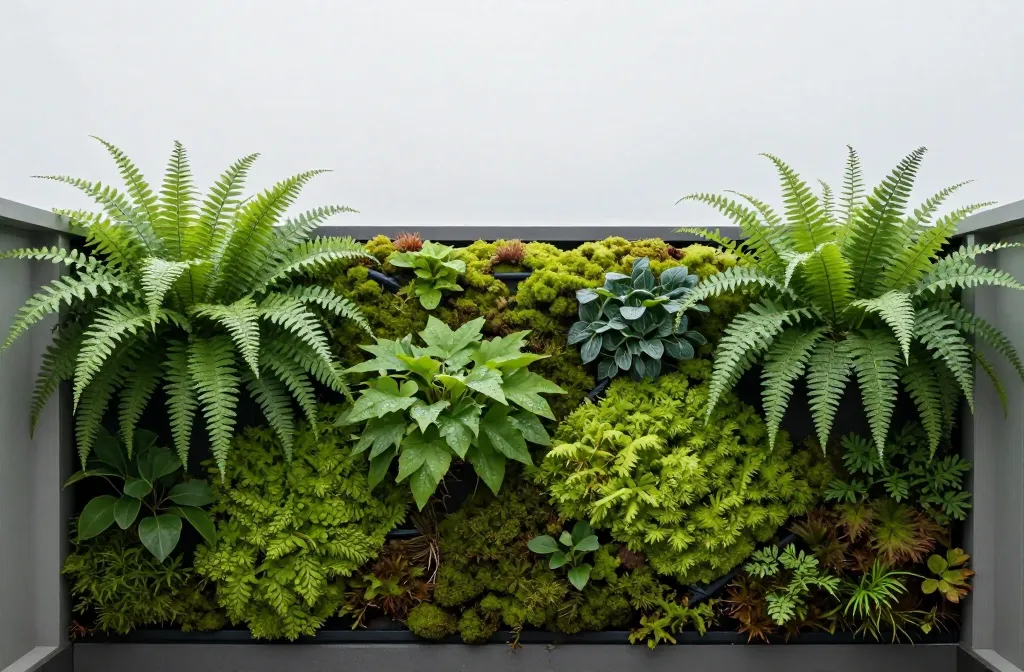
Got a moody wall or a balcony that never sees sunshine? Perfect. Shade-loving vertical gardens can look lush, layered, and ridiculously chic when you pair the right plants. This list breaks down smart combos that thrive in low light, play nice together, and make maintenance easy. Ready to turn that dim corner into a leafy showstopper?
1. Ferns + Moss: The Velvet-and-Fringe Dream Team
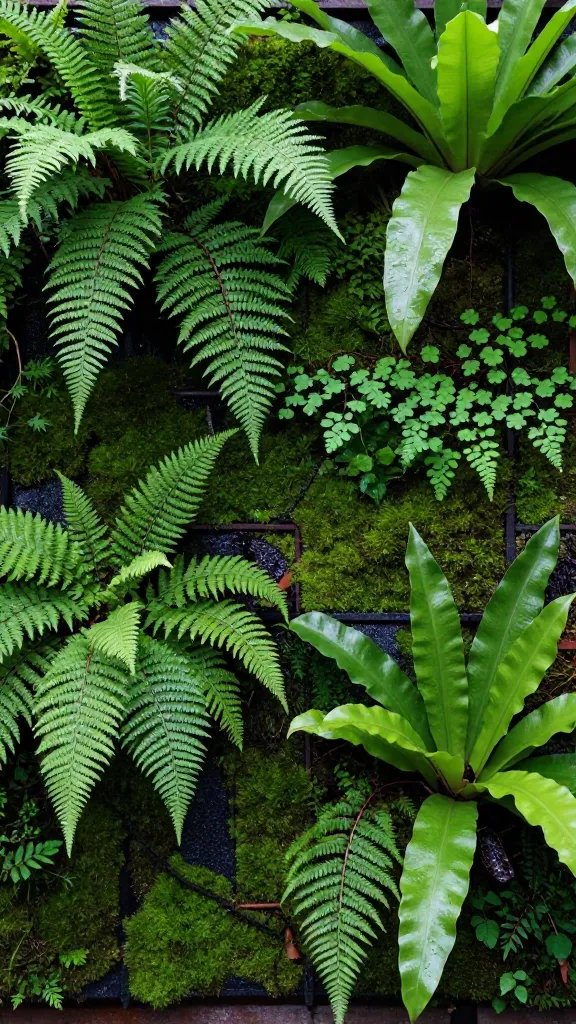
Want instant forest vibes? Pair feathery Boston ferns or maidenhair ferns with cushiony sheet moss or java moss. They love cool, humid, low-light spots and drape beautifully over vertical pockets and panels.
This combo reads like a misty woodland on your wall. Moss fills gaps, hides irrigation, and keeps roots cool while ferns add height and texture.
Great Pairings:
- Boston fern + sheet moss for easy care
- Maidenhair fern + cushion moss for delicate, high-humidity corners
- Bird’s nest fern + sphagnum moss in pockets for structure
Tips:
- Use a moisture-retentive mix: coco coir + fine bark + perlite.
- Mist lightly or run a drip line; never let moss dry out completely.
- Protect from drafts; ferns hate sudden temp swings.
Use this when you want a soft, romantic base layer that stays green year-round. It’s low-light gold, seriously.
2. Heuchera + Lamium: Color Pops Without Sunburn
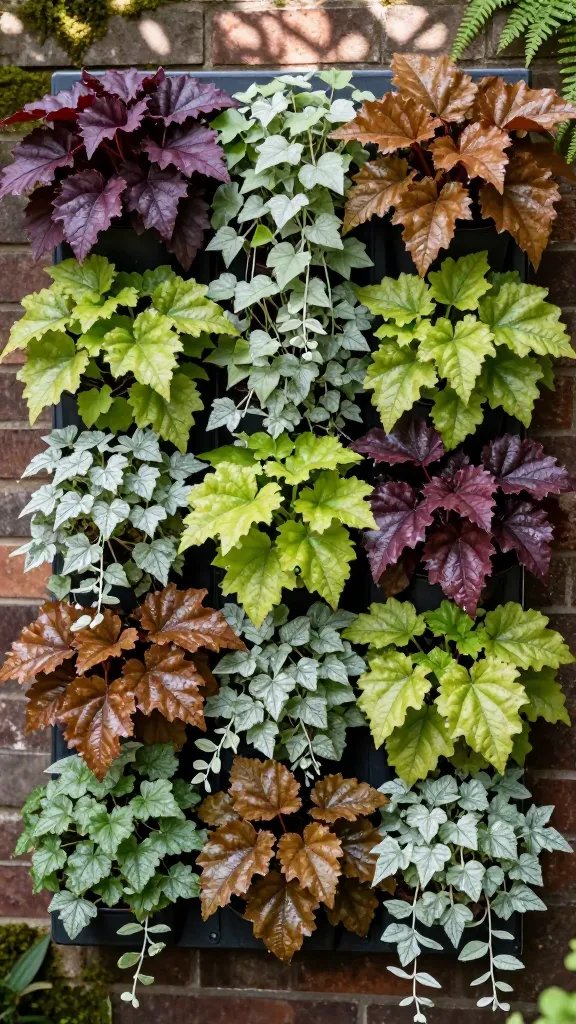
Shade doesn’t mean boring. Heuchera (coral bells) brings jewel-toned foliage—plum, caramel, lime—while Lamium (deadnettle) spills silver-variegated leaves down the wall. Together they create contrast that looks intentional and high-end.
Both handle dappled to deep shade and like consistent moisture with good drainage. Lamium cascades to soften edges; heuchera anchors pockets with bold leaves.
Why It Works:
- Heuchera’s thicker leaves tolerate vertical planters well.
- Lamium’s creeping habit fills gaps and covers soil edges.
- Both play nice in cooler zones and under trees or overhangs.
Planting Tips:
- Mix varieties: Heuchera ‘Obsidian’ + Lamium ‘Beacon Silver’ = drama.
- Feed lightly in spring; overfeeding = floppy growth.
- Trim Lamium runners when they try to bully neighbors.
Choose this duo when you want color that doesn’t rely on blooms. FYI, it photographs beautifully—hello, Instagram wall.
3. Philodendron + Pothos + Tradescantia: The Low-Light Trailing Trifecta
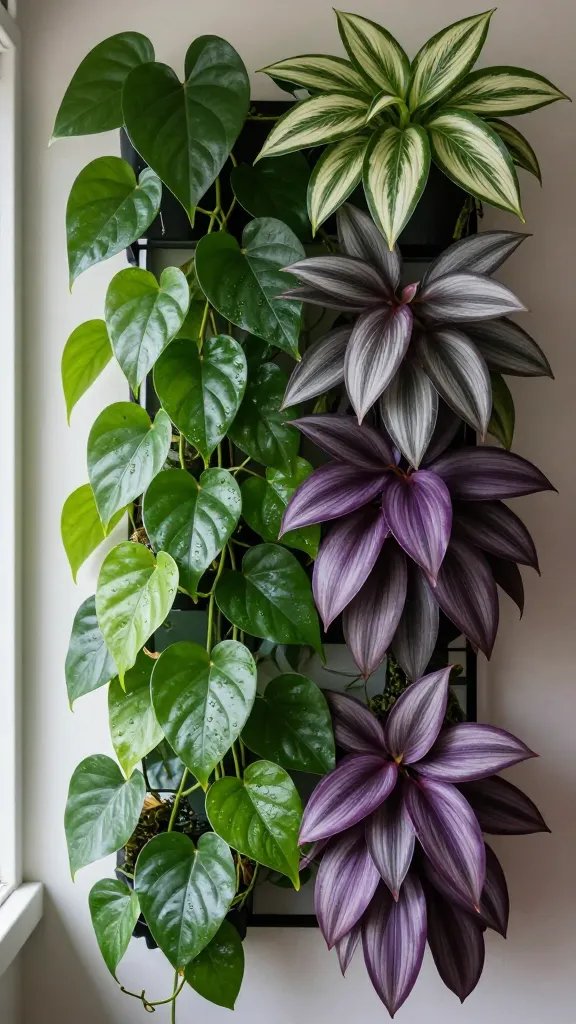
For lush spillover in true low light, you can’t beat this trio. Heartleaf philodendron grows steadily, pothos handles neglect like a champ, and Tradescantia adds stripes or purple for flair. They share similar watering needs and respond well to light pruning.
Mix them in alternating pockets for a patterned cascade. The vines knit together, cover hardware, and make your wall look finished fast.
Best Varieties For Shade:
- Philodendron hederaceum (heartleaf) for resilience
- Pothos ‘Jade’ or ‘Marble Queen’ for variegation in lower light
- Tradescantia zebrina or fluminensis for color streaks
Maintenance Notes:
- Rotate vines every few weeks so both sides get what little light exists.
- Snip and replant cuttings to thicken bare spots.
- Don’t overwater; let the top inch dry slightly between cycles.
Use this combo to cover lots of vertical real estate quickly. It’s budget-friendly and almost foolproof—IMO, the best starter set.
4. Aspidistra + Clivia + Cast Iron Allies: The Unkillable Core
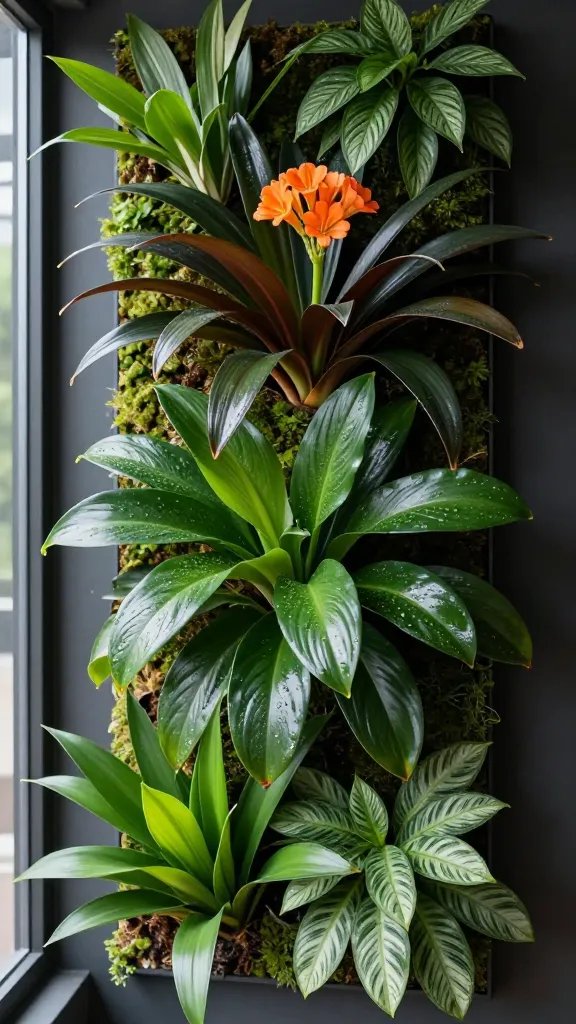
Want a backbone that survives neglect, low light, and “oops” moments? Meet the cast iron plant (Aspidistra), Clivia, and supportive shade buddies like ZZ plant (in very low-light edges) or Aglaonema. These give you evergreen structure and occasional blooms without drama.
They anchor living walls that don’t get great airflow or consistent care. Big leaves read clean and architectural, which balances frillier trailing plants nearby.
How To Use Them:
- Place Aspidistra at mid to lower tiers for stability and mass.
- Tuck Clivia in bright shade pockets for winter-spring blooms.
- Slot Aglaonema where you want patterned foliage without fuss.
Care Essentials:
- Well-drained mix; these hate soggy roots.
- Water less often than your vines and ferns.
- Wipe leaves monthly to reduce dust and maximize light absorption.
Build your wall’s skeleton with these, then decorate around them. They keep everything looking intentional even when other plants take a nap.
5. Hardy Herbs + Edibles For Shade: Minty-Fresh, Salad-Ready Layers
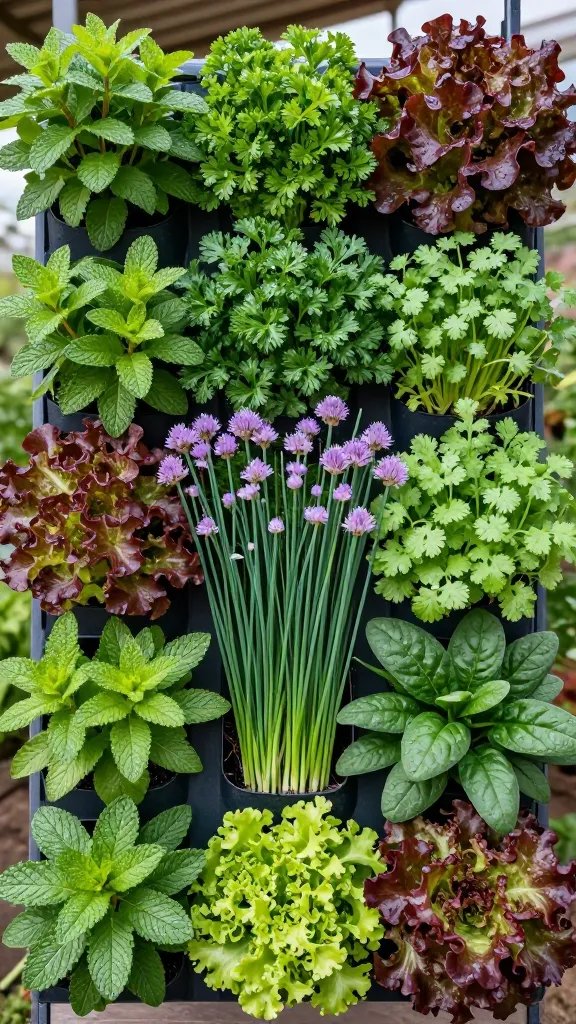
Yes, you can eat from a shade-loving living wall. Focus on mint, parsley, chives, cilantro, lettuces, mizuna, and spinach. These tolerate partial shade and steady moisture, and they look lush while they grow.
Combine leafy greens with aromatic herbs for beauty and function. Imagine harvesting a handful of parsley from a wall that also looks like a restaurant feature—win-win.
Smart Pairings:
- Curly parsley + red romaine for texture contrast
- Mint (contained) + mizuna for ruffled edges
- Chives + butterhead lettuce for clean lines and repeated harvests
Pro Tips:
- Use deeper pockets (at least 6–8 inches) for greens to avoid bolt stress.
- Harvest often to keep plants compact and productive.
- Keep mint corralled in its own pocket; it’s a runner with no chill.
Try this when you want your wall to feed you and look good doing it. FYI, shade-grown greens taste sweeter and less bitter—chef’s kiss.
Bonus: How To Make These Combos Thrive
- Light Reality Check: “Low light” means bright shade, north-facing windows, or fewer than 2 hours of direct sun.
- Watering: Install a gentle drip line with adjustable emitters; different pockets dry at different rates.
- Soil Mix: For vertical planters, go airy: 40% coco coir, 30% fine bark, 20% perlite, 10% compost.
- Fertilizer: Monthly half-strength balanced feed during growing season; pause in winter.
- Airflow & Humidity: Small fan nearby prevents fungal issues and keeps fronds perky.
- Layering Strategy: Top tiers: ferns and trailers. Middle: colorful foliage (heuchera, tradescantia). Bottom: structure (aspidistra) and edibles.
- Pest Watch: Check undersides weekly. Treat early with neem or insecticidal soap.
Sample 11 Low-Light Options At A Glance
- Boston Fern (Nephrolepis exaltata)
- Maidenhair Fern (Adiantum)
- Bird’s Nest Fern (Asplenium nidus)
- Sheet/Cushion Moss (Hypnum/Leucobryum)
- Heuchera (Coral Bells)
- Lamium (Deadnettle)
- Heartleaf Philodendron
- Pothos (Epipremnum)
- Tradescantia zebrina/fluminensis
- Aspidistra (Cast Iron Plant)
- Parsley/Mint/Chives/Lettuces (Shade-Tolerant Edibles)
Ready to build your shade-loving masterpiece? Mix a few of these combos, keep the water steady, and snip as you go. Your gloomy wall is about to glow—trust me, you’ll wonder why you didn’t do this sooner.