
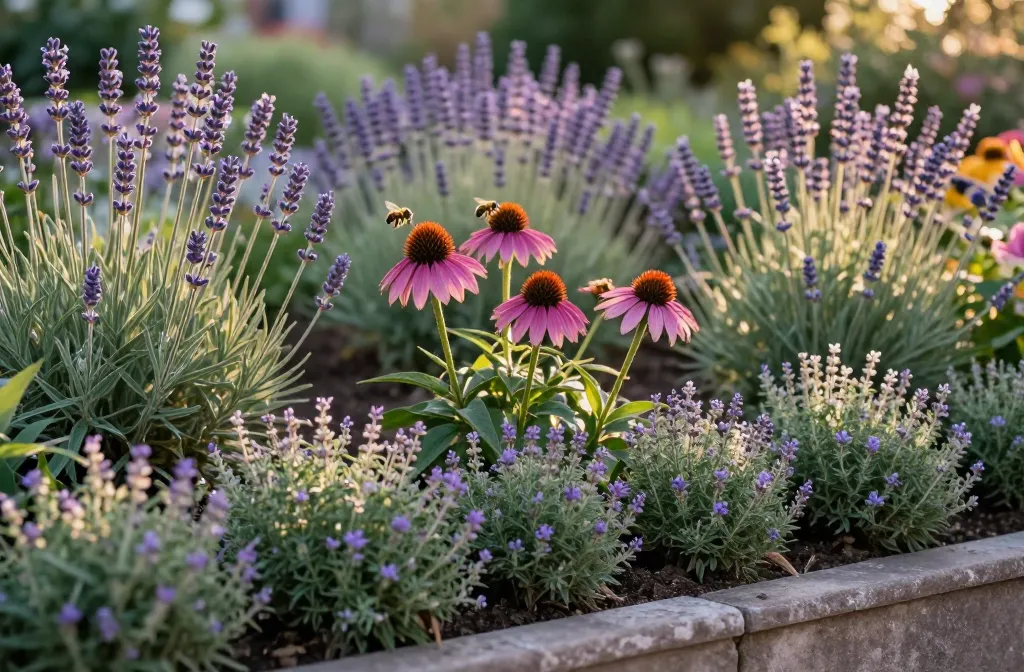
Your medicinal herbs can do more than sit pretty—they can team up and supercharge each other. The right plant pairings boost flavor, repel pests, attract pollinators, and even improve soil health. Want fewer aphids and more potent harvests? Pair smart, harvest happy, and let your garden basically run itself.
1. Lavender + Echinacea + Thyme: The Pollinator Magnet Trio
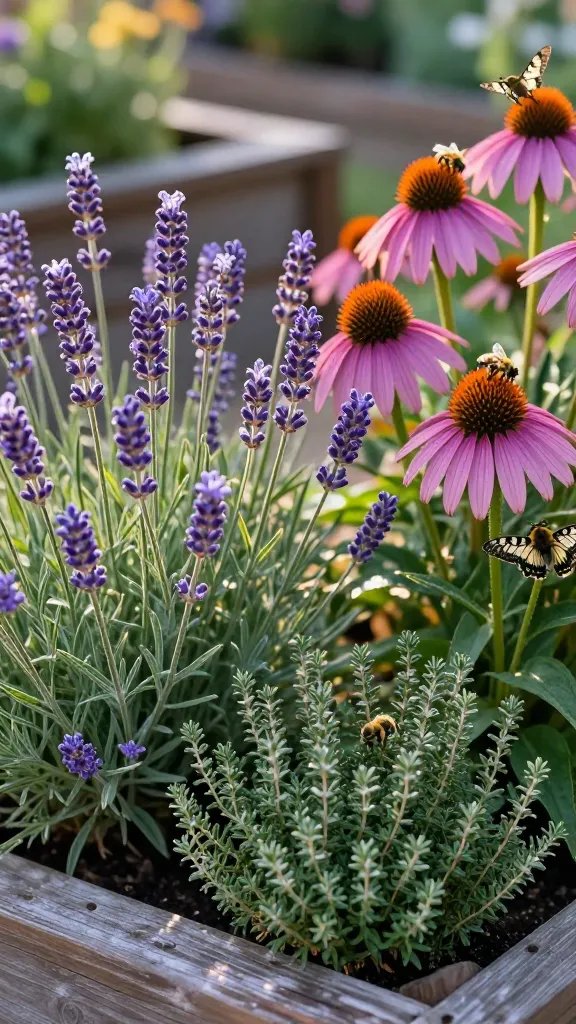
This trio works like a garden party for beneficial insects. Lavender lures bees from miles away, echinacea offers a long bloom window, and thyme sprawls at ground level to block weeds and confuse pests. You get beauty, fragrance, and serious herbal power in one bed.
Why It Works
- Pollinator draw: Lavender and echinacea keep bees and butterflies circling.
- Pest pressure down: Thyme’s aromatic oils help deter cabbage moths and aphids nearby.
- Microclimate boost: Thyme acts as a living mulch, conserving moisture for shallow-rooted neighbors.
Plant lavender at the back, echinacea mid-row, and a thyme carpet along the edge. Keep thyme slightly drier than echinacea by planting it on a slight mound. Want herbal benefits? Use echinacea roots and petals for immune support, lavender for calming teas and salves, and thyme for cough-soothing syrups.
Tips
- Choose English lavender for better cold tolerance, or lavandin for stronger scent.
- Deadhead echinacea to prolong bloom, but leave a few seedheads for birds.
- Let thyme flower—pollinators go wild for it.
Use this combo where you need pollinator traffic, fragrance, and low-maintenance beauty. FYI, it looks gorgeous along sunny paths.
2. Calendula + Chamomile + Yarrow: The Gentle Healers That Fight Dirty (Against Pests)
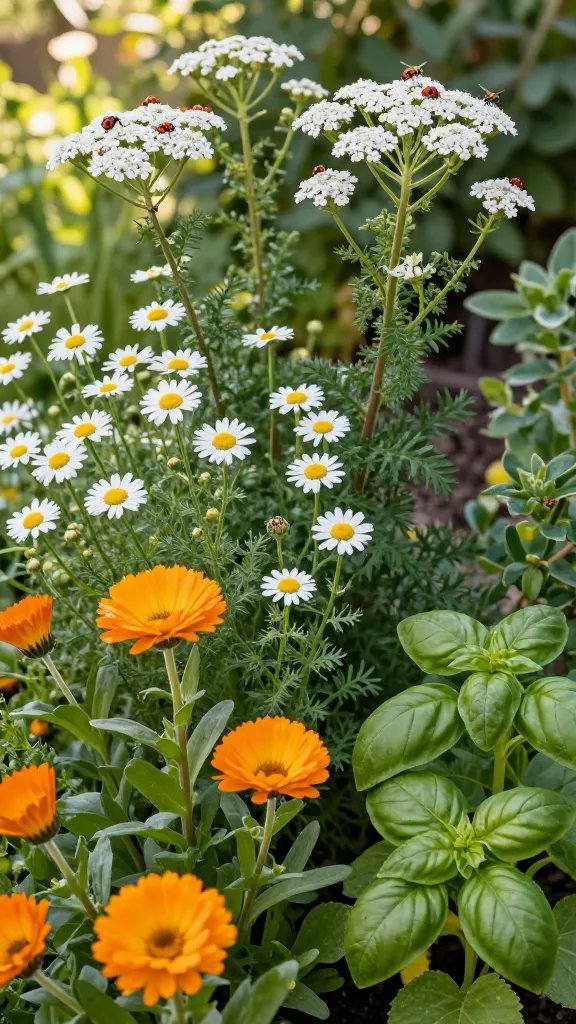
These three look sweet but throw down in the pest arena. Calendula traps aphids and distracts them from prized herbs, chamomile coaxes nearby plants into stronger growth, and yarrow boosts beneficial predator populations. Together, they create a resilience bubble for your garden.
Key Benefits
- Trap crop action: Calendula pulls sucking insects off tender herbs like lemon balm or basil.
- Growth boost: Chamomile releases compounds that can improve neighbor vigor (old gardener wisdom that actually checks out).
- Beneficial HQ: Yarrow’s umbels attract ladybugs, lacewings, and tiny parasitic wasps.
Space them in a triangle every few feet near susceptible herbs. Snip calendula blooms often to keep petals coming for salves and skin-soothing oils. Dry chamomile flowers for tea, and use yarrow leaves in poultices or to activate compost.
Quick Planting Notes
- Full sun to part sun works; don’t overwater.
- Deadhead calendula to reduce self-seeding (unless you want a cheerful surprise next year).
- Yarrow spreads—choose a clumping variety if you like tidy beds.
Use this trio to protect delicate medicinals and stock your apothecary with skin and tummy helpers. Seriously, they’re overachievers.
3. Sage + Rosemary + Lemon Balm: Aroma Shield With Mood-Lifting Perks
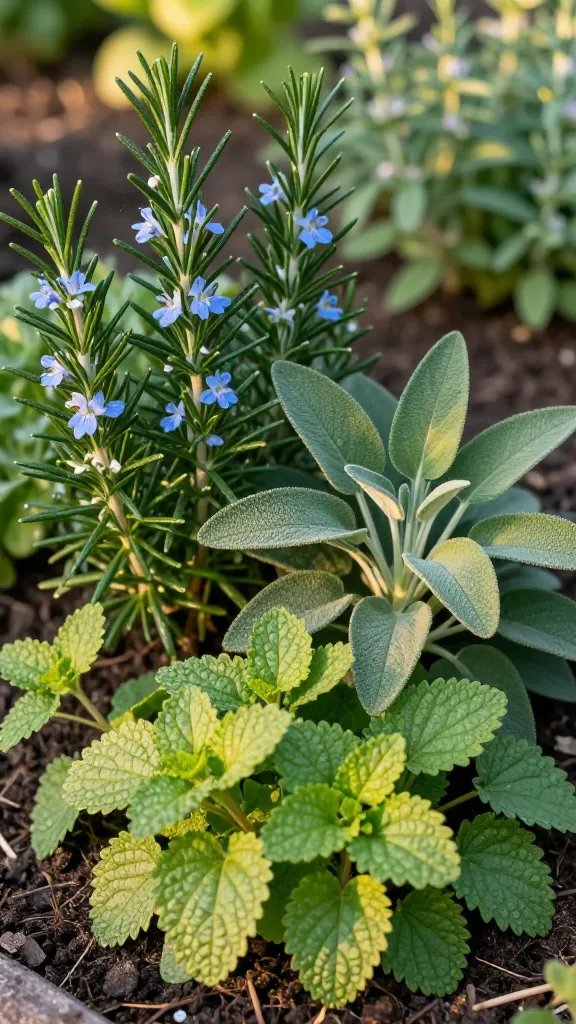
This combo smells like a Mediterranean spa, and pests hate that. Sage and rosemary bring woody oils that repel moths and beetles, while lemon balm cools the party with bright, uplifting fragrance. You also get a solid lineup for teas, broths, and steam inhalations.
How They Support Each Other
- Aromatic barrier: Sage and rosemary make a scented fence that confuses pests.
- Moisture mediation: Lemon balm tolerates a bit more moisture and can shade soil around rosemary roots in heat.
- Herbal synergy: Combine all three in respiratory steams or digestive teas.
Plant rosemary on the sunniest, driest edge. Tuck sage nearby with good airflow. Give lemon balm a corner it can spread into, or use a pot sunk into the bed to tame it. Harvest lemon balm often to prevent takeover and to keep leaves fresh for calming teas.
Care Notes
- Go easy on water; soggy roots mean sad rosemary.
- Prune sage lightly after flowering to keep it compact.
- Cut lemon balm monthly to reset flavor and reduce mildew.
Perfect for edges, patios, and spots where you want a living air freshener. Use when you want pest relief and a constant tea stash, IMO the best multitaskers.
4. Peppermint + Catnip + Valerian: The Bug-Baffling Sleep Squad
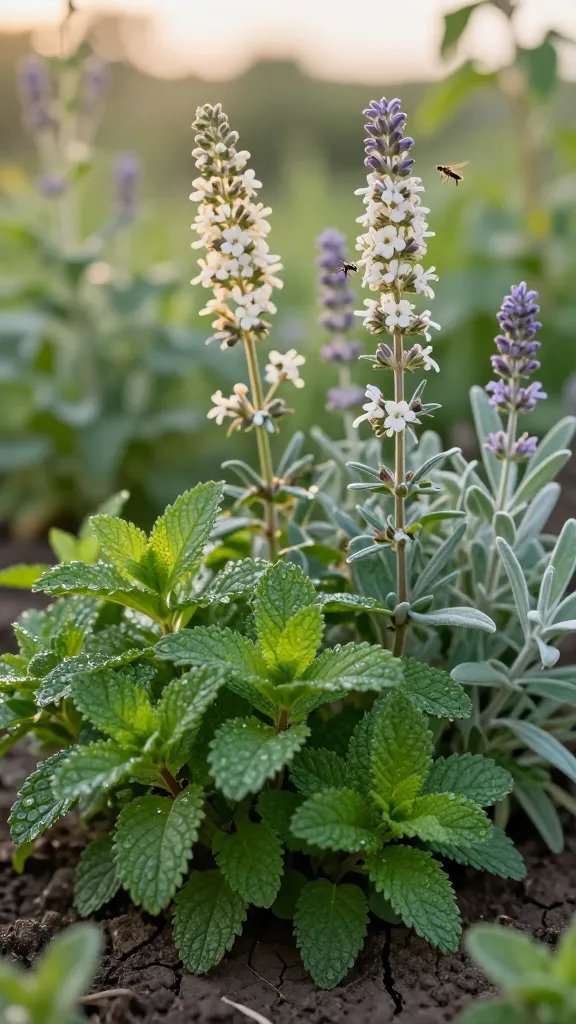
You want pest management without sprays? This trio outsmarts them. Minty scents confuse ants and aphids, catnip deters flea beetles and can repel mosquitoes, and valerian brings calm energy to the bed (and your bedtime tea scene) while inviting pollinators with night-fragrant blooms.
Why It Works
- Scent cloud defense: Peppermint and catnip overwhelm insect tracking.
- Soil friends: Valerian’s deep roots break up soil and pull nutrients upward.
- Wildlife balance: Valerian flowers attract hoverflies—great aphid predators.
Contain peppermint and catnip in bottomless buried pots or raised beds unless you enjoy chaos. Plant valerian in the ground to anchor the area and add vertical interest. Harvest catnip before flowering for potent sachets and teas; use peppermint fresh for digestion and cooling; take valerian root for sleep support (with care and proper ID).
Practical Tips
- Give catnip its own space—cats will roll it like it’s Coachella.
- Water regularly but don’t drown valerian; it likes even moisture.
- Divide mint every year to keep it vigorous.
Use this combo near doorways, seating areas, or beds prone to mosquitoes. Sleep better, swat less—win-win.
5. Holy Basil (Tulsi) + Bee Balm (Monarda) + Borage: The Immune-Boosting, Pollinator-Feeding Power Bed
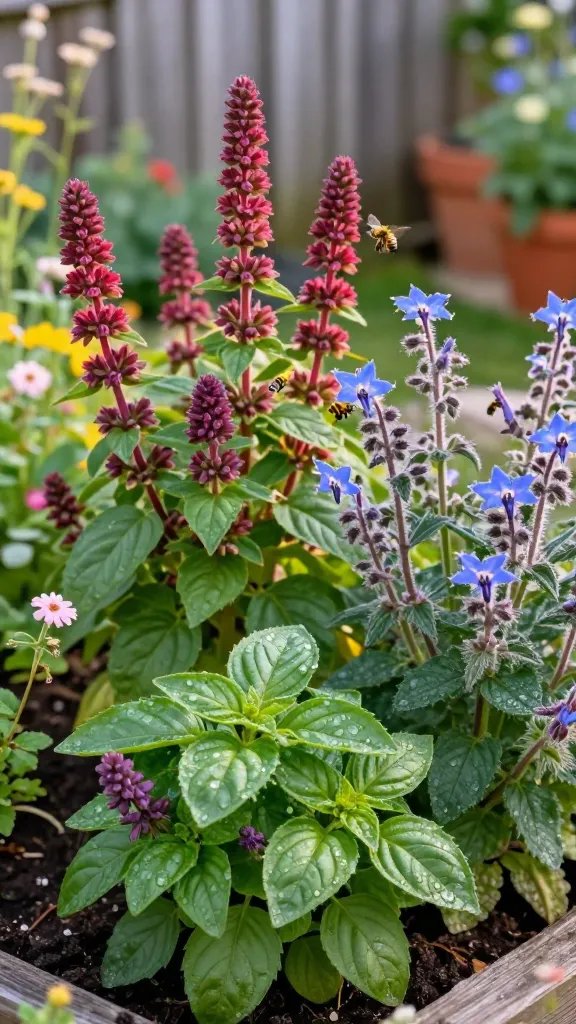
If you want vigor, plant this trio and watch the garden hum. Tulsi offers adaptogenic support, bee balm feeds bees and deters fungal issues with its spicy oils, and borage pumps nectar, improves pollination, and adds trace minerals through its deep taproot. It also looks like a cottage-core postcard.
Strengths At A Glance
- Pollinator superhighway: Monarda and borage bloom like they mean it.
- Companion bonus: Borage seems to improve nearby plant resilience and flavor (old-school gardener lore that holds up in practice).
- Wellness stack: Tulsi for stress, borage flowers for mood-brightening teas, monarda for respiratory steams.
Plant tulsi at center, ring with monarda, and sprinkle borage around as accents. Succession sow borage every few weeks for fresh flowers all season. Deadhead monarda to reduce powdery mildew, and give good airflow. Harvest tulsi leaves often to keep it bushy and potent.
Growing Notes
- Full sun to part sun; rich, well-drained soil.
- Water evenly; monarda protests drought with mildew.
- Borage self-seeds—great if you want freebies, not great if you want minimal volunteers.
Use this bed when you want a steady stream of tea herbs and a pollinator magnet next to veggies. Trust me, your cucumbers and tomatoes will send thank-you notes.
Ready to play matchmaker in your herb garden? Mix these pairings, watch the pest pressure drop, and harvest armfuls of fragrant goodness. Start with one trio, then add another—your future self (and your teacup) will be thrilled.