
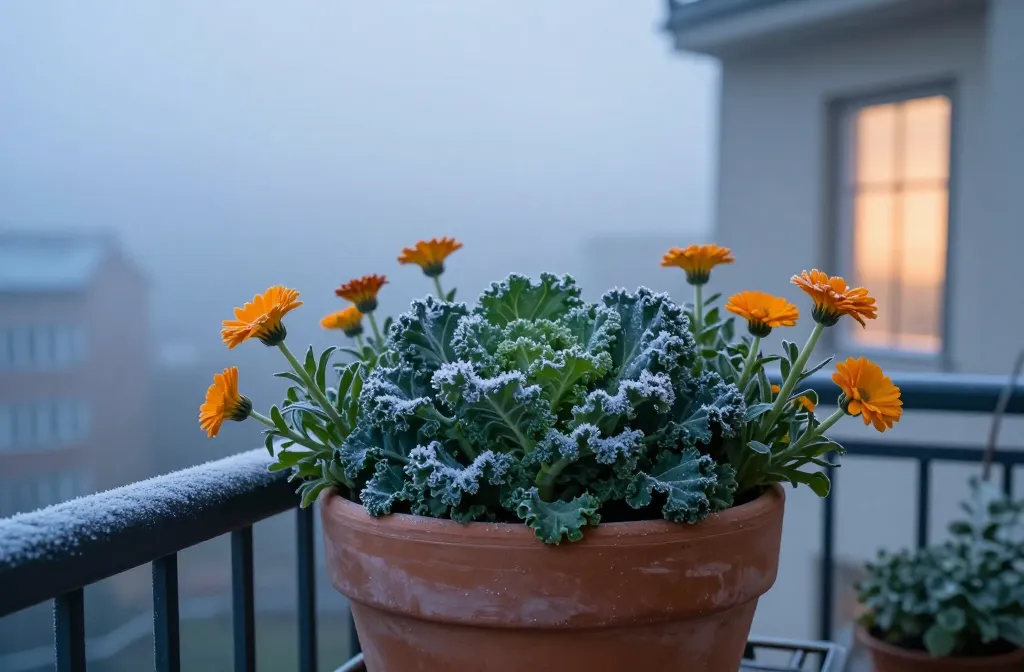
Cold nights, tiny balconies, and a questionable radiator? You can still grow a lush, productive garden. The secret sauce: pairing frost-tolerant plants that help each other thrive in chilly, low-light conditions. These combos fit window boxes, rail planters, and pots—and they don’t mind a surprise cold snap. Ready to squeeze more flavor and color out of your square footage?
1. Brassica Dream Team: Kale + Chives + Calendula
Kale handles frost like a champ, but flea beetles and aphids love it. Enter chives and calendula. Chives confuse pests with their oniony scent, and calendula acts as a trap crop and bee magnet even in cool weather.
Why It Works
- Kale thrives in cool temps and tastes sweeter after frost.
- Chives deter aphids and add a punchy garnish to soups and eggs.
- Calendula draws pollinators and lures pests away from kale leaves.
Use a 12–14 inch pot or a window box with at least 8 inches of depth. Put kale in the center, chives at the edges, and calendula spilling over the side for color and airflow.
Tips
- Give this trio 4–6 hours of light—east or south windows are perfect.
- Mulch with shredded leaves to buffer temperature swings.
- Harvest outer kale leaves regularly to keep the plant compact.
Best for: Balcony containers where you want steady greens and low-maintenance flowers all season.
2. Root-and-Leaf Snack Box: Carrots + Radishes + Parsley
Roots and greens play nice when you mind spacing and timing. Radishes come up fast, carrots take their time, and parsley fills the top layer without hogging root space. This combo stays cool-loving and thrives in tight quarters.
Why It Works
- Radishes mature in 25–35 days and loosen soil for carrots.
- Carrots prefer cool soil to develop sweet, crisp roots.
- Parsley provides edible foliage and some shade to keep soil cool.
Use a deep window box or bucket with at least 10–12 inches of soil. Sow radishes and carrots at the same time. Add parsley plugs along the rim once seedlings establish.
Planting Layout
- Carrots: rows 2–3 inches apart, thin to 2 inches.
- Radishes: scatter between carrot rows, pull as they mature.
- Parsley: 3–4 plants around the edges.
Keep moisture consistent to prevent splitting. FYI, cold windows at night help carrots stay firm and sweet.
Best for: Window sills with bright light and anyone who loves crunchy snacks straight from the pot.
3. Cozy Herb Quartet: Thyme + Sage + Winter Savory + Violas
Herbs make the apartment smell like a mountain cabin (in a good way), and many shrug off frost. This evergreen-ish crew provides flavor and flowers while taking up little space. Violas add edible blooms that handle cold like tiny champions.
Why It Works
- Thyme and winter savory offer cold tolerance and ground-cover growth.
- Sage brings structure and aromatic pest deterrence.
- Violas provide nectar and edible color even after light frosts.
Choose a wide, shallow pot with fast-draining soil. Herbs hate wet feet in cold weather, so add extra perlite or grit. Tuck violas along the rim to trail and bloom.
Care Notes
- Water deeply, then let the top inch dry completely.
- Clip sprigs often to keep growth dense and flavorful.
- Rotate the pot weekly for even light, especially indoors.
This one looks gorgeous on a balcony table and keeps flavor at your fingertips. Seriously, toss those sad store-bought herb clamshells.
Best for: Cooks who want hardy herbs year-round and a pop of edible flowers for drinks and desserts.
4. Nordic Salad Bar: Spinach + Mâche (Corn Salad) + Green Onions
If you want salads in sweater weather, this is your trio. Spinach loves chilly nights, mâche thrives in cold like it’s on vacation, and green onions add crunch without demanding warmth. These plants pack a lot of harvest into narrow spaces.
Why It Works
- Spinach powers through frost and rebounds after light freezes.
- Mâche grows happily in low temps—its nutty leaves taste gourmet.
- Green onions fit between clumps and regrow after cutting.
Use a trough-style planter or two 10–12 inch pots. Sow spinach thickly and thin for baby greens. Tuck mâche plugs or seeds between spinach gaps, and plant green onions at the back for height.
Harvest Strategy
- Spinach: cut-and-come-again from outer leaves.
- Mâche: harvest whole rosettes at 3–4 inches wide.
- Green onions: snip greens or pull entire plants at pencil thickness.
Keep soil evenly moist and add a light fish or kelp feed every 2–3 weeks. You’ll harvest bowls of salad even when the forecast screams “nope.”
Best for: Apartment dwellers who want constant greens with minimal fuss and maximum flavor.
5. Cool-Weather Color And Tea Box: Nasturtiums (Dwarf) + Lemon Balm + Garlic Chives
Yes, nasturtiums can handle light frosts, and dwarf types suit containers perfectly. Pair them with calming lemon balm and the mild zing of garlic chives. You’ll get edible flowers, fresh tea leaves, and an herb that secretly repels pests.
Why It Works
- Nasturtiums bring edible, peppery flowers and snag aphids away from other plants.
- Lemon balm adds citrusy tea leaves and tolerates cold balcony drafts.
- Garlic chives deter pests and add savory flavor to literally everything.
Plant in a 12–14 inch pot with rich potting mix. Position lemon balm in the center (it gets bushy), garlic chives at two opposite edges, and two dwarf nasturtiums to cascade. Give them as much light as you can—south or west exposure wins.
Pro Moves
- Pinch lemon balm often to prevent legginess and keep the aroma strong.
- Deadhead nasturtiums to extend blooming into cool spells.
- Divide garlic chives every year to keep clumps productive.
IMO, this combo nails the “looks pretty, tastes great, scares pests” trifecta. It thrives on balconies and bright kitchens alike.
Best for: Tea lovers and edible-flower fans who want cheerful color without babying their plants.
Quick Setup Essentials
- Containers: Aim for 10–14 inch pots with drainage. Fabric grow bags work great in cold because they dry out faster.
- Soil: High-quality potting mix with extra perlite for winter drainage. Skip garden soil in containers.
- Light: 4–6 hours is solid. Supplement with a small LED grow light if your window leans gloomy.
- Water: Water in the morning and avoid soggy soil. Cold + wet = root sulk.
- Frost Protection: Keep a lightweight row cover or old pillowcase handy for surprise dips.
Fertilizer And Timing
- Feeding: Use a diluted liquid organic feed every 2–3 weeks. Leafy greens love a little nitrogen; herbs prefer mild, steady nutrition.
- Timing: Start in late summer or early fall for a cool-season wave, then again in early spring. Many of these plants overwinter with minimal protection.
Troubleshooting (Because Stuff Happens)
- Aphids: Blast with water, then spray diluted soap. Calendula and nasturtiums help by distraction.
- Leggy growth: You need more light. Rotate pots and trim tops to encourage bushy regrowth.
- Yellowing leaves: Usually overwatering in cold conditions. Improve drainage, ease up on the watering can.
Ready to turn your chilly balcony into a productive mini-farm? These frost-tolerant pairings play nicely, taste amazing, and forgive the occasional drafty night. Set up one container, watch it thrive, and then—trust me—try all five. Your future salads (and smug sense of garden pride) await.