
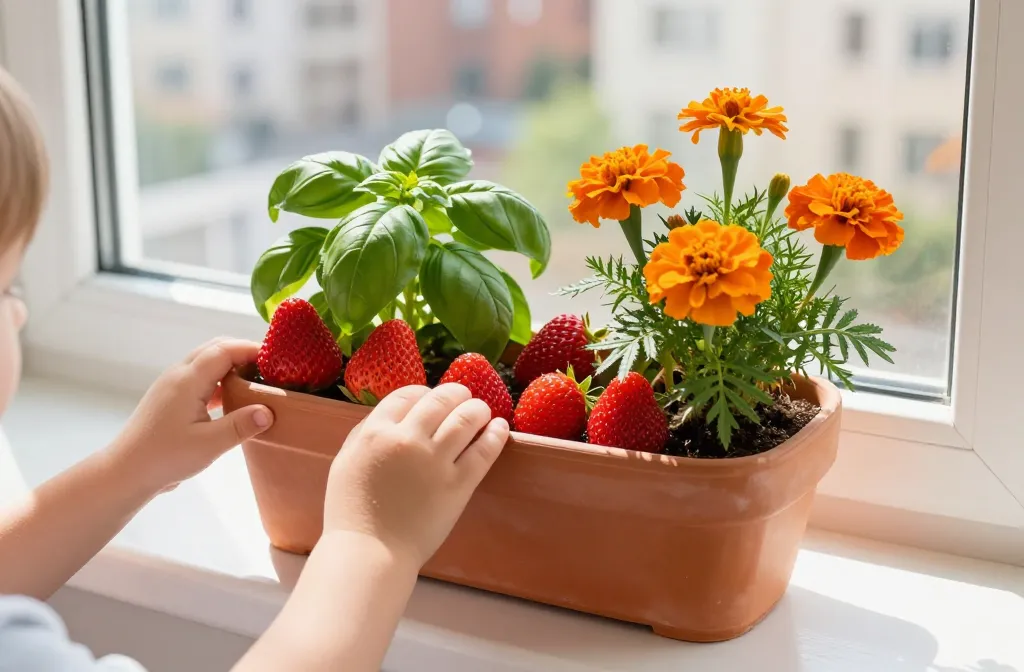
Want little hands in the dirt without any panic Googling? Let’s build an apartment garden that’s safe, snackable, and sneakily educational. These kid-friendly companion combos keep pests down, boost harvests, and turn your windowsill into a science lab. Ready to grow mini botanists along with your basil?
1. Snackable Super Team: Strawberries + Basil + Marigold
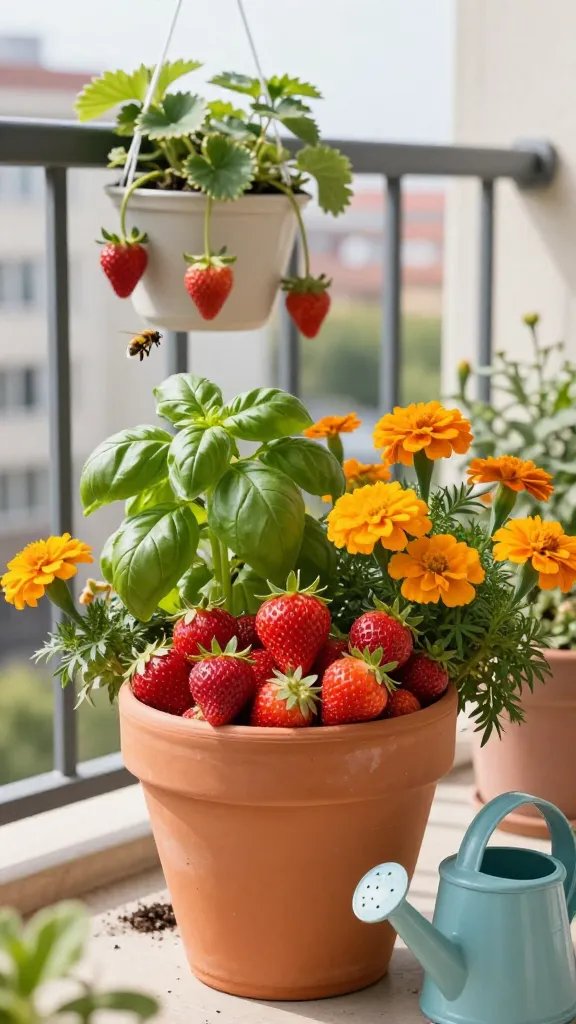
This trio brings flavor, color, and a bit of magic. Strawberries deliver sweet rewards, basil boosts growth and attracts pollinators, and marigolds act like tiny bouncers that deter pests. Kids get instant feedback: flowers turn into berries, and basil perfumes everything.
Why It Works
- Strawberries: Shallow-rooted, perfect for pots and hanging planters.
- Basil: Attracts bees and improves strawberry flavor (anecdotally and IMO, delicious).
- Marigolds: Their scent discourages aphids and whiteflies.
Container Setup
- Use a 12–14 inch wide container with excellent drainage.
- Plant 2 strawberry starts around the edge, 1 basil in the middle, and tuck 1 marigold near the rim.
- Full sun (5–8 hours) near a bright window or balcony.
Kid-Friendly Activities
- Count new flower buds and predict which ones become berries.
- Do a smell test: basil vs. marigold—describe each scent.
- Harvest basil leaves and taste the difference with strawberries—sweet + herbal equals chef’s kiss.
Use this combo when you want quick wins and lots of color. It’s low-fuss and super rewarding for first-time kid gardeners.
2. Pizza Garden Magic: Cherry Tomato + Sweet Basil + Calendula
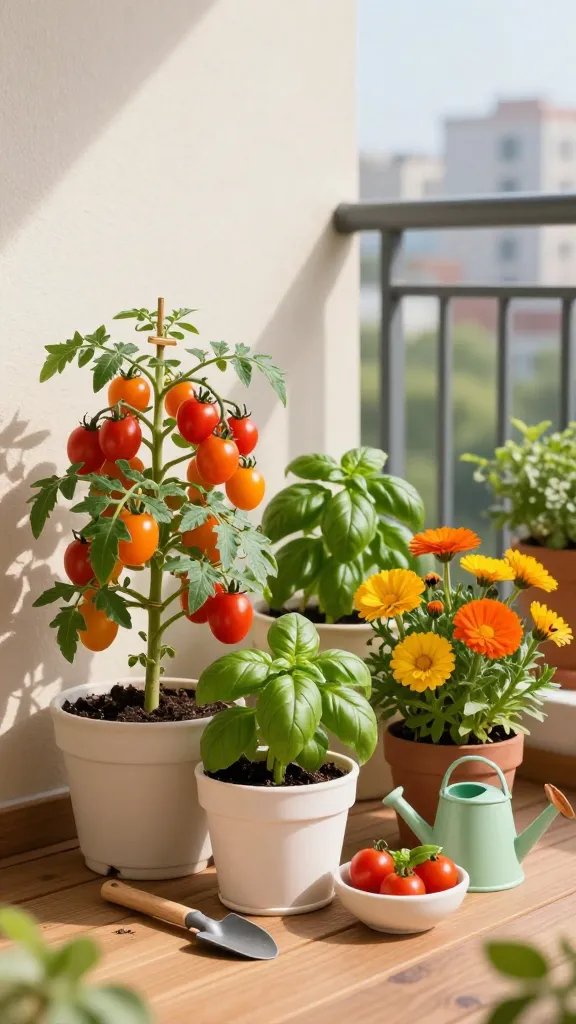
Turn a sunny corner into a pizza-topping factory. Cherry tomatoes teach patience and pruning, basil teaches pinching, and calendula provides pollinator support and petals that are technically edible (great for decor on kid salads). It’s the kind of combo that gets kids asking, “Is it red yet?” every morning.
Why It Works
- Cherry Tomatoes: Compact varieties thrive in containers and ripen fast.
- Sweet Basil: Improves growth and attracts helpful insects.
- Calendula: Bright blooms bring bees and hoverflies, which eat aphids.
Container Setup
- Use a 5-gallon bucket or large pot with a stake or mini trellis.
- 1 tomato in the center, basil on one side, calendula on the other.
- Sun, sun, and more sun (6+ hours). Rotate the pot weekly for even growth.
Kid-Friendly Activities
- Pinch basil tops together—explain how it makes the plant bushier.
- Count pollinator visits during sunny afternoons.
- Make “pizza picks”: tiny skewers of tomato + basil leaf. Seriously, so good.
Perfect for window-box chefs who want to eat what they grow. It teaches plant care, pollinators, and kitchen creativity in one pot.
3. Sensory Garden Duo: Mint (In Its Own Pot) + Nasturtium
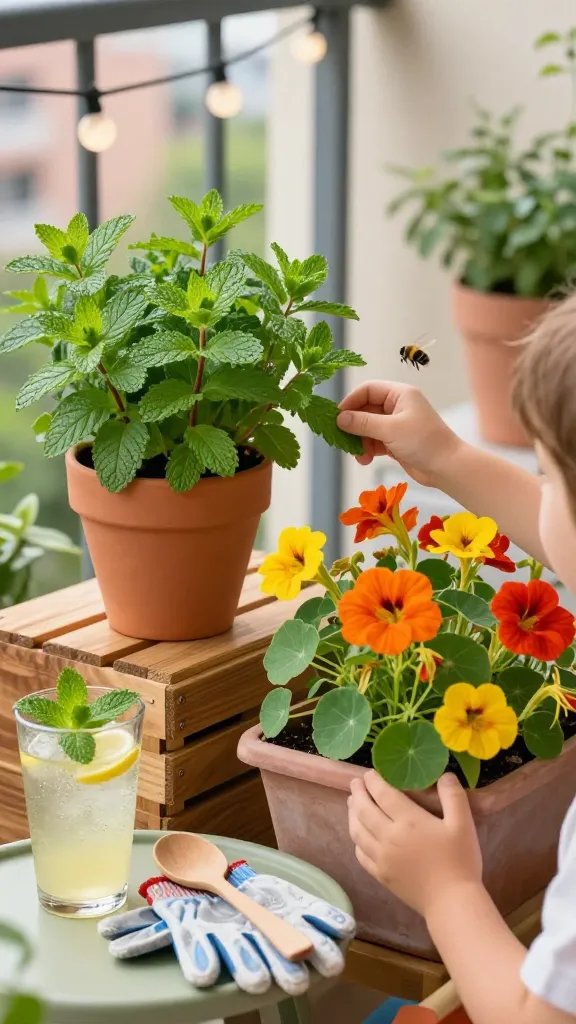
Sensory play, activated. Mint begs for sniffing and stirring into lemonade, while nasturtiums add peppery edible flowers that look like they belong in a fairy tale. Kids explore smell, taste, and color safely—no mystery plants, no stress.
Why It Works
- Mint: Hardy and fragrant, but keep it contained so it doesn’t take over.
- Nasturtiums: Trailing flowers that attract pollinators and repel some pests.
- The two together make a vibrant, multi-sensory corner that’s basically a science station.
Container Setup
- Plant mint in its own small pot (6–8 inches) to prevent spread.
- Plant nasturtium in a nearby hanging pot or window box to trail.
- Both tolerate part sun; nasturtium blooms best with 4–6 hours of light.
Kid-Friendly Activities
- Make “smell maps”: compare mint strength in morning vs. evening.
- Taste test nasturtium petals—peppery like a tiny salad.
- Count how many leaves they can identify by scent alone (blindfold optional, giggles guaranteed).
Use this duo when you want a calm, sensory corner that doubles as a kid-safe tasting garden. FYI: mint also makes excellent kid-friendly iced tea.
4. Pollinator Party: Blueberry + Thyme + Alyssum
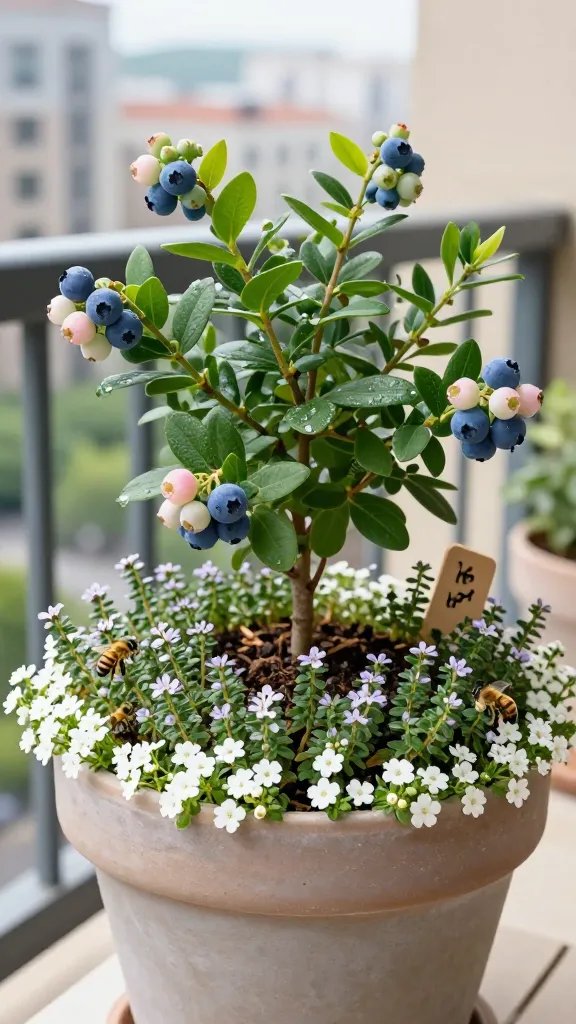
Want the quiet thrill of fruit forming before your eyes? Pair a compact blueberry with low-growing thyme and a halo of alyssum. Bees love it, kids love it, and your balcony or sill turns into a pollinator snack bar.
Why It Works
- Blueberry (Dwarf Varieties): Self-fertile types (like ‘Top Hat’ or ‘Jelly Bean’) do well in pots.
- Thyme: Ground-hugging, aromatic, and pollinator-friendly.
- Alyssum: Tiny flowers that draw beneficial insects and soften pot edges.
Container Setup
- Use an 8–10 inch pot with acidic potting mix (ericaceous blend) for blueberries.
- Plant thyme and alyssum together in a separate shallow bowl, or share a larger planter with a divider.
- Bright light, morning sun preferred. Water blueberries with rainwater if possible.
Kid-Friendly Activities
- Track flower-to-berry progress with a simple chart.
- Run fingers across thyme and describe the scent—lemony? earthy?
- Observe bees and hoverflies—how many visitors in 5 minutes?
Reach for this combo when you want long-term learning. Kids see seasons: bloom, fruit set, harvest, repeat. Trust me, the first blueberry they pick feels like winning.
Safety Note
- All listed plants are generally considered safe and kid-friendly.
- Always supervise young children and teach “ask before tasting.”
- Wash produce before eating, especially balcony-grown plants near roads.
5. Bug-Busting Buddies: Cucumbers + Dill + Chives
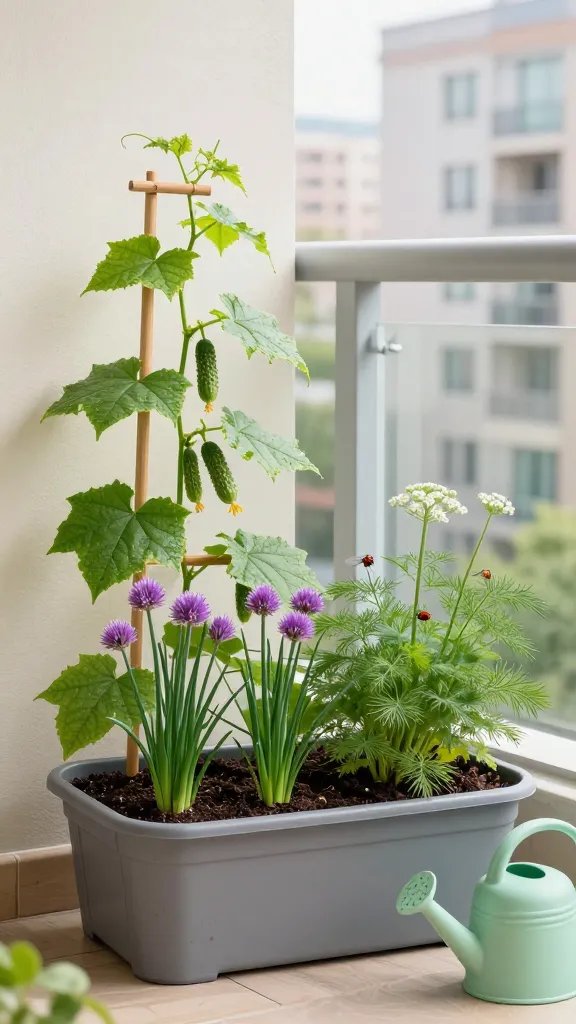
If your child loves vines and “jungle vibes,” cucumbers deliver. Pair them with dill to attract lacewings and ladybugs, and chives to gently deter pests. You get crunchy snacks and natural pest control without harsh sprays—win-win.
Why It Works
- Cucumbers (Bush Types): Compact cultivars climb small trellises and fruit reliably.
- Dill: Umbel flowers bring beneficial insects and smells incredible.
- Chives: Onion scent can help keep aphids at bay; edible flowers are a bonus.
Container Setup
- Use a 12–16 inch pot with a mini trellis or string support.
- Plant one cucumber in the center, dill at the back, chives at the front.
- Consistent water, lots of light, and mulch the top with coco coir to keep moisture even.
Kid-Friendly Activities
- Train tendrils up the trellis—call it “cucumber yoga.”
- Snip chives with kid-safe scissors and top scrambled eggs or noodles.
- Smell dill, then find dill seeds and start “baby dill” in a jam jar.
Choose this team when you want to teach vertical gardening and friendly bugs. It turns “ew, bugs” into “yay, garden helpers.” Seriously, it’s a game-changer.
Quick Care Cheatsheet
- Light: Most combos need 5–8 hours of sun. Use a small grow light if your windows are shy.
- Water: Keep soil evenly moist but not soggy. Teach the “one knuckle test” before watering.
- Soil: Use high-quality potting mix; add perlite for drainage.
- Fertilizer: Mild, balanced liquid feed every 2–3 weeks during active growth.
- Tools: Child-sized watering can, blunt scissors, plant labels, and a magnifying glass.
13 Safe And Educational Combinations At A Glance
- Strawberries + Basil + Marigold
- Cherry Tomato + Sweet Basil + Calendula
- Mint (separate pot) + Nasturtium
- Blueberry (dwarf) + Thyme + Alyssum
- Cucumber (bush) + Dill + Chives
- Peas (dwarf) + Lettuce + Radishes
- Carrots (short ‘Paris Market’) + Chives
- Bell Pepper (mini) + Basil + Oregano
- Swiss Chard + Parsley + Marigold
- Bush Beans + Savory + Calendula
- Lemon Balm (separate pot) + Chamomile
- Kale (dwarf) + Nasturtium
- Oregano + Thyme + Sage (tiny herb trio)
Mix and match these in window boxes, rail planters, or a sunny sill. Rotate crops each season to keep things fresh and teach kids about plant families and soil health.
Teaching Moments To Sneak In
- Plant Parts: Roots (carrots), stems (celery-like chard), leaves (lettuce), flowers (nasturtium), fruits (tomatoes, cucumbers).
- Pollination: Watch bees move pollen; try hand-pollinating tomatoes with a soft paintbrush.
- Composting Basics: Start a mini worm bin or collect coffee grounds for soil.
- Observation Skills: Daily “garden check” for new leaves, buds, or visitors.
Apartment-Friendly Tips
- Choose compact or dwarf varieties labeled for containers.
- Use saucers and felt pads to protect floors and neighbors from drips.
- Rotate pots every week for even light; give leggy plants a trim.
- Label everything—kids love ownership, and it prevents “mystery greens.”
- Keep sharp tools out of reach and set a tasting rule: “Only with a grown-up’s okay.”
You don’t need a backyard to raise curious gardeners—just a sunny window and a few smart plant buddies. Start with one combo, then add another when you’re feeling bold. Before long, you’ll have a tiny jungle that feeds your family and your kids’ curiosity, IMO the best kind of home upgrade.