
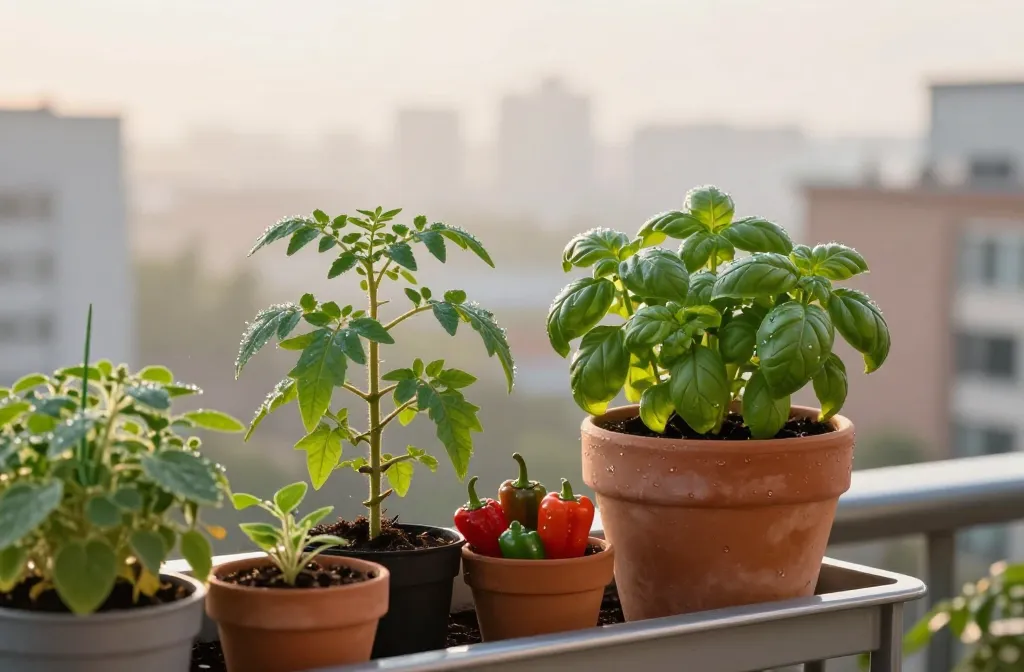
Your windowsill can be a jungle and a salad bar at the same time. The right plant pairings boost flavor, deter pests, and save precious square inches. You’ll grow more with less effort—aka the dream for small-space gardeners. Ready to stack the deck in your favor?
1. Basil + Tomatoes: The Balcony Power Couple
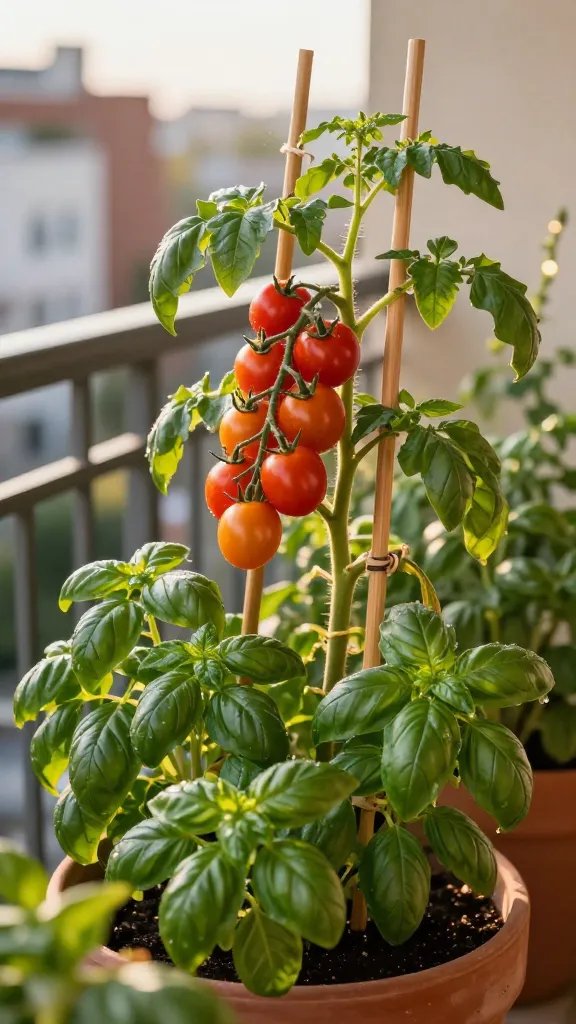
This classic combo earns its reputation, even in tight quarters. Basil helps repel pests that love tomato leaves, and the scent alone makes your patio smell like pizza night. Tomatoes appreciate the air circulation and basil’s shade on the potting soil.
Why It Works
- Pest control: Basil’s aromatic oils can deter whiteflies, aphids, and thrips that target tomatoes.
- Flavor boost: Many gardeners swear tomatoes grown near basil taste richer. Science is mixed, but your caprese won’t complain.
- Space savvy: Basil fills the understory while tomatoes climb a stake or trellis.
How To Pot Them
- Use a 5+ gallon container for compact tomato varieties (like ‘Tumbling Tom’ or ‘Patio’).
- Plant 2–3 basil plants around the rim for living mulch and easy harvesting.
- Add a tomato cage or slim trellis. Keep basil pruned to prevent crowding.
Best for: Sunny balconies, warm windows, and anyone who wants pesto on standby.
2. Peppers + Oregano + Chives: The Bite-Sized Salsa Trio
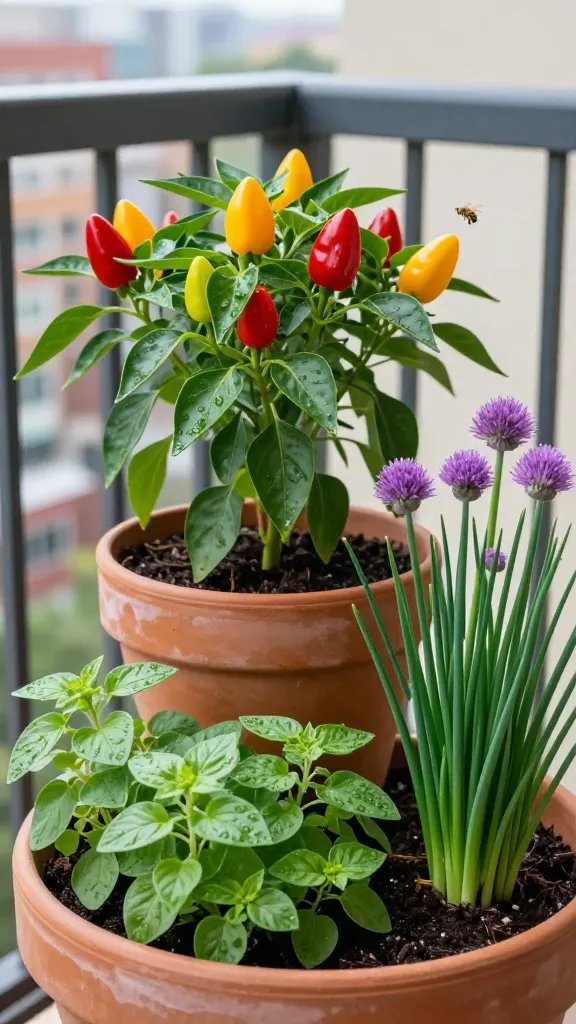
Peppers thrive with a pair of aromatic buddies that keep pests guessing. Oregano spreads gently, suppresses weeds, and perfumes the air. Chives pull double duty with edible leaves and purple blooms that attract pollinators.
Why It Works
- Aromatic shield: Oregano and chives can confuse pests like spider mites and aphids.
- Pollinator magnets: Chive blossoms bring bees for pepper flowers.
- Low maintenance: All three love similar watering and sun.
Container Game Plan
- Choose a 3–5 gallon pot for compact peppers (jalapeño, shishito, or mini bells).
- Plant a small oregano start on one side and a clump of chives on the other.
- Top-dress with compost mid-season; snip chives often to encourage new growth.
Best for: Cook-at-home folks who want quick garnishes and a steady pepper haul, FYI it looks cute.
3. Lettuce + Radish + Cilantro + Green Onions: The Cut-And-Come-Again Salad Box
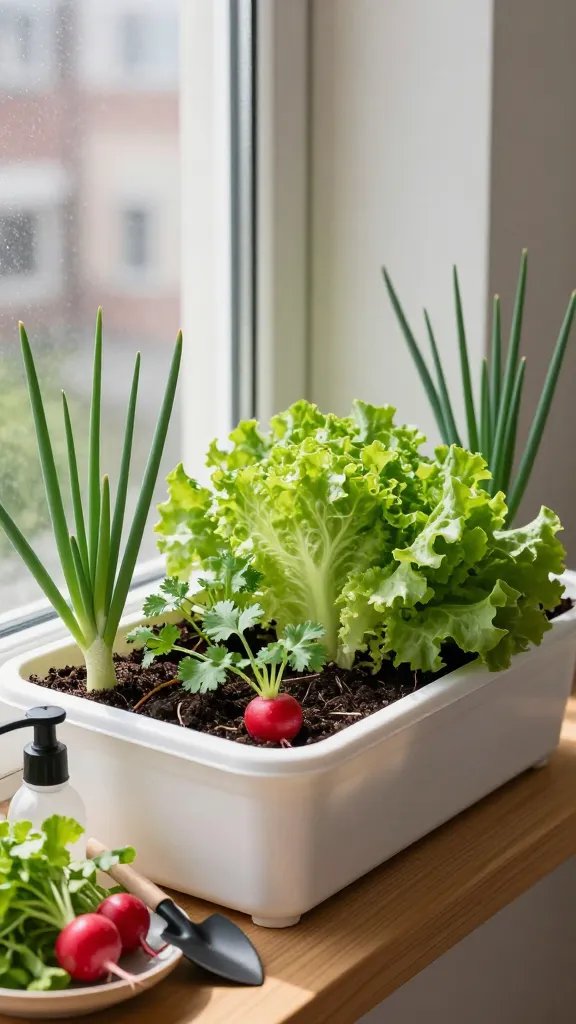
You don’t need a backyard to grow daily salads. This shallow-rooted crew plays nicely in a wide planter and grows fast. Stagger plantings and you’ll harvest for weeks without a grocery run.
Why It Works
- Speed + synergy: Radishes mature quickly and loosen soil for lettuce roots.
- Cool-season harmony: All four prefer cooler temps and partial sun—perfect for east-facing windows.
- Flavor balance: Crisp lettuce, peppery radish, bright cilantro, and zippy onions—DONE.
Planting Layout
- Use a rectangular window box (at least 8–10 inches deep).
- Plant a row of leaf lettuce (red oakleaf or butterhead), sprinkle radish seeds between, tuck cilantro at one end, and a clump of green onions at the other.
- Succession-sow radishes every 2 weeks to keep the crunch coming.
Quick Tips
- Harvest lettuce by snipping outer leaves so plants keep producing.
- Let one cilantro plant flower—pollinators love it and you’ll get coriander seeds.
Best for: Window gardeners who want constant salad without babysitting plants. Seriously, it’s easy.
4. Mint (In Its Own Pot) + Cucumbers + Dill: The Cooling Crew
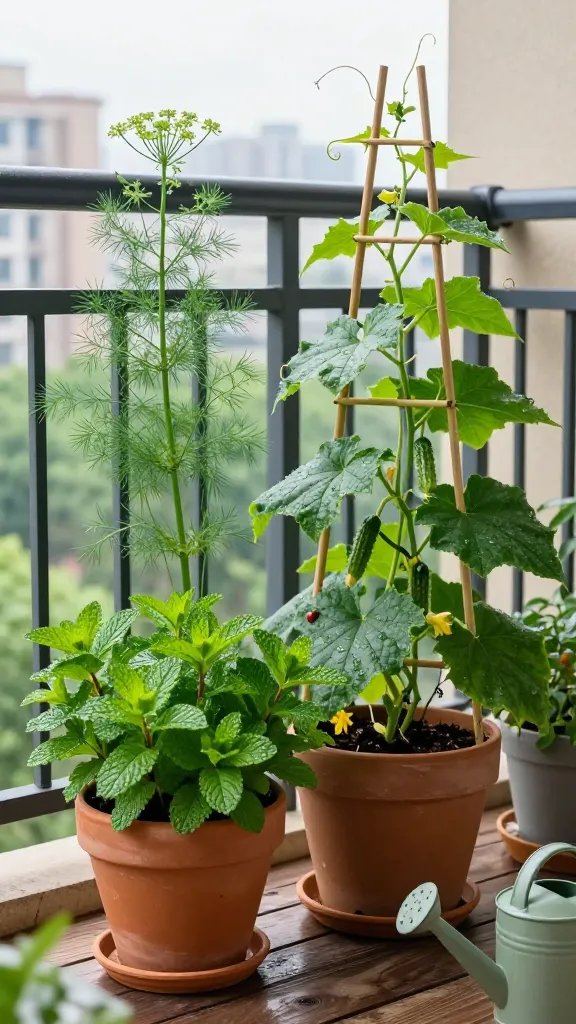
Mint spreads like gossip, so give it its own pot—then pair that pot next to cucumbers and dill. The scents complement each other, and the harvest screams summer. You’ll get crisp cukes, feathery dill for pickling, and mint for drinks.
Why It Works
- Pest pressure relief: Mint’s strong aroma can help deter cucumber beetles when nearby.
- Vertical efficiency: Cucumbers climb, dill grows tall and airy, mint stays contained in its pot.
- Kitchen synergy: Hello, tzatziki, pickles, and cucumber-mint water.
Smart Setup
- Grow cucumbers in a 5–7 gallon pot with a trellis; choose bush or compact types (‘Bush Champion’, ‘Spacemaster’).
- Plant dill in the same cucumber pot toward the back so it doesn’t shade vines.
- Place a separate mint pot right beside the cucumber container.
Care Notes
- Keep cucumbers evenly moist for straight, non-bitter fruit.
- Snip dill regularly; let one plant bolt for seeds.
- Trim mint hard to keep it lush and prevent legginess.
Best for: Sunny patios and anyone living their iced-beverage fantasy all summer.
5. Thyme + Rosemary + Sage + Parsley: The Mediterranean Micro-Grove
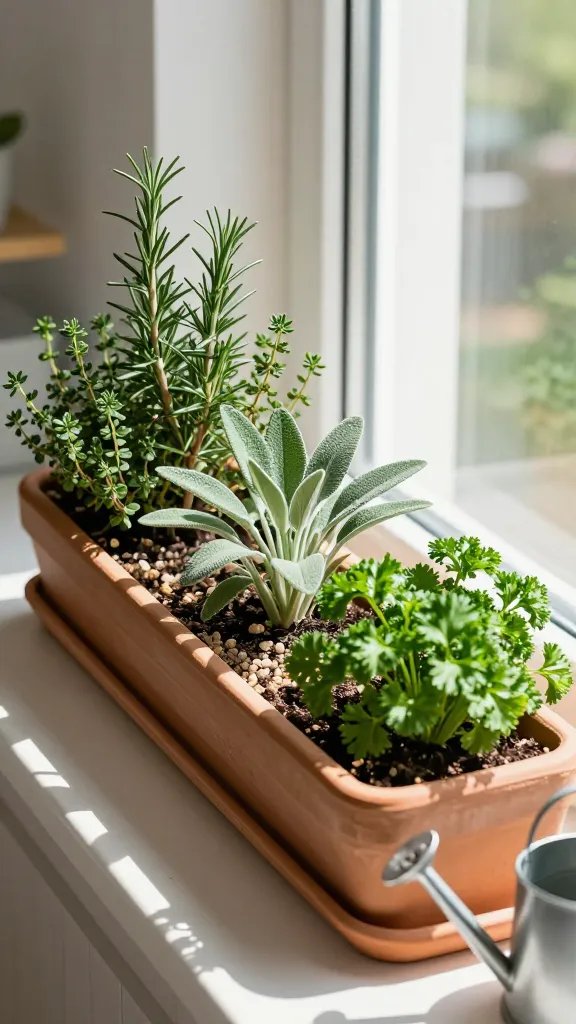
Bring the herb garden vibes indoors with sturdy perennials that love bright light and good drainage. Thyme, rosemary, and sage like it on the dry side, while parsley balances the mix with fresh, leafy greens. It’s a flavor toolkit in one tidy setup.
Why It Works
- Shared preferences: Lots of sun, excellent drainage, light feeding.
- Aromatic barrier: Strong essential oils help deter common indoor pests.
- Year-round harvest: These herbs keep producing with a little pruning.
Container Strategy
- Use a long trough planter with gritty soil (mix potting soil with perlite or coarse sand).
- Plant rosemary at one end (upright variety), sage at the other, thyme along the front edge, and parsley in a central pocket with slightly richer soil.
- Rotate the planter weekly for even sun exposure.
Maintenance
- Water deeply but infrequently; let the top inch dry between waterings.
- Trim rosemary and sage to prevent woody growth; harvest thyme by snipping tips.
- Feed lightly with a balanced organic fertilizer every 4–6 weeks.
Best for: Busy cooks who want robust, savory herbs on call—IMO, nothing beats fresh rosemary on roasted potatoes.
Bonus: 16 Edible Companion Combos At A Glance
- Tomato + Basil
- Tomato + Chives
- Pepper + Oregano
- Pepper + Chives
- Lettuce + Radish
- Lettuce + Green Onions
- Lettuce + Cilantro
- Cucumber + Dill
- Cucumber + Mint (nearby pot)
- Mint + Lemon Balm (separate pots, great tea duo)
- Rosemary + Thyme
- Rosemary + Sage
- Parsley + Chives
- Parsley + Lettuce
- Cilantro + Green Onions
- Dill + Parsley
General Tips For Apartment Companion Planting
- Match sunlight needs: Keep full-sun lovers together; shade-tolerant greens can share lower-light spots.
- Think vertical: Trellis tomatoes, cucumbers, and peppers to free surface space for herbs.
- Right-size pots: More soil equals more forgiveness. Under-potting = drama.
- Water strategies: Group plants by thirst. Mediterranean herbs prefer drier soil than leafy greens.
- Feed lightly: Overfertilizing leads to lush leaves and fewer fruits. Gentle, regular feedings win.
- Airflow matters: Avoid cramming pots. Good spacing prevents mildew and fungus gnats.
- Prune and pinch: Keep herbs bushy and productive. Harvest early and often—plants love the attention.
Small space doesn’t mean small harvest. Pair these companions and your apartment garden will work smarter, not harder. Start with one combo, taste the difference, and thank yourself every time dinner needs a last-minute upgrade.