
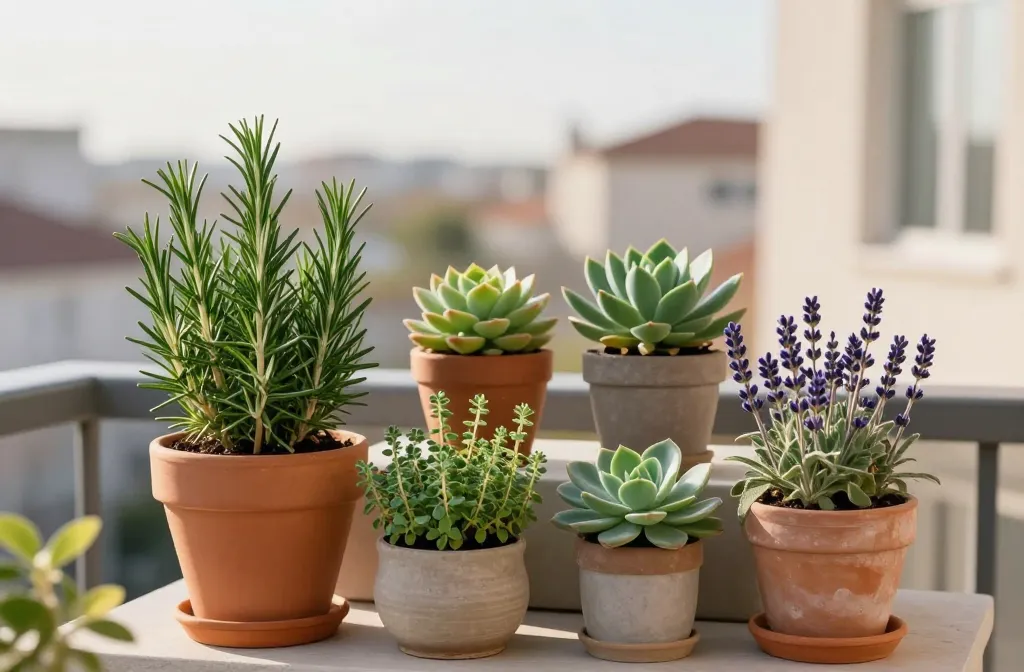
You love plants, but your suitcase stays packed—same. The secret to thriving greenery while you’re gone? Pair plants that help each other hoard moisture, repel pests, and tolerate neglect. These 12 drought-resistant pairings fit small spaces, forgive missed waterings, and still look lush. Ready to vacation-proof your window boxes and balcony pots?
1. Rosemary + Thyme: The Mediterranean Minimalists
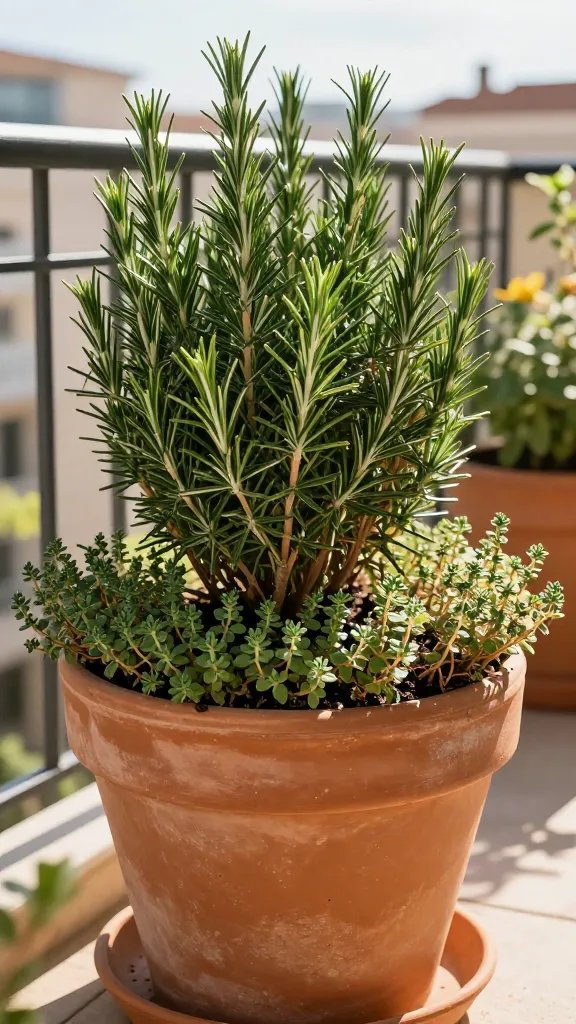
These two basically thrive on sun, breeze, and your absence. Rosemary brings upright structure while thyme spills and carpets the soil, shading the surface to reduce evaporation. Their oils deter pests, and both hate wet feet—so you can under-water without guilt.
Why It Works
- Shared needs: Full sun, lean soil, excellent drainage.
- Built-in mulch: Creeping thyme shades soil and slows moisture loss.
- Pest resistance: Aromatic foliage discourages aphids and whiteflies.
Use a terracotta pot with a gritty mix for ultimate drainage. Prune lightly to keep rosemary from going woody and let thyme trail over the rim for that chef’s-kiss look.
Quick Tips
- Choose upright rosemary cultivars (“Tuscan Blue”) with creeping thyme (“Elfin,” “Coccineus”).
- Water deeply, then ignore until soil is bone-dry 2 inches down.
- Snip and eat often—harvesting keeps both compact.
Perfect for sunny sills and balconies where you want an edible duo that survives long weekends away.
2. Aloe Vera + Haworthia: Succulent Roommates With Chill Energy
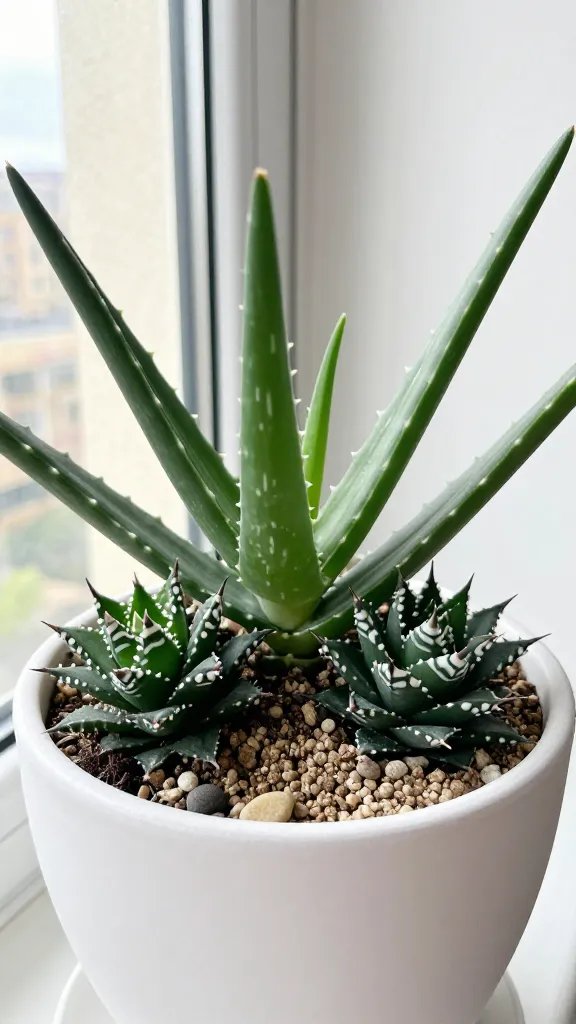
If you forget to water plants the way you forget old passwords, meet your new besties. Aloe stores water like a camel, while haworthia stays petite and unfussy in bright light or bright shade. They share similar soil needs and won’t fight for nutrients.
Why It Works
- Compatible watering: Infrequent, deep soaks; long dry spells.
- Visual contrast: Aloe’s thick spears + Haworthia’s patterned rosettes = instant design moment.
- Root harmony: Both prefer snug pots, so you won’t repot every five minutes.
Use a shallow, wide planter for airflow and fast drying. Add perlite or pumice, and keep them near a bright window. No saucer puddles—these two hate wet ankles.
Care Snapshot
- Light: Bright indirect to gentle direct sun (morning preferred).
- Water: Every 2–4 weeks; less in winter if your apartment runs cool.
- Soil: Cactus/succulent mix with extra grit.
Reach for this pairing when you want sculptural, low-effort plants that handle your three-day city escapes without drama.
3. Lavender + Sage: The Fragrant Sunbathers
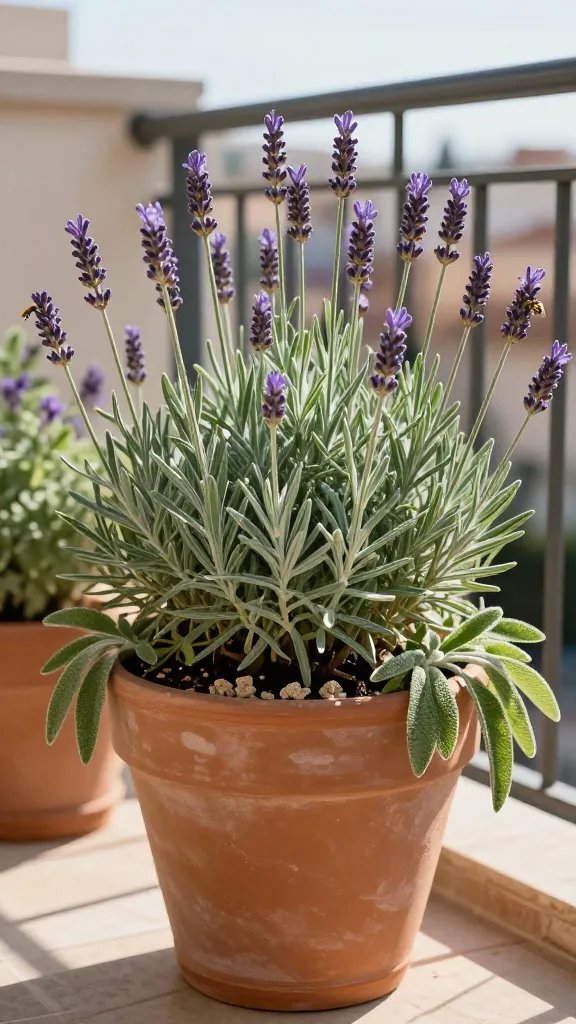
Crave a balcony that smells like a Provençal holiday? Lavender and sage sip water slowly, thrive in heat, and keep pests bored. Their silver-green leaves reflect light, which helps prevent water loss—smart and gorgeous.
Why It Works
- Heat tolerance: Both love blazing sun and moving air.
- Waxy foliage: Reduces transpiration, so they stay plump longer.
- Pollinator buffet: Bees show up for lavender blooms, then patrol for pests—free security system.
Plant lavender toward the pot’s center and sage along the edge to avoid leafy squabbles. Choose compact varieties to keep things apartment-sized and tidy.
Plant Choices
- Lavender: ‘Hidcote’ or ‘Munstead’ for containers.
- Sage: Common culinary sage or purple-leaf sage for color contrast.
Water deeply when the top few inches feel dry and walk away. FYI, skip rich fertilizer—both prefer lean, well-drained soil and will actually sulk if you spoil them.
Use this pairing if you travel often and want a fragrant, edible, pollinator-friendly duo that shrugs off long, hot weeks.
4. Snake Plant + ZZ Plant: The Nearly Unkillable Power Couple
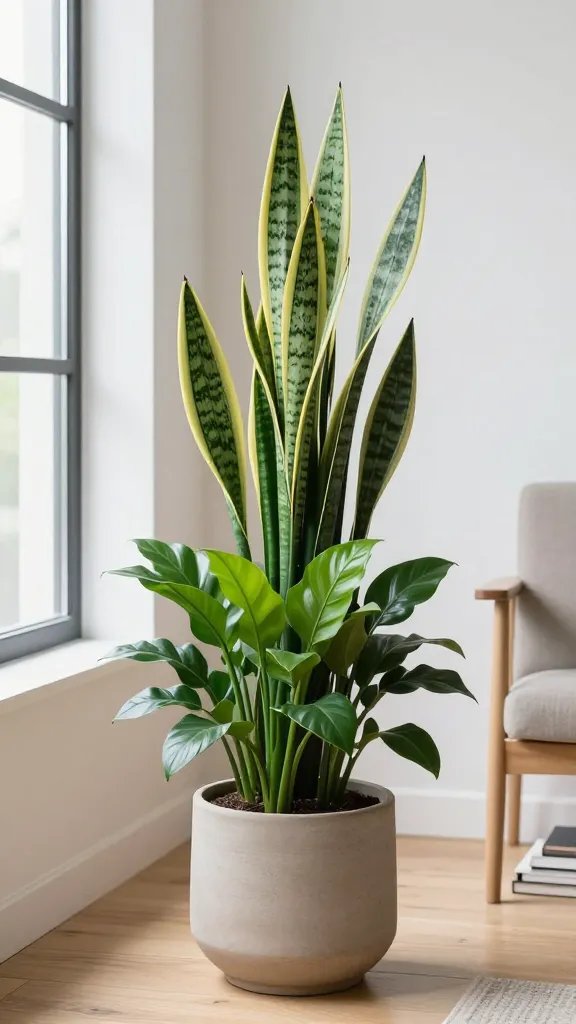
Want drama with zero effort? Snake plant brings upright, architectural leaves, while ZZ plant adds glossy, deep-green fronds. Both tolerate low light, weird watering schedules, and roommates who never crack a window.
Why It Works
- Drought pros: Rhizomes store water; both forgive neglect.
- Low-light tolerance: Perfect for shady corners or north-facing windows.
- Airy vibes: Clean lines and lush texture without the high-maintenance attitude.
Co-pot in a large container or cluster separate pots for a layered, design-forward look. Use a chunky, fast-draining mix, and don’t baby them—seriously, overwatering is the only way to fail here.
Care Cheat Sheet
- Light: Low to bright indirect; keep out of harsh midday sun.
- Water: Every 3–6 weeks depending on season and light.
- Soil: Potting mix with bark or perlite; excellent drainage.
Choose this pairing for hallways, bathrooms, or any spot where plants go to “think about their life choices.” They’ll still thrive while you’re off collecting passport stamps.
5. Cherry Tomatoes + Basil + Marigold + Oregano + Chives + Nasturtium: The Balcony Kitchen Guild
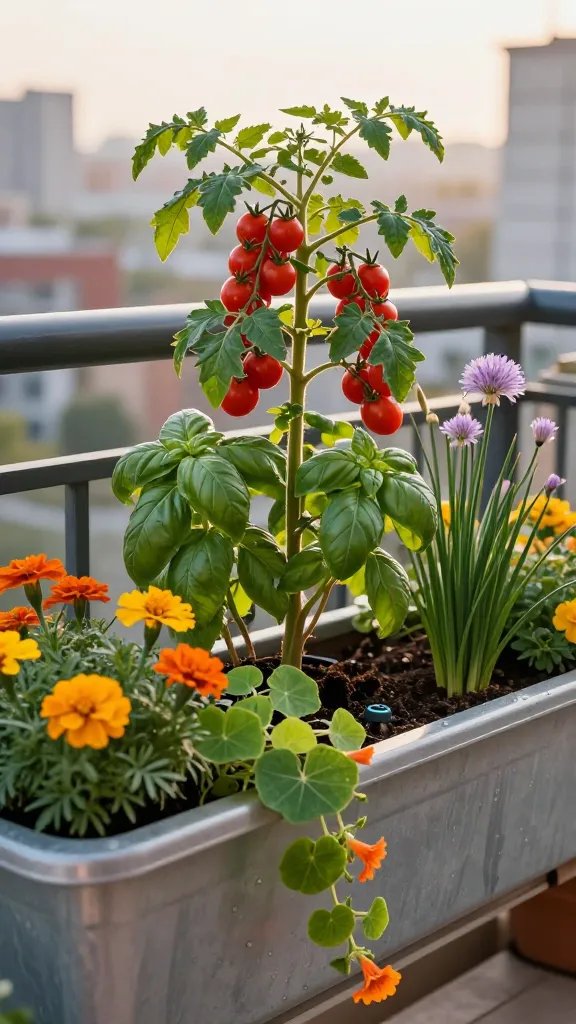
Okay, this one’s the overachiever. It’s six drought-tolerant friends working like a tiny ecosystem in a single container or trough. They share sun, discourage pests, and give you salads and sauces on demand.
Why It Works
- Mutual benefits: Basil enhances tomato flavor and helps confuse pests; marigolds deter nematodes; oregano and chives act like savory groundcovers; nasturtium traps aphids away from your tomatoes.
- Water-wise layering: Dense foliage shades soil and slows evaporation.
- Edible abundance: You can harvest constantly, which actually keeps growth in check.
Use a big container with sun exposure and a tomato cage. Plant tomato in the center, basil on the sunny side, marigolds as corner buddies, oregano and chives as edging, and nasturtium to cascade over the rim like a dramatic scarf.
Container Setup
- Size: 18–24 inch wide pot or railing trough with deep volume.
- Soil: High-quality potting mix with added compost and perlite.
- Watering: Deep soak, then let the top few inches dry. Mulch with straw or coco coir to lock in moisture.
Smart Extras
- Add a self-watering insert or a wick system if you take week-long trips.
- Choose dwarf or determinate tomatoes (‘Tiny Tim,’ ‘Patio Princess’).
- Pinch basil often and harvest chives to keep airflow around the tomato.
Use this mini guild when you want maximum flavor and pest control in minimal space—and you still plan to disappear for long weekends.
Ready to try these pairings? Pick one that fits your light and vibe, set it up with fast-draining soil, and water deeply before you jet. Then come home to plants that look suspiciously better without you—no hard feelings, we promise.