
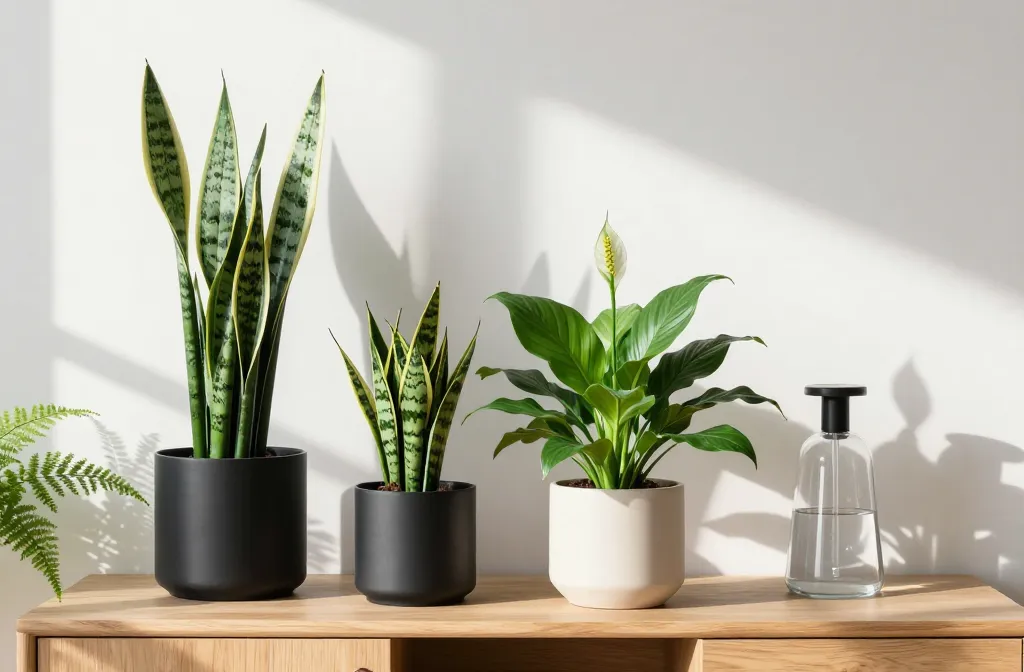
Your plants already look cute—now make them work overtime. These powerhouse pairings filter indoor air, boost humidity, and look like they belong on a design blog. You’ll get cleaner vibes, fewer funky odors, and lush textures that make your space feel like a greenhouse getaway. Ready to build duos and trios that thrive together? Let’s plant some magic.
1. Snake Plant + Peace Lily: The Low-Light Clean Team
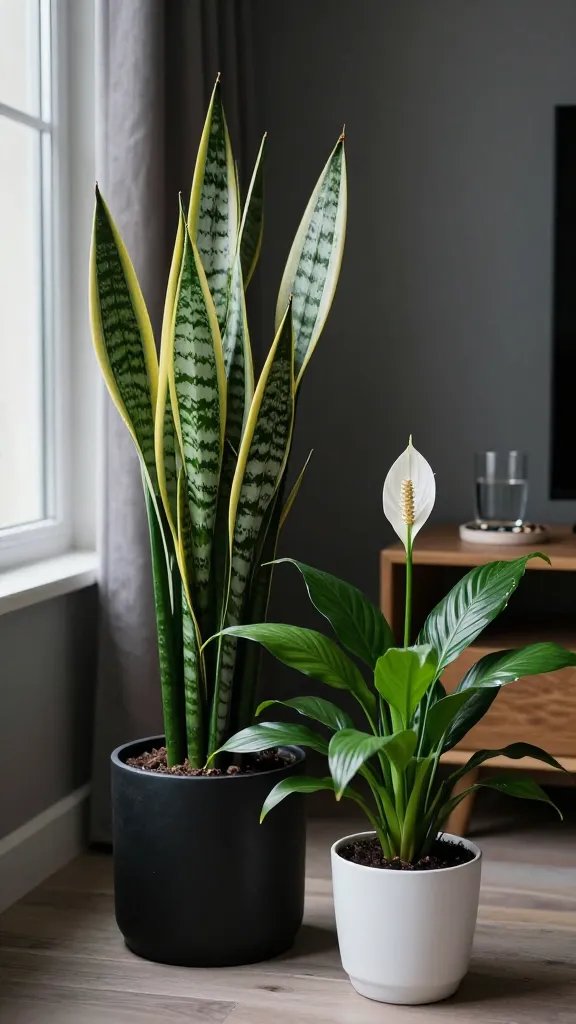
This duo crushes it in dim corners where most plants give up. The Snake Plant acts like a stoic air sentinel, while the Peace Lily drinks up humidity and blooms when it’s happy. Together they target common indoor pollutants and look incredibly sleek.
Why It Works
- Snake Plant (Sansevieria): Hardy, tolerates neglect, filters formaldehyde and benzene, and thrives in low-light zones.
- Peace Lily (Spathiphyllum): Loves medium to low light, flags droop when thirsty (aka built-in reminder), and helps reduce mold spores and VOCs.
Place them in bedrooms, entryways, or bathrooms with weak natural light. The lily adds lush leaves and white blooms, while the snake plant provides vertical drama that never looks fussy.
Care Tips
- Water the Peace Lily weekly; water the Snake Plant every 2–4 weeks. Separate watering days save both.
- Use a well-draining peat-free mix and pots with drainage holes.
- Keep away from cold drafts—both hate it, even if they pretend they don’t.
Use this pair when you want a forgiving starter combo that still purifies like a champ.
2. Areca Palm + Boston Fern: The Humidity Dream Team
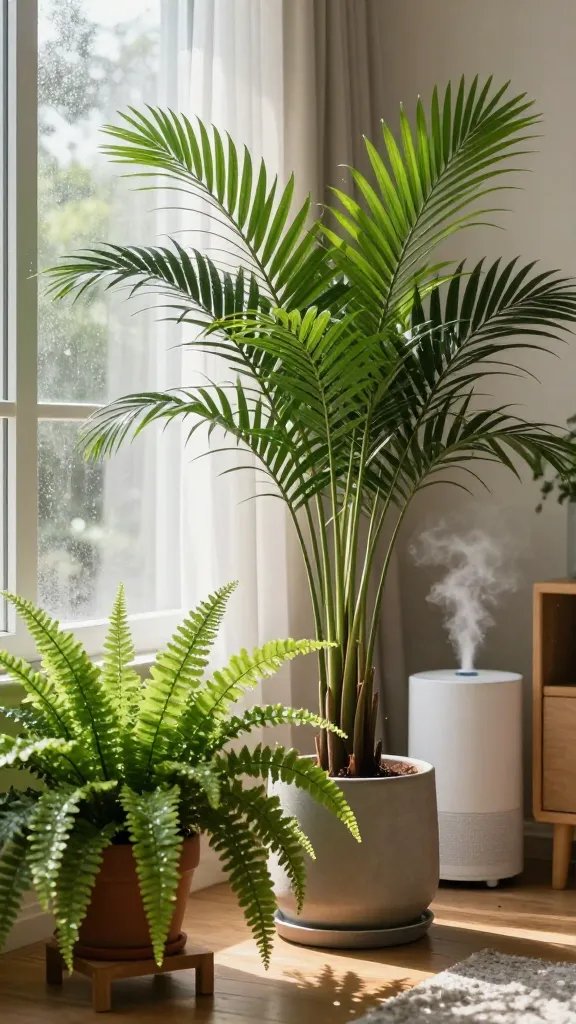
If your air feels drier than a stand-up comic’s wit, this combo rescues your skin and your sinuses. The Areca Palm pumps moisture into the room while the Boston Fern laps it up and filters airborne nasties. The result? Lush, tropical vibes and smoother breathing.
Why It Works
- Areca Palm: Top-tier for humidifying the air, filters xylene and toluene, and adds graceful fronds that scream “indoor retreat.”
- Boston Fern: Excellent at absorbing indoor pollutants and thrives in consistently moist soil and higher humidity.
Put them near bright, indirect light—think a few feet off a sunny window. The fern nests under the palm’s fronds, catching the microclimate the palm creates. It’s like VIP seating for plants.
Care Tips
- Mist the fern regularly or set both on a pebble tray to boost humidity.
- Water the palm when the top inch of soil dries; keep the fern evenly moist but not soggy.
- Trim crispy fronds fast—browning often signals low humidity.
Pick this combo for living rooms or home offices where you want fresh air and an instant jungle aesthetic. FYI: dust the fronds monthly for peak air-scrubbing power.
3. Rubber Plant + Pothos: The Stylish Pollutant-Busters
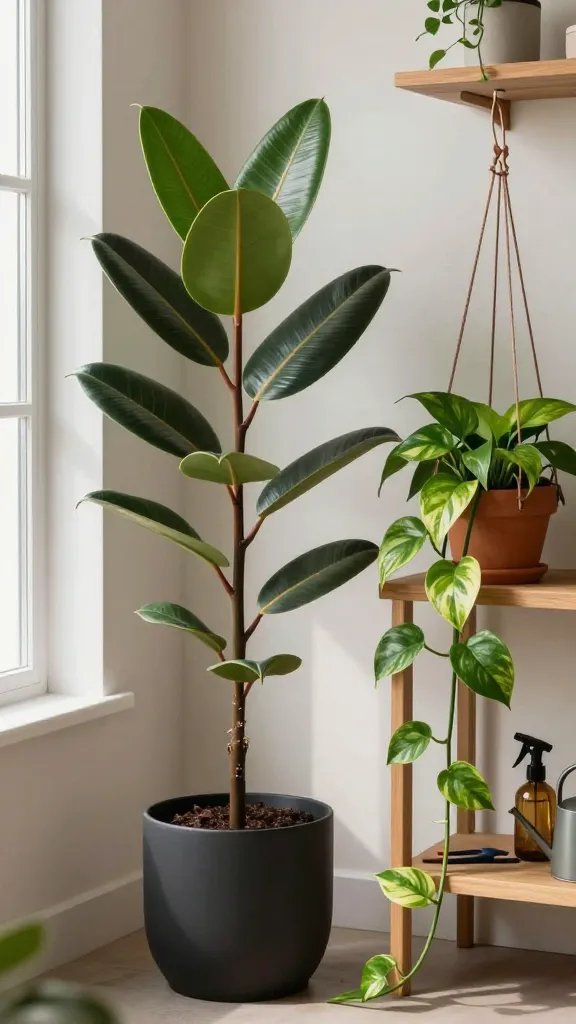
Want bold foliage and effortless care? Meet the Rubber Plant and Pothos, a duo that tackles indoor toxins while looking like a curated designer vignette. Rubber Plant supplies broad, glossy leaves; Pothos adds cascading vines for texture and movement.
Why It Works
- Rubber Plant (Ficus elastica): Filters formaldehyde, adds dramatic height, and thrives in bright, indirect light.
- Pothos (Epipremnum aureum): Extremely forgiving, grows fast, and removes a cocktail of common VOCs.
Grow the Rubber Plant in a floor pot and let a Pothos trail from a nearby shelf or the same planter’s edge. The Pothos softens the Rubber Plant’s upright look and creates the layered, editorial vibe you see on Pinterest.
Care Tips
- Let the Rubber Plant dry slightly between waterings; water Pothos when the top inch is dry.
- Rotate both every few weeks for even growth and stronger stems.
- Wipe Rubber Plant leaves with a damp cloth to keep pores clear for better gas exchange.
Use this combo in bright living spaces or dining rooms. It’s a chic, low-maintenance way to upgrade air quality and style, IMO.
4. Spider Plant + Dracaena: The Office-Ready Detox Duo
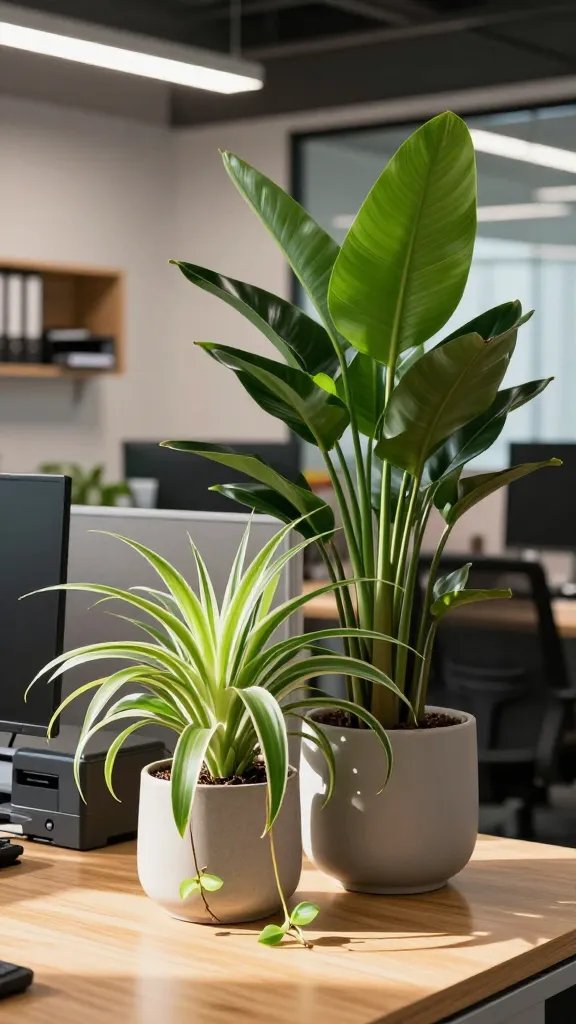
This pair thrives under inconsistent office lights and temperature swings. The Spider Plant multiplies like it’s trying to win a reality show, while Dracaena varieties quietly handle airborne toxins from paints, printers, and off-gassing furniture.
Why It Works
- Spider Plant (Chlorophytum comosum): Known for gobbling up formaldehyde and carbon monoxide and pumping oxygen like a champ.
- Dracaena (e.g., ‘Janet Craig,’ ‘Warneckii’): Filters trichloroethylene, benzene, and more—basically, everyday office fumes.
Place a Dracaena as the anchor plant and tuck Spider Plants around it or in hanging baskets. The Spider Plant’s variegated leaves brighten boring corners and balance Dracaena’s upright habit.
Care Tips
- Water Spider Plants when the soil dries halfway; Dracaena prefers slightly drier conditions.
- Avoid fluoride-heavy tap water if possible; both can show brown tips. Use filtered or let tap water sit overnight.
- Bright, indirect light works best, but both tolerate moderate light without drama.
Deploy this combo in workspaces, studies, or rental apartments with mystery ventilation. It’s durable, forgiving, and seriously effective.
5. ZZ Plant + Chinese Evergreen: The “Set-It-And-Forget-It” Clean-Air Pair
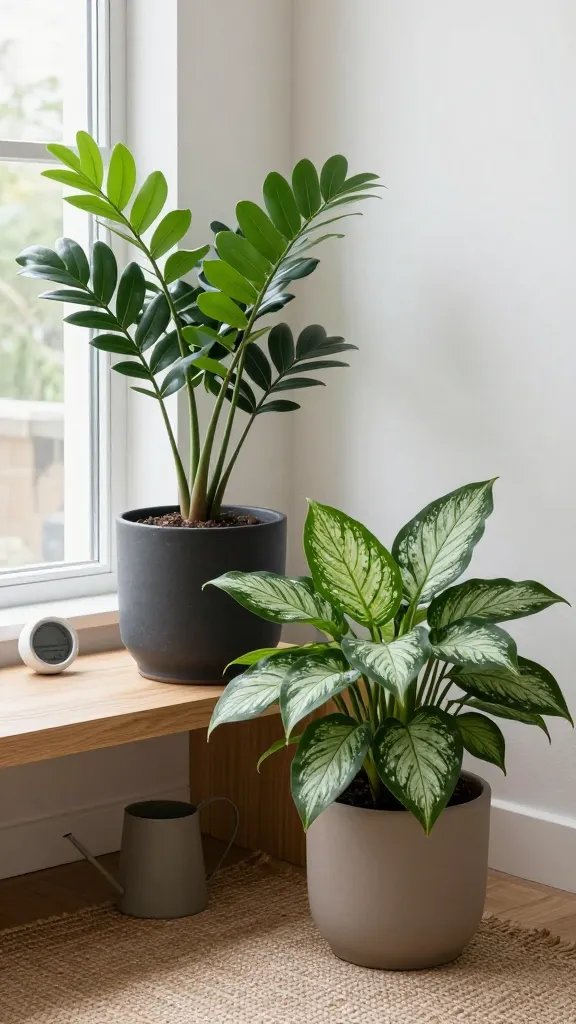
If you identify as a “sometimes I forget to water” person, welcome home. The ZZ Plant and Chinese Evergreen bring hardy foliage and solid air filtration without demanding constant attention. They handle lower light, dry air, and inconsistent schedules like pros.
Why It Works
- ZZ Plant (Zamioculcas zamiifolia): Stores water in rhizomes, tolerates low light, and filters common indoor pollutants.
- Chinese Evergreen (Aglaonema): Excellent for dim rooms, comes in gorgeous patterned leaves, and helps reduce VOCs.
Use them as a duo in hallways, guest rooms, or any nook where sunlight plays hard to get. The contrast of glossy, architectural ZZ leaves with patterned Aglaonema creates interest without the drama.
Care Tips
- Water the ZZ every 3–4 weeks; allow the Aglaonema to dry slightly between waterings.
- Keep both away from direct midday sun to prevent leaf scorch.
- Dust leaves monthly to boost light absorption and keep the air-cleaning engine humming.
Choose this pairing when you want low effort with high payoff—perfect for busy schedules or forgetful plant parents. Trust me, they’ll still look good when you remember them next Tuesday.
Quick Safety and Placement Notes
- Pets and Kids: Many of these plants can be mildly toxic if ingested (Peace Lily, Pothos, Dracaena, Rubber Plant, ZZ, Chinese Evergreen). Keep out of reach or choose pet-safe alternatives like Spider Plant and some ferns.
- Airflow Matters: Combine your plants with regular ventilation. Crack a window when weather allows.
- Cluster for Power: Grouping plants increases local humidity and amplifies purification effects.
- Light = Life: Even “low-light” plants prefer bright, indirect light. Dim ≠ no light.
Optional Add-Ins For Next-Level Clean Air
- Activated Charcoal Disks in planters to adsorb odors.
- LECA or Pumice mixed into soil for better drainage and fewer root rot episodes.
- Self-Watering Inserts to keep moisture steady—great for ferns and peace lilies.
Ready to breathe easier? Pair one or two combos, place them where you hang out most, and keep up with light dusting and sane watering. With these companion plants, your space will look lush, smell fresher, and feel calmer—seriously, your lungs will say “thank you.”