
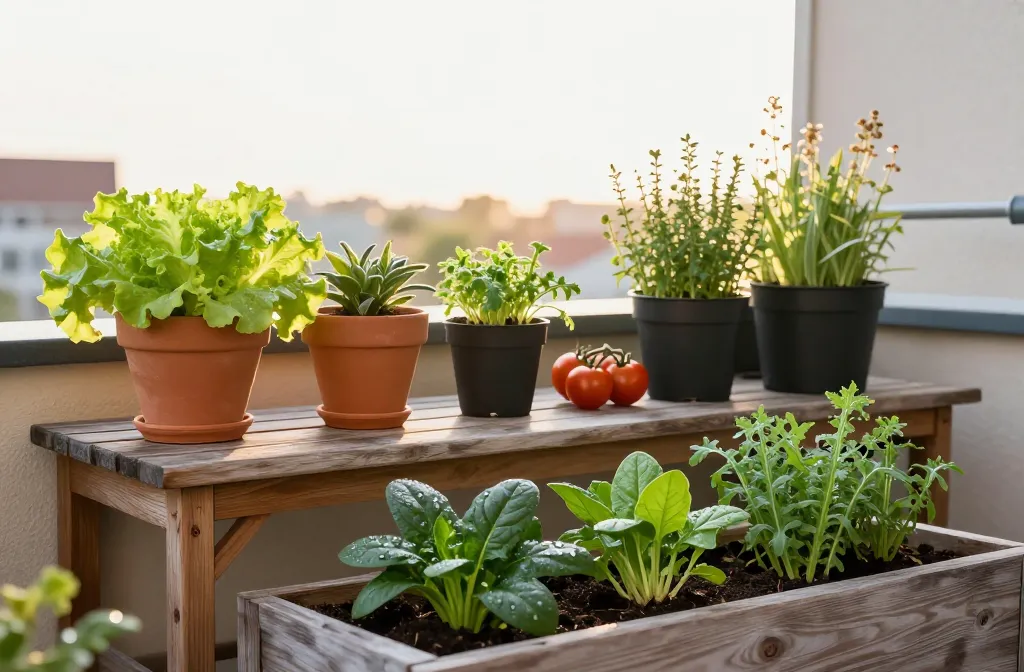
Want fresh veggies without tearing up your yard? Containers are your shortcut. You get fast wins, fewer pests, and way more control. Grab a couple pots, a bag of soil, and let’s turn your patio or balcony into a tiny farm—no farm boots required.
These picks grow fast, taste amazing, and don’t throw diva fits when you forget to water once. We’ll cover what to plant, what pots to use, and how not to accidentally drown anything. Ready to harvest your first salad in weeks?
1. Leafy Legends: Lettuce, Spinach, And Arugula
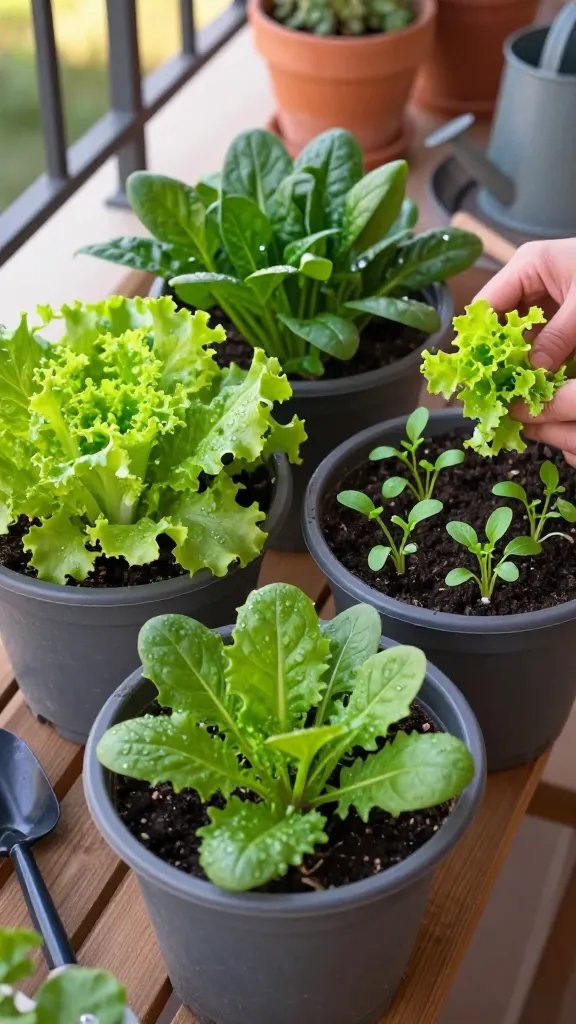
If you want instant gratification, start here. Leafy greens love containers, grow in cool weather, and give you repeat harvests. You cut, they come back—like a salad subscription you don’t have to cancel.
Why They’re Awesome
- Fast harvests: Baby greens in 3–4 weeks.
- Compact roots: Thrive in shallow pots.
- Cut-and-come-again: Multiple harvests from one planting.
Use a wide container 6–8 inches deep. Fill it with high-quality potting mix—not garden soil, which compacts and suffocates roots. Sow seeds thickly for baby greens or space 4–6 inches apart for full heads. Keep the soil consistently moist, not soaked.
Tips
- Shade buffer: In hot weather, give afternoon shade to prevent bitterness.
- Water check: Greens wilt dramatically when thirsty, then perk back up. Don’t let it happen daily.
- Fertilizer: A light, weekly liquid feed keeps leaves tender and sweet.
Harvest outer leaves first and let centers keep growing. Perfect for bowls, wraps, and smug “I grew this” photos. FYI, cooler spring and fall temps give the best flavor.
2. Snack Champions: Cherry Tomatoes, Peppers, And Bush Beans
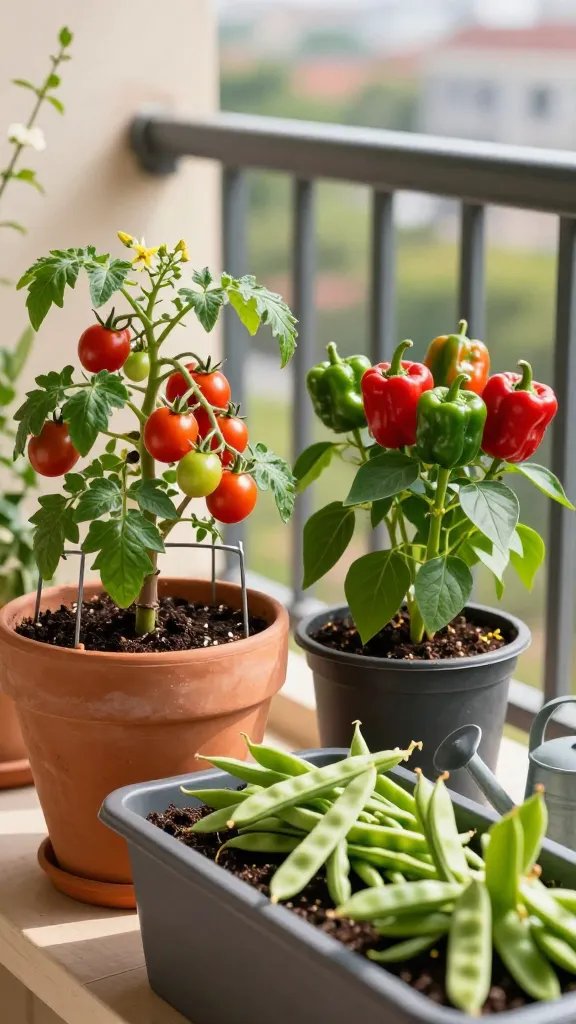
Want that “I grew real food” thrill? These give huge flavor per square inch. Cherry tomatoes, compact peppers, and bush beans shine in pots and keep producing for months.
Container Setup
- Cherry tomatoes: 5+ gallon pot with a cage or stake.
- Peppers: 3–5 gallon pot, warm spot, full sun.
- Bush beans: 8–10 inch deep window box or 3–5 gallon pot.
Use a light, well-draining potting mix and water deeply when the top inch dries. Tomatoes and peppers love steady feeding: mix a slow-release fertilizer at planting, then boost with a tomato/vegetable liquid feed every 2–3 weeks.
Pro Moves
- Choose the right types: Look for “dwarf,” “patio,” or “bush” on the tag.
- Sun worship: 6–8 hours daily equals sweeter fruit and more blooms.
- Prune lightly: Remove lower tomato leaves that touch soil to prevent disease.
- Bean bonus: Bush beans fix nitrogen—good neighbors for other veggies.
These crops give you big flavor on small footprints. Pop cherry tomatoes like candy, slice peppers for tacos, and steam beans for a quick side. Seriously, you’ll wonder why you ever bought store tomatoes.
3. Root Crew: Radishes, Carrots, And Spring Onions
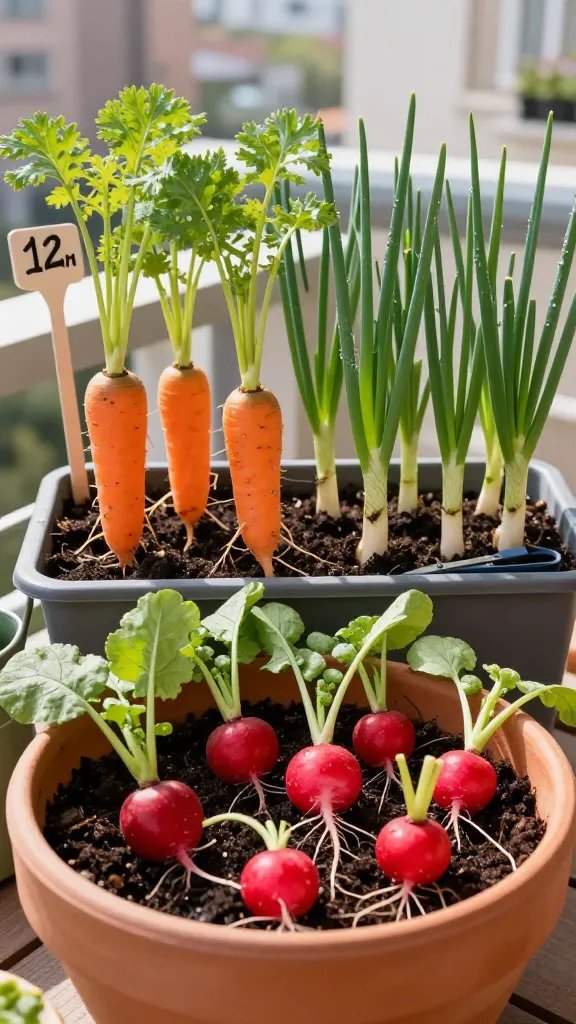
Roots in containers? Totally doable—and surprisingly fun. You’ll get fast radishes, tender baby carrots, and scallions that make everything taste fresher.
Right Pots = Better Roots
- Radishes: Shallow but wide pot, 6–8 inches deep.
- Carrots: Go deep—12 inches minimum. Try “Parisian,” “Thumbelina,” or “Nantes.”
- Spring onions: 6–8 inch deep box; pack them in closely.
Root crops hate being transplanted. Sow seeds directly and keep soil consistently moist as they germinate. Thin seedlings (yes, it hurts) so roots have room—crowding equals spindly results.
Keys To Success
- Loose mix: Add perlite for drainage so roots don’t fork or stunt.
- Steady moisture: Uneven watering causes split roots and spicy radishes (not in a good way).
- Cooler temps: Plant spring/fall for the sweetest flavor.
Radishes mature in as little as 25 days—beginner gold. Carrots take longer, but pull one early just to taste your future. Green onions? Snip as needed and replant more every couple weeks for a steady supply.
4. Herb Heroes: Basil, Mint, Chives, Parsley, And Cilantro
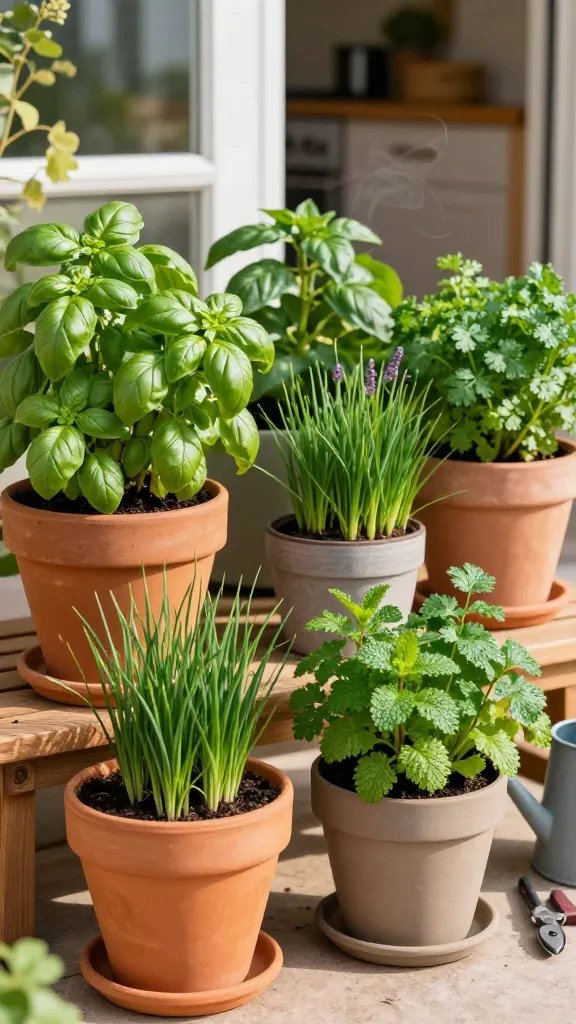
Herbs make everything taste like you tried harder than you did. They love containers, smell incredible, and keep your kitchen stocked. Plus, they look cute—no lie.
Best Herbs For Beginners
- Basil: Sun-lover; pinch often for bushy growth.
- Mint: Grow in its own pot unless you want mint forever and everywhere.
- Chives: Tough, perennial, mild onion flavor.
- Parsley: Curly or flat-leaf; steady producer.
- Cilantro: Cool weather champ; bolts in heat—grow in spring/fall.
Use 6–10 inch pots with drainage holes. Water when the top inch dries, and feed lightly every few weeks. Harvest often—especially basil—to keep them productive and prevent flowering (flowering tells the plant to retire, and we are not allowing that).
Smart Moves
- Morning sun: Herbs love at least 4–6 hours.
- Pinch basil tips: More tips = more leaves. Trust me.
- Rotate pots: Turn them weekly for even growth and sturdier stems.
- Cilantro plan: Sow new seeds every 2–3 weeks to stay ahead of bolting.
Herbs earn their space with huge flavor returns. Toss into pasta, eggs, salads, or drinks. Your future self will thank you when pesto basically grows itself on your balcony.
5. Space-Savvy Stars: Cucumbers (Bush), Zucchini (Compact), And Sugar Snap Peas
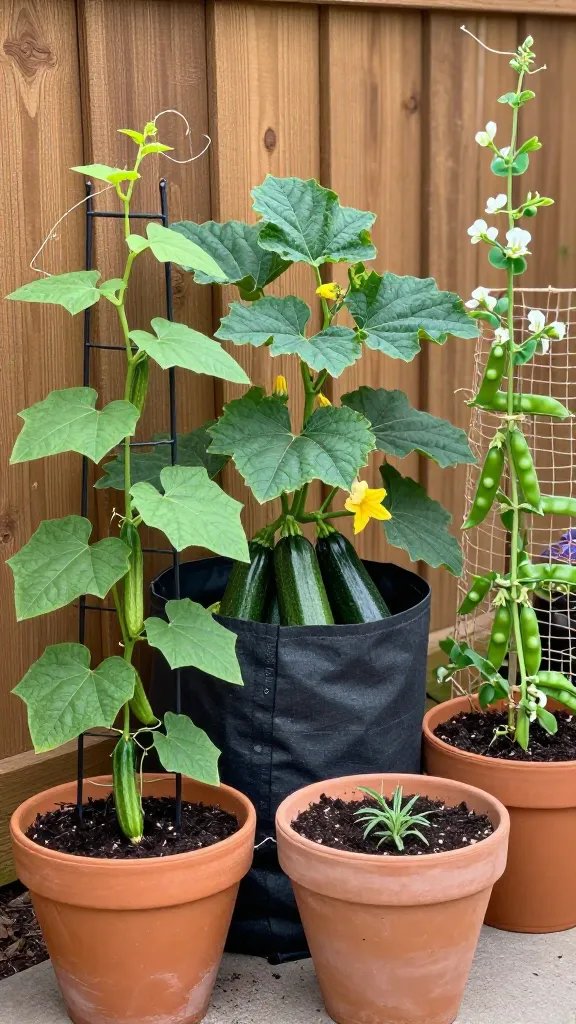
Think containers can’t handle bigger plants? They can—if you choose the right types and give them something to climb. These varieties deliver big harvests without hijacking your patio.
Choose Compact, Train The Vines
- Bush cucumbers: “Bush Champion,” “Patio Snacker”—grow in 5–7 gallon pots with a small trellis.
- Compact zucchini: “Raven,” “Black Beauty,” or “Astia” in 10+ gallon pots.
- Sugar snap peas: Cool-season, climb twine or a mesh panel in 3–5 gallon containers.
Cukes and zukes demand full sun, regular water, and consistent feeding. Peas prefer cooler temps and will thank you for spring or fall conditions. Trellis early so you don’t wrestle vines later—nobody wins that match.
Care And Harvest Hacks
- Water rhythm: Deep watering keeps fruit from bittering or turning misshapen.
- Pollination help: Gently tap flowers or plant nearby blooms to attract bees.
- Pick small, pick often: Zucchini and cukes taste better younger and keep the plant producing.
- Pea trick: Harvest every other day when pods plump. Eat half before you reach the kitchen—mandatory.
These give that “real harvest” energy fast. Peas snack straight off the vine, cukes crunch beautifully, and zucchini turns into fritters in minutes. IMO, this is where container gardening starts to feel downright luxurious.
Bonus Essentials For All Containers
- Drainage holes: Non-negotiable. Add a saucer to protect decks.
- High-quality potting mix: Light, fluffy, and made for containers.
- Mulch the top: A thin layer of straw or shredded leaves reduces watering needs.
- Watering test: Stick a finger an inch deep. Dry? Water slowly until it drains.
- Sun math: Track your sun for a day. Most veggies want 6–8 hours.
- Rotate crops seasonally: Spring greens → summer fruiting crops → fall roots/greens.
Dial in these basics and everything grows easier. You’ll spend less time troubleshooting and more time eating your victories.
Ready to pot up your first mini farm? Start with one or two containers and build from there. The first harvest hits different—you grew it, you eat it, and it tastes like summer. Now go plant something and brag about it later.