
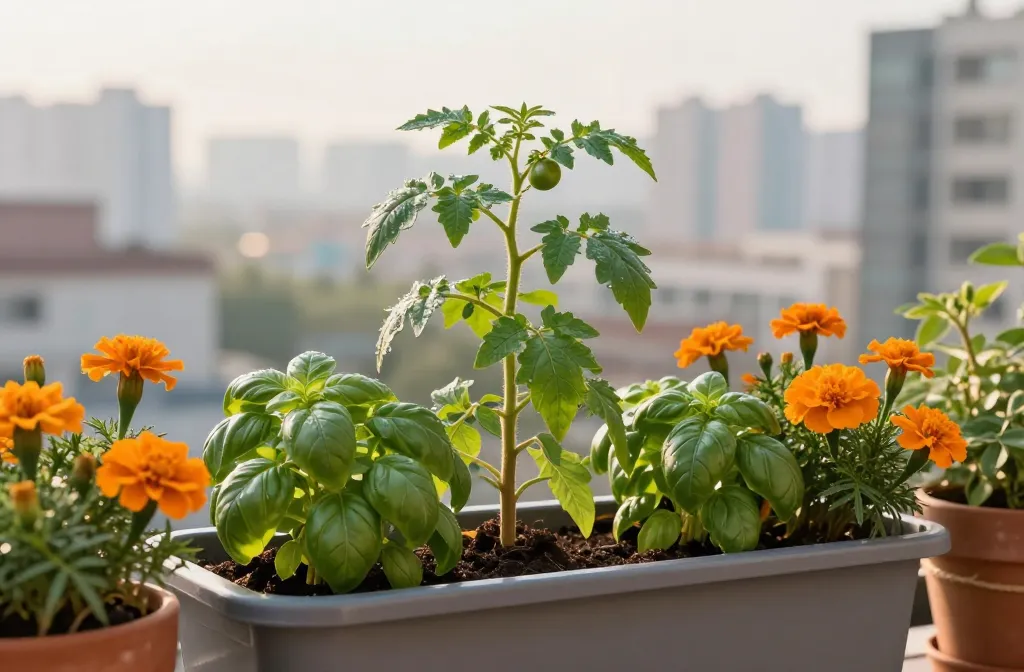
Short on space but big on plant dreams? Companion planting lets your tiny balcony or sunny windowsill work like a mini farm. These five setups pack in three plant partners each—15 no-fail combos that feed, protect, and boost each other. Ready to turn a couple of pots into a snack factory? Let’s plant smart, not hard.
1. The Salsa Box: Tomatoes + Basil + Marigolds
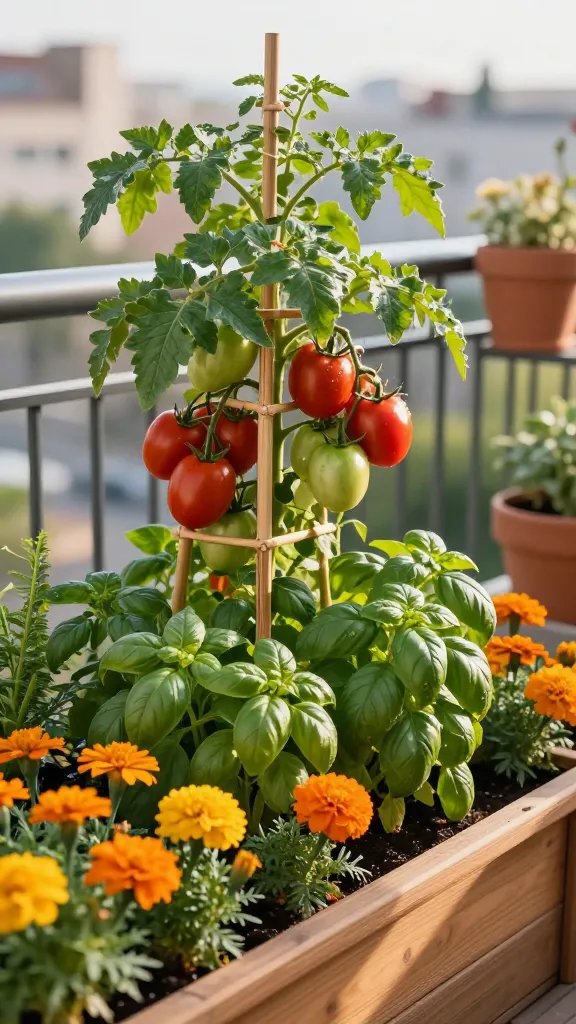
This trio is the poster child of apartment gardens for a reason. Tomatoes get support and flavor, basil brings fragrance and pest resistance, and marigolds patrol for bugs like tiny floral bouncers. It looks gorgeous and smells like summer.
Why It Works
- Basil helps deter thrips and may improve tomato taste (anecdotally, but IMO it’s real).
- Marigolds confuse and repel pests like whiteflies and aphids.
- Tomatoes provide light shade under their canopy for basil in hot afternoons.
Container Setup
- One 10–15 gallon pot or a rectangular planter.
- 1 tomato (dwarf/compact varieties like ‘Tiny Tim’ or ‘Patio’), 2–3 basil plants, 2 marigolds around edges.
- Use a stake or compact tomato cage immediately to avoid drama later.
Care Tips
- Full sun (6–8 hours). Water deeply; keep tomatoes evenly moist.
- Pinch basil tips often for bushy growth. Use those in everything—pesto, pizza, your life.
- Feed with a balanced, slow-release fertilizer at planting; top up with liquid feed every 2–3 weeks once fruit sets.
Benefits: Fewer pests, better airflow, and a steady supply of caprese-ready goodness. Perfect for a sunny balcony or fire escape ledge (safely). FYI: avoid pairing tomatoes near dill or potatoes in tiny spaces.
2. The Pollinator Patio: Cucumbers + Nasturtiums + Chives
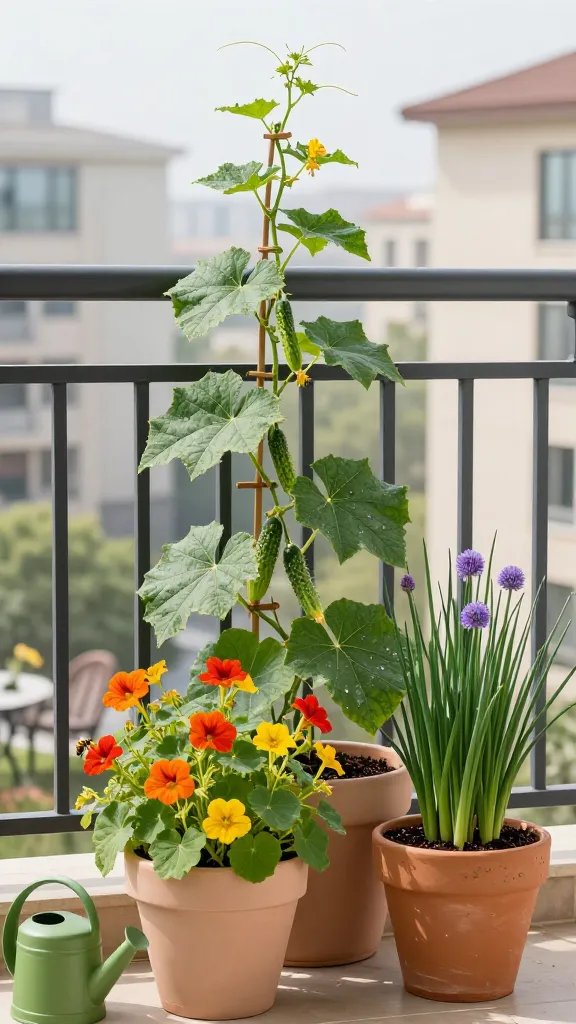
If you love crunchy cucumbers but think they need a field, surprise: they’ll climb a balcony trellis like pros. Nasturtiums act as an aphid magnet, pulling pests off your cukes, while chives shoo away beetles and add oniony charm. Plus, nasturtium leaves and flowers are edible—peppery and pretty.
Why It Works
- Cucumbers climb and free up floor space.
- Nasturtiums attract beneficial insects and distract pests.
- Chives deter cucumber beetles with their sulfur compounds.
Container Setup
- At least a 10–12 gallon pot with a sturdy trellis.
- 1–2 bush or compact cucumbers (try ‘Bush Pickle’ or ‘Spacemaster’), 1–2 nasturtiums spilling over edges, a small clump of chives tucked in a corner.
- Well-draining potting mix; add compost for staying power.
Care Tips
- Full sun. Keep soil consistently moist to avoid bitter fruit.
- Harvest cucumbers small for tender crunch. Pick often to keep production high.
- Trim chives and toss in eggs, salads, and buttered toast. You’re welcome.
Benefits: Built-in pest management and a vertical harvest that saves space. Great for railings or along a sunny wall with trellis support.
3. The Herb Power Trio: Mint (Containered) + Lettuce + Radishes
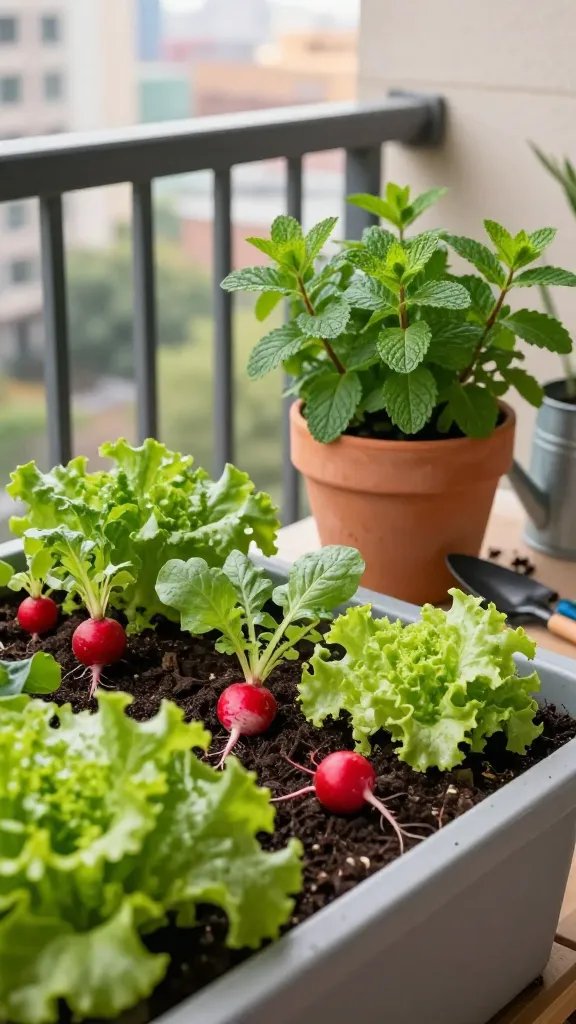
Need quick wins? This combo gives you speedy salads with minimal fuss. Mint stays in its own pot to avoid going full invader, while lettuce and radishes grow fast and happy together. You’ll snip, slice, and brag within weeks.
Why It Works
- Radishes loosen soil and mature fast (3–5 weeks).
- Lettuce appreciates the light shade from mint if nearby.
- Mint repels pests and supplies endless mojito potential—but keep it quarantined.
Container Setup
- One 12–16 inch wide, shallow planter for lettuce and radishes.
- Separate 8–10 inch pot for mint (non-negotiable, mint is a drama queen).
- Plant radishes in rows or clusters; tuck lettuce starts or seeds between.
Care Tips
- Partial sun to bright indirect light. Lettuce bolts in heat, so afternoon shade helps.
- Water regularly; don’t let lettuce dry out or it turns bitter and judgey.
- Sow radishes every 1–2 weeks for continuous harvests.
Benefits: Instant gratification and low risk. Perfect for windowsills, shaded balconies, or anyone who wants salad without a commitment.
4. The Stir-Fry Squad: Peppers + Scallions + Oregano
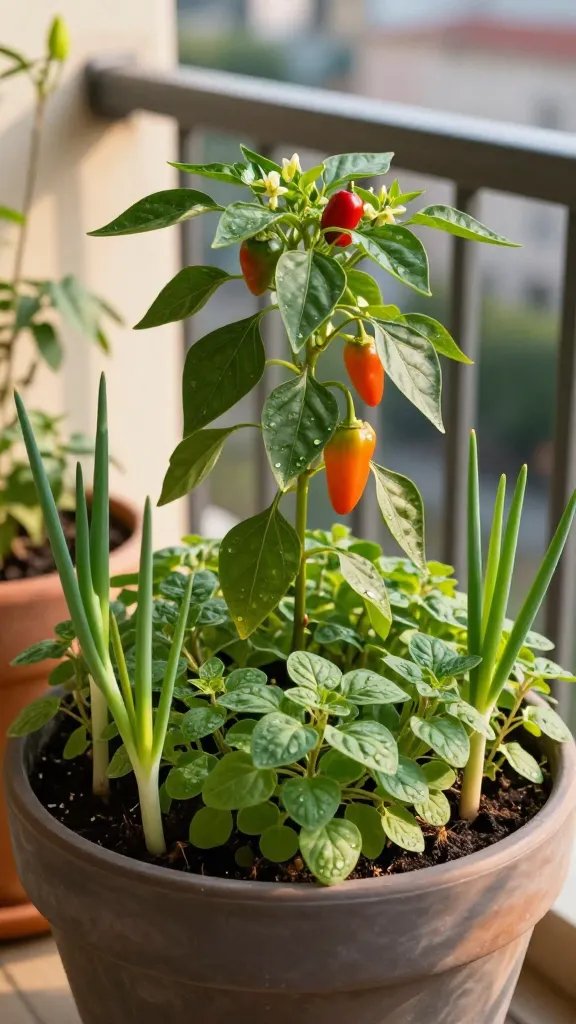
Crave something a little spicy, a little savory, and totally container-friendly? Pair compact peppers with scallions and a cushion of oregano. They play nicely, look beautiful, and deliver flavor you’ll taste in every dish.
Why It Works
- Peppers like warm roots and lots of sun.
- Scallions slide into small spaces and grow fast.
- Oregano forms a living mulch that helps retain moisture and deter pests.
Container Setup
- One 7–10 gallon pot.
- 1 compact pepper (sweet ‘Lunchbox’ types or hot ‘Numex’/‘Fresno’), 6–8 scallions around the edges, 1 oregano plant as groundcover.
- Use a light, rich potting mix and add a handful of slow-release fertilizer.
Care Tips
- Full sun. Peppers love heat; balconies that bake in summer are prime real estate.
- Water deeply but let the top inch dry between waterings to prevent sulks.
- Harvest scallions continuously; snip oregano often to keep it tidy and flavorful.
Benefits: Continuous yields with minimal fuss and maximum taste. Great for beginners who want big flavor in small spaces—seriously, you’ll never buy sad store scallions again.
5. The Tea & Tummy Tamer: Strawberries + Thyme + Calendula
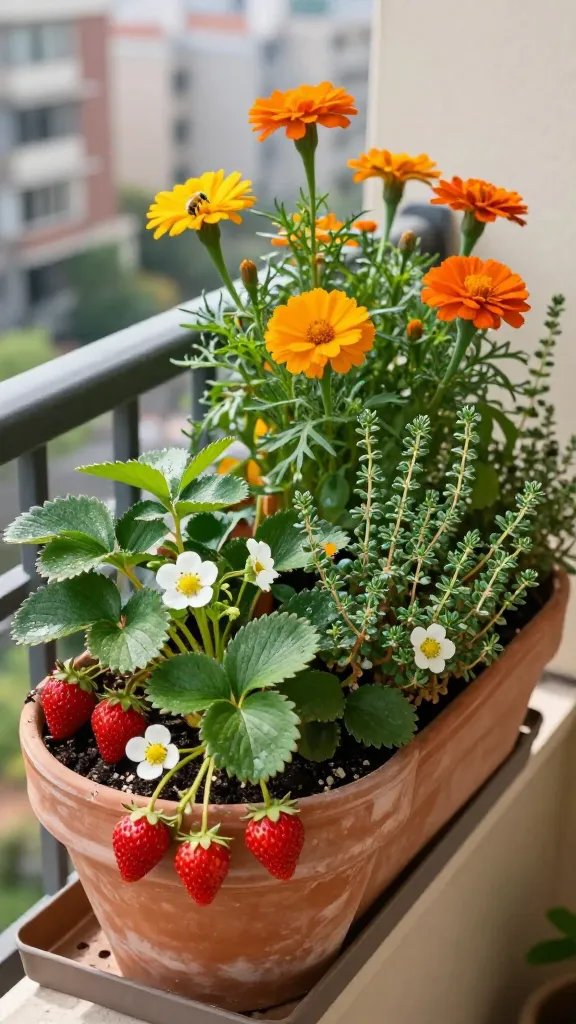
Want a planter that doubles as dessert and skincare? Strawberries, thyme, and calendula create a sweet, soothing trio. They attract pollinators, reduce weeds, and look like a cottage garden shrunk for your balcony.
Why It Works
- Strawberries spread lightly and produce for months in containers.
- Thyme acts as fragrant groundcover and discourages pests.
- Calendula draws pollinators and gives edible petals for salads and salves.
Container Setup
- 12–16 inch wide bowl planter or railing box with great drainage.
- 3–4 everbearing strawberry plants, 1 thyme cluster, 1–2 calendulas tucked between.
- Use a high-quality potting mix; top with straw or coconut coir to protect berries from splashing soil.
Care Tips
- Full sun to light partial sun (6+ hours is best).
- Water regularly; strawberries hate drought and hold grudges.
- Prune runners if space is tight; redirect energy into fruiting.
Benefits: Pretty enough for the front of your balcony and productive enough to snack from daily. Perfect for anyone who wants flowers, fragrance, and fruit in one compact piece of joy.
Quick Add-Ons And Pro Moves
- Soil Matters: Use fresh, high-quality potting mix. Container soil from last year? Refresh with compost.
- Drainage Is Life: Every pot needs holes. Add a saucer for apartments but empty it so roots don’t sit in soup.
- Fertilizing: Slow-release at planting + light liquid feed every 2–3 weeks once plants get going.
- Watering: Morning is best. Stick a finger in—if the top inch is dry, water thoroughly.
- Sunlight Reality Check: Track your light. South and west balconies are gold; east works for greens; north suits mint and lettuce.
- Pest Patrol: Check leaves underside weekly. A quick blast of water or neem soap early saves headaches later.
- Compact Varieties: Look for dwarf, patio, or bush types. They thrive in containers and won’t stage a coup.
15 Foolproof Companion Combos At A Glance
- Tomato + Basil + Marigold
- Tomato + Chives + Nasturtium
- Tomato + Parsley + Calendula
- Cucumber + Nasturtium + Chives
- Cucumber + Dill + Marigold
- Cucumber + Basil + Calendula
- Pepper + Oregano + Scallions
- Pepper + Basil + Marigold
- Pepper + Thyme + Chives
- Strawberry + Thyme + Calendula
- Strawberry + Borage + Chives
- Strawberry + Mint (separate pot nearby) + Chamomile
- Lettuce + Radish + Chive
- Lettuce + Dill + Nasturtium
- Lettuce + Parsley + Calendula
Use these as plug-and-play ideas across the five core setups above. Mix based on what you’ll actually eat—because the best garden is the one you snack from daily.
You’ve got this. Start with one combo, watch it thrive, then add another when you feel bold. Your apartment is about to become the coziest, tastiest jungle—trust me, you’ll brag to your neighbors and maybe even share a tomato (maybe).