
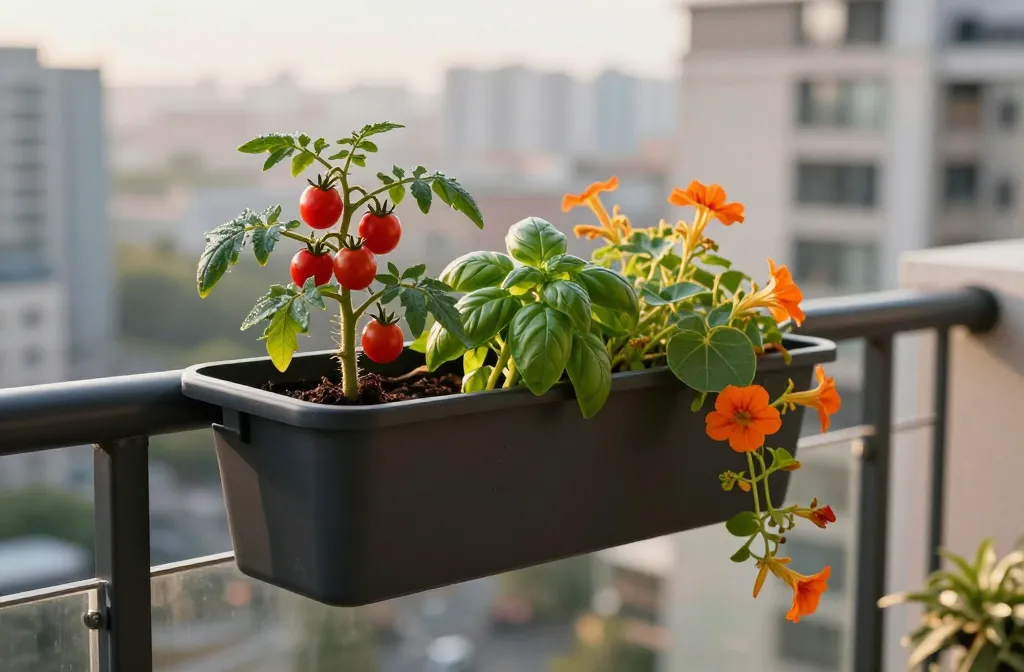
Your railing can do more than hold a few sad pots. With the right plant pairings, it becomes a vertical paradise that feeds you, attracts pollinators, and looks ridiculously good. These combos maximize tight spaces, play nice together, and keep maintenance easy. Grab some planters, clip them to the railing, and let’s build a mini jungle, FYI—without blocking your view.
1. Sun-Lovers, Zero Drama: Tomatoes + Basil (With Nasturtium Bonus)

This classic isn’t just a Pinterest fantasy—it works. Tomatoes and basil boost each other’s flavor and keep pests in check. Add trailing nasturtiums to drape over the railing for color and extra aphid defense.
Plan It Right
- Container depth: 12–16 inches for tomatoes; basil and nasturtium tuck in the sides
- Sun: 6–8 hours minimum, south or west-facing railing
- Spacing: 1 compact tomato (dwarf or determinate) per 12–14 inch pot, 2–3 basil, 1 nasturtium
Use railing planters with sturdy brackets—tomatoes get heavy. Choose dwarf varieties like ‘Tiny Tim’ or ‘Patio Baby’ and pinch off suckers to keep things compact.
Tips
- Water daily in heat; tomatoes hate drought swings
- Feed lightly every 10–14 days once fruit sets
- Rotate the pot weekly for even sun if your space only faces one direction
Why this combo? Basil improves airflow and confuses pests, nasturtiums act as a trap crop, and you get Caprese all summer. Win-win-win.
2. The Citrus Sunrise: Dwarf Lemon + Thyme + Calendula
Want fragrance, color, and cocktails on demand? Pair a dwarf lemon or calamondin with low-growing thyme and sunny calendula. It looks lush without hogging space, and everything pulls double duty—herb, bloom, and fruit.
Container Setup
- Pot size: 16–20 inches for dwarf citrus; use a single large pot or neighboring railing planters
- Soil: Fast-draining citrus mix with extra perlite
- Sun: 6+ hours; morning sun is ideal for balconies that scorch in late afternoon
Thyme forms a living mulch that reduces evaporation. Calendula attracts pollinators and gives edible petals for salads or tea. Seriously, it’s the balcony equivalent of brunch.
Care Notes
- Water deeply when top inch dries, but never let citrus sit in soggy soil
- Fertilize citrus monthly with a balanced, micronutrient-rich formula
- Pinch calendula for more blooms; harvest thyme often to keep it tidy
This combo shines if you want fragrance and edible beauty with minimal fuss. Use it beside seating for aromatherapy every time you step outside.
3. The Shade Sleuth: Lettuce + Chives + Strawberries
No full sun? No problem. Create a layered edible rail that thrives in partial shade using cut-and-come-again lettuces, pest-repelling chives, and trailing strawberries. It’s a soft, lush look that still feeds you.
Why It Works
- Lettuce loves cooler temps and handles 3–5 hours of sun
- Chives deter aphids and offer mild onion flavor
- Strawberries cascade over the edge and stay productive in bright indirect light
Choose a wide, shallow railing planter for lettuce and chives. Hang a second planter or pouch beneath for strawberries to cascade, saving top-rail space.
Planting Formula
- 12–18 inch planter: 4–6 loose-leaf lettuces, 1 clump chive, 2 strawberries
- Use moisture-retentive mix with compost and coco coir
- Mulch with fine bark or shredded straw to keep soil cool
Harvest outer lettuce leaves often to keep them coming, snip chives weekly, and pick berries as soon as they blush. Perfect for east-facing balconies and anyone who loves salad on repeat.
4. Pollinator Party Line: Lavender + Trailing Rosemary + Alyssum
Ready for fragrance that literally spills over the railing? Combine upright lavender, trailing rosemary, and sweet alyssum for a bee-magnet trio with Mediterranean drought tolerance. It looks romantic, smells incredible, and won’t nag you for water every day.
Design Notes
- Container depth: 10–12 inches; go long and shallow for a “window box” vibe
- Soil: Gritty mix—potting soil plus sand/perlite for drainage
- Sun: 6–8 hours; good airflow prevents mildew
Lavender anchors the height, rosemary trails and softens edges, and alyssum creates a frothy carpet that blooms forever. This trio attracts beneficial insects that help everything else on your balcony.
Care Cheats
- Water deeply, then dry down—don’t overwater
- Shear alyssum midseason for fresh flushes
- Prune lavender lightly after bloom to keep it compact
Use this combo along the windiest part of your railing—these plants love airflow. Bonus: rosemary and lavender both double as kitchen heroes.
5. Pest-Blocking Power Mix: Peppers + Oregano + Marigolds
If you’ve dealt with aphids, thrips, or spider mites, this trio fights back. Compact peppers bring heat or sweet crunch, oregano spreads as a living mulch, and marigolds shout “buzz off” to pests while luring pollinators. Colorful, productive, and surprisingly low-maintenance.
Setup That Saves Space
- Planter size: 12–14 inches per pepper; tuck oregano along the rim
- Sun: 6+ hours; heat-loving and balcony-friendly
- Varieties: ‘Lunchbox’ sweets, ‘Numex’ chiles, or ‘Fushimi’ for stir-fries
Marigolds fill gaps, deter nematodes in deeper containers, and give cheery blooms. Oregano suppresses weeds (lol, balcony weeds) and reduces soil splash onto pepper leaves.
Care and Harvest
- Water consistently to prevent blossom drop
- Feed peppers every 2–3 weeks once flowering starts
- Pinch oregano to keep it from taking over
Use this combo when you want color and spice with bonus pest control. Place near the sunniest edge and enjoy a steady stream of peppers from midsummer to fall.
Bonus Combos (Quick Hits To Mix and Match)
- Cucamelon + Mint: Tiny grape-sized “melons” trail beautifully; mint perfumes the air. Keep mint in a separate pot to prevent takeover.
- Eggplant (dwarf) + Thai Basil: Heat lovers with bold flavors; great for stir-fry nights.
- Snow Peas + Dill: Vertical climbers with airy dill as a pollinator magnet; perfect in spring and fall.
- Carrots (short) + Parsley: Root and leaf duo with similar needs; choose ‘Parisian’ or ‘Thumbelina’ carrots.
- Blueberry (dwarf) + Lemon Balm: Acidic soil buddies; lemon balm stays in check if you snip often.
- Spinach + Radish: Fast, cool-season pair; harvest radish first to make room for spinach.
- Zucchini (dwarf) + Borage: Compact squash with bee-attracting blue stars; choose true dwarf varieties only.
- Shishito Pepper + Chives: Productive, compact, and great for quick pan-fries.
- Cilantro + Green Onion: Taco night on a rail; sow cilantro in waves.
- Tatsoi + Nasturtium: Tender greens plus edible flowers; thrives in partial shade.
- Arugula + Viola: Peppery leaves and edible blooms; gorgeous and fast-growing.
- Dwarf Cucumber + Dill: Classic pickle partners in miniature form; train vines along the railing with clips.
- Beets (baby) + Oregano: Harvest beet greens early and bulbs later; oregano covers soil.
- Swiss Chard + Sage: Colorful stems with aromatic leaves; handles heat and light frost.
Use these as plug-and-play modules across your railing. Mix them based on sun exposure, taste preferences, and how wild you want the vibe to look.
Smart Railing Garden Hacks
- Choose compact cultivars: Look for words like dwarf, patio, bush, or container on labels.
- Go vertical: Use trellis clips, twine, or mesh attached to the railing to train vines.
- Water strategy: Morning watering prevents scorch; add a saucer reservoir or self-watering insert if you travel.
- Light math: Reflective walls and glass boost sun, while overhangs steal it. Track light for a day before planting.
- Soil matters: Use high-quality potting mix, not garden soil. Add compost lightly each month.
- Wind buffer: Group pots and add a thin bamboo screen if gusts whip your balcony.
- Weight check: Railing planters can get heavy. Use lightweight plastic or fabric planters and confirm load limits.
- Pest patrol: Inspect undersides of leaves weekly. A quick blast of water or neem solves most issues early.
Dial these in once, and maintenance turns into a 10-minute morning ritual. IMO, that’s the sweet spot between lush and low-effort.
Seasonal Swaps That Keep It Fresh
- Spring: Peas, lettuce, radish, cilantro, dill
- Summer: Tomatoes, peppers, basil, cucumbers, eggplant
- Fall: Kale, tatsoi, chard, parsley, chives
- Winter (mild climates): Rosemary, thyme, sage, pansies, violas
Rotate by season to avoid tired soil and plant fatigue. Your railing stays productive and Insta-ready year-round, trust me.
Quick Troubleshooting
- Leggy plants: Not enough sun—move higher, trim, or switch to shade-tolerant combos.
- Yellow leaves: Overwatering or poor drainage—add perlite and check pot holes.
- No fruit on tomatoes/peppers: Heat stress or low pollination—shake plants gently at midday.
- Powdery mildew: Increase airflow, water at soil level, prune crowded leaves.
Small tweaks fix most problems fast. Keep it simple and observant, and your balcony will reward you.
Ready to make your railing earn its rent? Start with one combo you’ll actually cook with, then add another next month. Before long, you’ll have a living pantry that looks gorgeous and tastes even better—no backyard required.