Avoid These 6 Common Mistakes When Growing Vegetables Indoors
You can grow crispy lettuce, fiery peppers, and juicy cherry tomatoes without a backyard. But indoor veggies demand a little strategy and a lot of light. If your seedlings look sad or your basil keeps ghosting you, you’re probably making one of these classic mistakes. Let’s fix them fast so your windowsill turns into a mini farmers market.
Are Your Indoor Veggies Getting Enough Light?
Most indoor vegetable failures trace back to insufficient light—plants need 12–16 hours of intense, full-spectrum light daily to produce real harvests indoors. Without it, seedlings grow leggy, leaves pale, and fruiting crops stall completely.
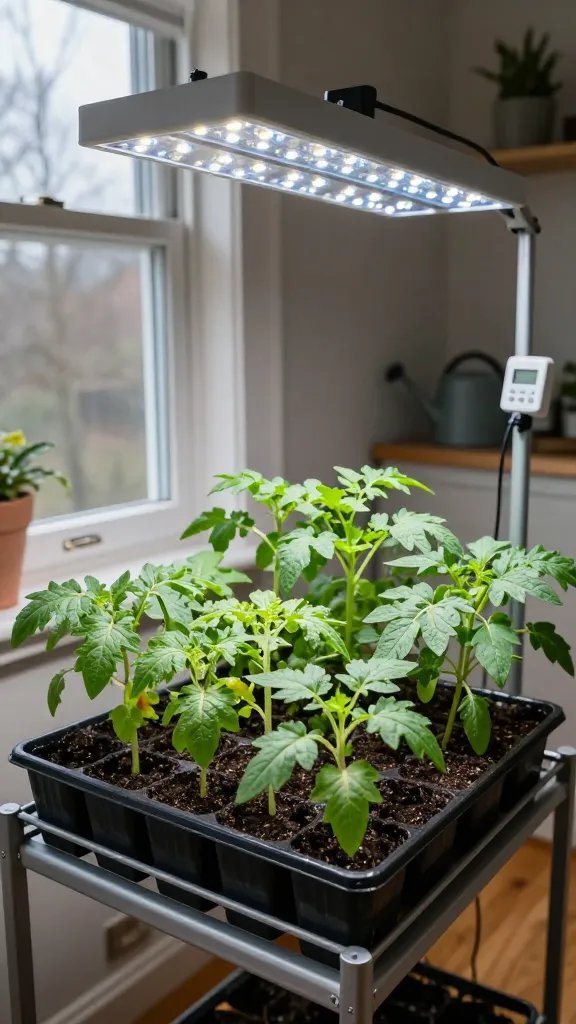
Light makes or breaks your indoor garden. Most veggies need way more brightness than a gloomy window can offer, especially in winter. According to University of Minnesota Extension’s guide on growing vegetables indoors, supplemental lighting is almost always necessary for productive indoor crops. If your plants stretch tall and flimsy, they’re screaming for more photons.
What’s Going Wrong
- Leggy seedlings and pale leaves signal low light.
- Tomatoes and peppers stall without intense, consistent light.
- South-facing windows help, but often aren’t enough on their own.
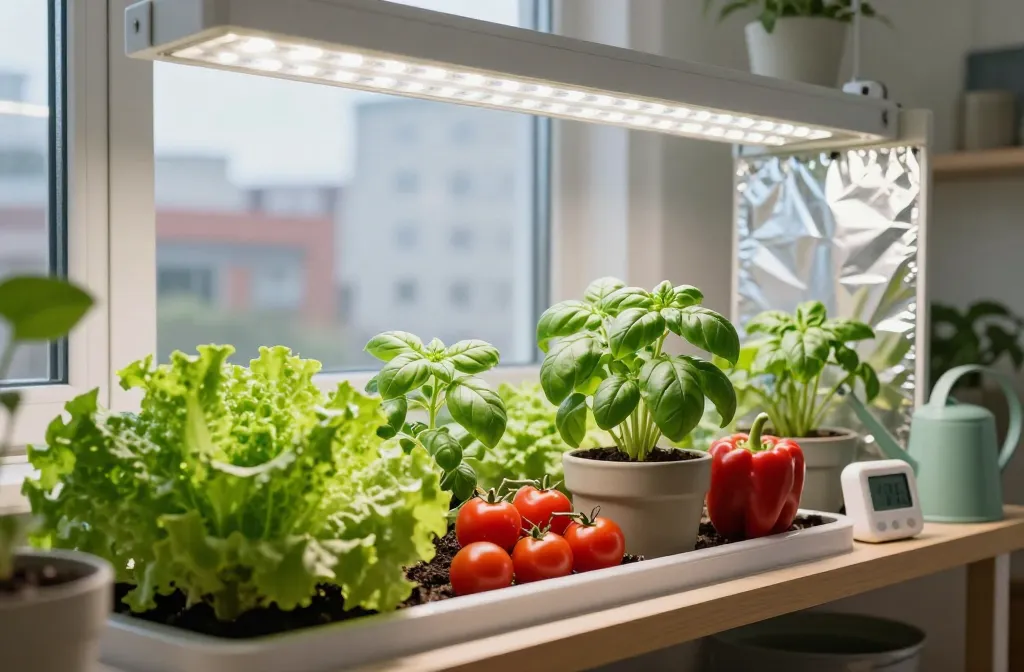
Solution? Use full-spectrum LED grow lights and set them on a timer for 12–16 hours daily. Keep lights 6–12 inches above leafy greens and 12–18 inches above fruiting crops. Adjust weekly as plants grow so you maintain the sweet spot.
Quick Tips
- Pick lights rated 30–50 watts actual draw per square foot for fruiting crops.
- Use reflective surfaces (foil or mylar) around the setup to bounce light back.
- Rotate pots weekly for even growth if you rely on windows at all.
More light means tighter growth, stronger stems, and better flavor. Your harvests will jump from “meh” to “wow.” If you’re running into other issues beyond light, check out 12 container gardening problems we all face and how to fix them for good for a full troubleshooting rundown.
Are You Overwatering Your Indoor Vegetables?
Overwatering is the number one killer of indoor vegetables—soggy soil suffocates roots, invites fungus gnats, and stunts growth within days. The fix is simple: water only when the top inch or two of soil feels dry, and always use pots with drainage holes.
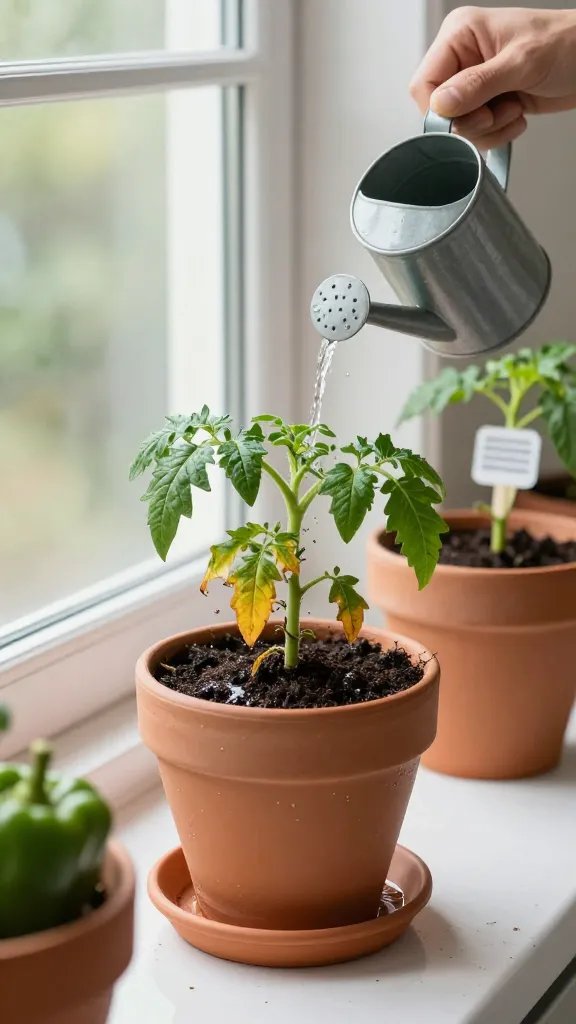
Most indoor plant drama starts with water. We baby our veggies and give them sips too often, which suffocates roots and invites fungus gnats to throw a party. Plants want rhythm, not guesswork.
Signs You’re Overdoing It
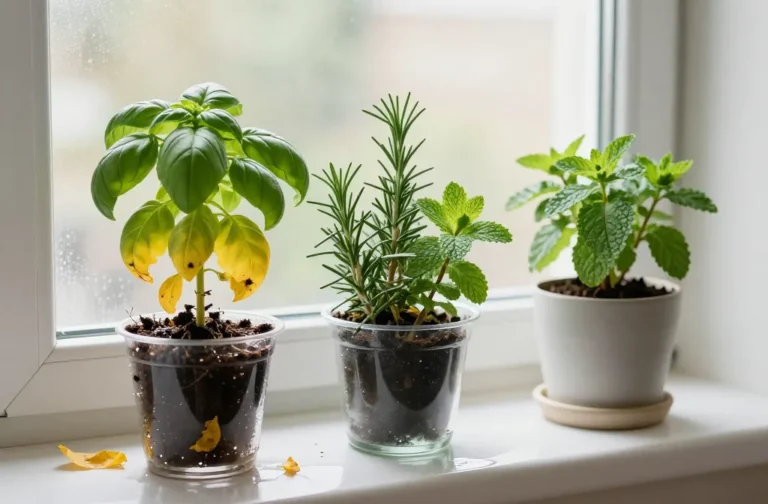
- Yellowing leaves with soggy soil
- Mushroomy smell or fungus gnats hovering
- Leaves dropping from the bottom up
Use pots with proper drainage and a lightweight mix. Water when the top inch feels dry for herbs and greens, and 2 inches for tomatoes and peppers. Stick a finger in the soil—old-school, but effective. For a deeper dive on reading your plants’ watering signals, these 7 warning signs your potted herbs are overwatered apply to veggies too.
Better Watering Routine
- Bottom-water seedlings: set trays in water for 10–15 minutes, then drain.
- Use a moisture meter if you’re unsure (cheap and surprisingly useful).
- Empty saucers after 15 minutes so roots don’t sit in a swamp.
Consistent hydration grows robust roots. You’ll see fewer pests, faster growth, and less drama—IMO, the dream. Our ultimate guide to watering container plants covers the full rhythm in detail.
Is Your Soil Mix Suffocating Indoor Roots?
Garden dirt and heavy potting mixes compact inside containers, cutting off oxygen to roots and inviting pests—a soilless, perlite-enriched mix solves this in minutes. The right blend drains fast, holds just enough moisture, and lets roots breathe.
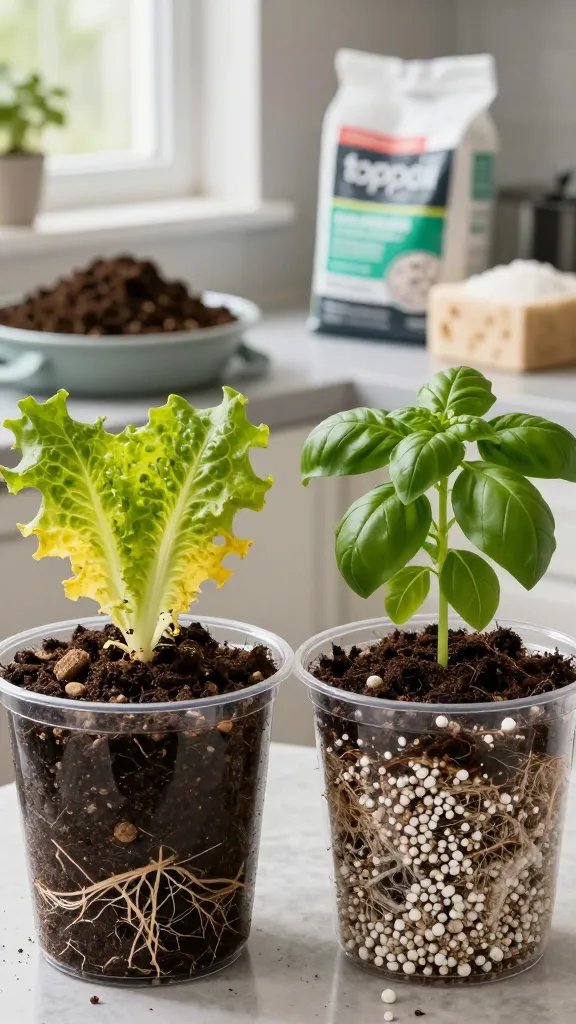
Indoor veggies hate compacted soil. Garden dirt clumps, harbors pests, and drains like molasses. Your plants need air down there—roots breathe too. UMN Extension’s research on soil mixes for containers confirms that soilless mixes dramatically outperform garden soil for indoor growing.
Build a Better Mix
- Base: High-quality soilless potting mix for containers
- Aeration: Add 20–30% perlite or pumice
- Moisture balance: Optional 10% coco coir for water retention
Skip bagged “topsoil” or dense compost-only blends. They smother roots and breed gnats indoors. If you want to include compost, keep it to 10–20% and bake it in the oven at low heat if pests worry you (yes, it smells weird—open a window). For a full breakdown of mix options, check 10 container soil mixes that actually work and when to use each one.
Container Essentials
- Use 5–10 gallon pots for tomatoes/peppers; 1–3 gallons for herbs and greens.
- Fabric pots promote airflow and reduce overwatering risk.
- Elevate pots on trays or stands for better drainage and cleanliness.
A light, airy mix grows faster plants with fewer issues. Your roots will thank you with lush leaves and steady growth.
Is Your Indoor Air Too Dry for Vegetables?
Indoor heating and AC drop humidity to levels that crisp leaf edges, drop blossoms, and slow growth—most indoor vegetables need 40–60% humidity to thrive. A small humidifier, pebble trays, or grouping plants together fixes dry air fast.
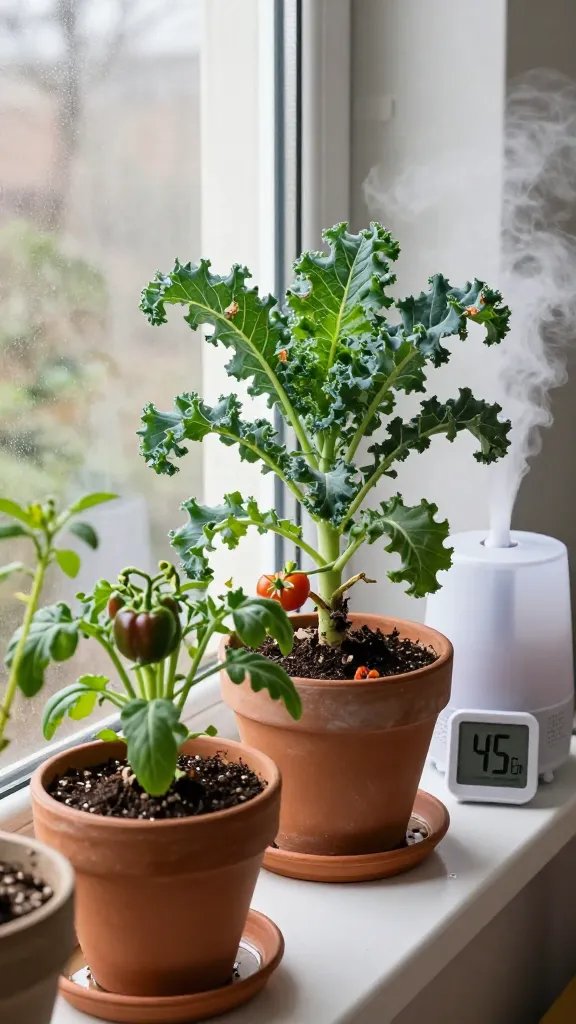
Heaters and AC turn your living room into a dehydrator. Dry air slows growth, curls leaves, and messes with pollination. Your kale doesn’t want a spa day, but it does want humidity.
Symptoms of Dry Air
- Leaf edges crisping or curling
- Blossoms dropping on tomatoes and peppers
- Soil drying out ridiculously fast
Target 40–60% humidity for most indoor veggies. A small humidifier nearby works wonders, especially in winter. Group plants together to create a tiny microclimate, or place trays with pebbles and water under pots (just don’t let roots sit in water).
Balance With Airflow
- Run a clip-on fan on low to prevent mildew and strengthen stems.
- Aim for a gentle breeze, not a wind tunnel—no leaf flapping Olympics needed.
- Open a window briefly when weather allows to refresh the space.
Proper humidity and airflow reduce stress and improve yields. Your plants will look perkier and produce more consistently, seriously.
Are You Feeding Your Indoor Vegetables Wrong?
Indoor vegetables need steady, half-strength fertilizer every 1–2 weeks—not heavy dump-feedings that burn roots and stunt growth. Match your fertilizer to the crop: balanced formulas for greens, higher-potassium blends for fruiting plants.
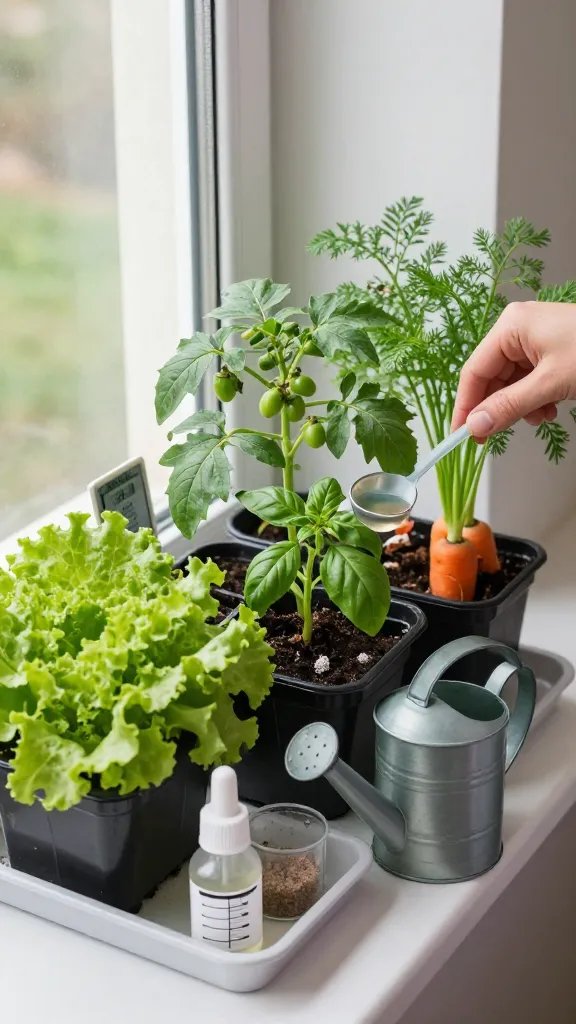
Indoors, nutrients don’t magically appear. But dumping fertilizer like it’s a sports drink leads to burnt tips and stalled growth. You want steady, predictable feeding.
Know Your Plant’s Appetite
- Leafy greens and herbs: Light to moderate feeders
- Tomatoes, peppers, cucumbers: Heavy feeders
- Root crops (radishes, carrots): Prefer less nitrogen
Start with a balanced fertilizer (like 4-4-4 or 3-1-2 for greens) at half-strength every 1–2 weeks. For fruiting crops, switch to a bloom formula with higher potassium and a pinch more calcium and magnesium once buds form. Avoid salt buildup by watering to slight runoff monthly and discarding excess.
Smart Feeding Habits
- Read labels, then use less than recommended and watch the plant.
- Look for signs: pale leaves = nitrogen; blossom end rot = calcium support; purple tinge = phosphorus.
- Consider slow-release organic pellets in the mix plus light liquid feeds.
Dialed-in nutrition produces steady growth and tastier harvests. Your basil will go from “okay” to “chef’s kiss.”
Are You Choosing the Right Vegetable Varieties for Indoors?
Dwarf, compact, and patio-bred varieties dramatically outperform standard garden types indoors—choosing the right seeds prevents frustration and delivers real harvests in limited space. Look for labels like “dwarf,” “patio,” or “compact” and varieties maturing in 55–70 days.
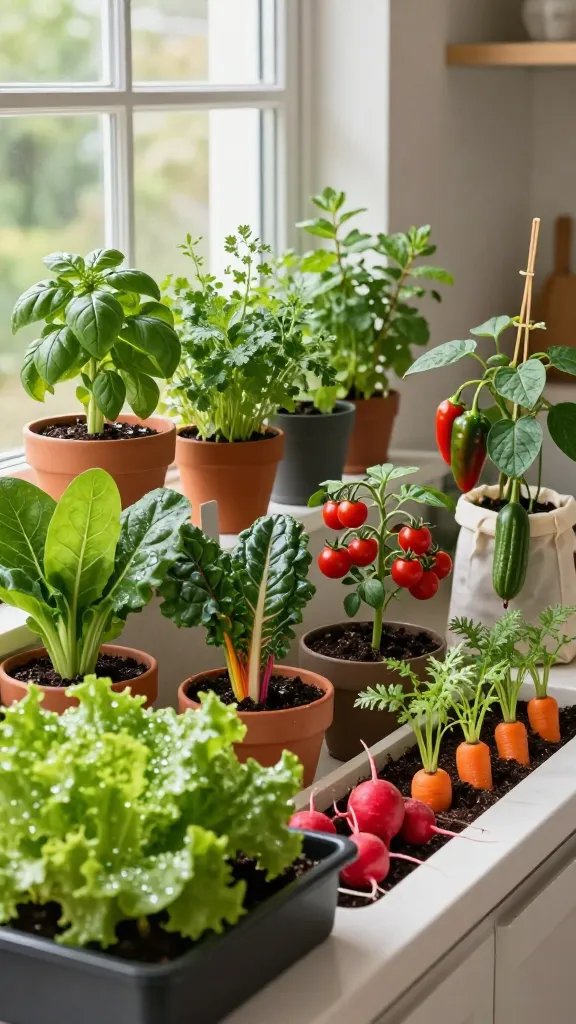
Some veggies behave indoors. Others throw tantrums. Choosing the right varieties turns indoor gardening from chaos to chill. Growing vegetables indoors successfully starts with selecting cultivars specifically bred for container life.
Pick Indoor-Friendly Winners
- Leafy greens: Lettuce (cut-and-come-again types), arugula, spinach, kale, Swiss chard
- Herbs: Basil, parsley, cilantro, chives, mint, thyme
- Compact fruiting: Dwarf tomatoes (Micro Tom, Tiny Tim), patio peppers, bush cucumbers
- Quick roots: Radishes, baby carrots (choose “thumb” or “mini” types)
Look for labels like “dwarf,” “patio,” or “compact.” Shorter days and limited space mean you want plants bred for containers. Tomatoes with 55–70 days to maturity and determinate habits do best indoors. If you want to scale up to bigger containers, the 5-gallon bucket garden hack gives you 12 high-yield options.
Don’t Forget Pollination and Support
- Gently shake tomato and pepper stems or use an electric toothbrush near flowers to move pollen.
- Stake early so you don’t wrestle a lanky tomato later.
- Train cucumbers on a small trellis to save space and boost airflow.
Right plant, right place = less fuss and more food. Pick compact champs and you’ll harvest sooner with fewer headaches, FYI.
Quick-Reference: 6 Indoor Vegetable Mistakes at a Glance
| Mistake | Key Symptom | Quick Fix |
|---|---|---|
| Not enough light | Leggy, pale seedlings | Full-spectrum LED, 12–16 hrs/day |
| Overwatering | Yellow leaves, soggy soil | Water only when top inch is dry |
| Heavy garden soil | Compacted mix, gnats | Soilless mix + 20–30% perlite |
| Dry indoor air | Crisp leaf edges, blossom drop | Humidifier or pebble tray, 40–60% RH |
| Wrong feeding | Burnt tips or pale leaves | Half-strength balanced fertilizer, 1–2 wk |
| Wrong variety choice | Huge plants, no fruit | Choose dwarf/patio/compact cultivars |
You’ve got this. Tweak the light, water smarter, and pick varieties that actually want to live indoors. A few small fixes can turn your apartment into the snack aisle you grow yourself—fresh, crunchy, and brag-worthy.
Frequently Asked Questions
What vegetables grow best indoors for beginners?
Leafy greens like lettuce, spinach, and kale are the easiest indoor crops because they tolerate lower light and harvest quickly. Herbs such as basil, chives, and mint also perform well on a bright windowsill or under a simple grow light.
How many hours of light do indoor vegetables need?
Most indoor vegetables need 12–16 hours of full-spectrum light daily to produce healthy foliage and fruit. Fruiting crops like tomatoes and peppers sit at the higher end of that range, while leafy greens and herbs can manage with 10–12 hours.
How often should I water indoor vegetables?
Water only when the top inch of soil feels dry to the touch—stick your finger in to check before reaching for the watering can. Overwatering kills more indoor vegetables than underwatering, so err on the side of waiting one more day.
Can I use garden soil for indoor container vegetables?
No—garden soil compacts inside containers, cuts off oxygen to roots, and often harbors pests and diseases. Use a soilless potting mix blended with 20–30% perlite for fast drainage and the air circulation roots need.