
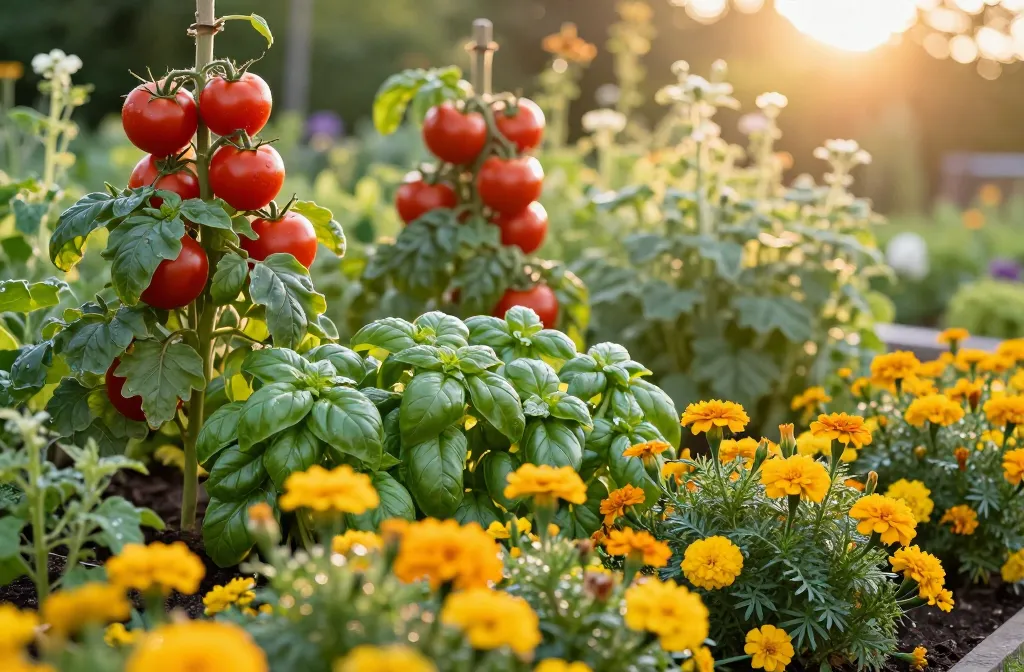
Ready to grow a garden that flirts back? Aphrodisiac herbs bring scent, flavor, and a little wink-wink energy, and companion planting makes them thrive. Pair the right plants and you get bigger harvests, fewer pests, and a vibe that screams candlelit dinners outside. Let’s build five dreamy combos that look gorgeous and taste even better.
1. Basil & Tomato With Marigold: The Classic Heart-Opener
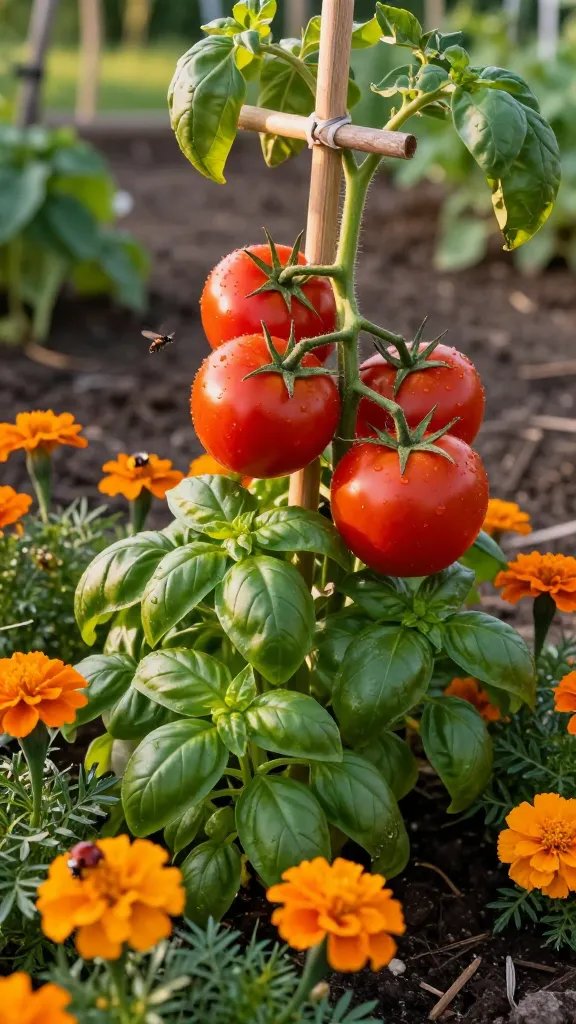
Tomato and basil basically wrote the definition of culinary chemistry. Add marigold and the trio turns into a love triangle that actually works: better flavor, fewer pests, and nonstop color. If you want an easy, high-reward bed, this is your day-one power move.
Why It Works
- Basil boosts tomato flavor and growth while repelling thrips and houseflies.
- Marigold deters nematodes and aphids and lures beneficial insects.
- Tomatoes provide light shade and structure for basil to stay lush and tender.
Plant tomatoes 18–24 inches apart in a sunny bed. Tuck basil at each tomato’s feet, roughly 8–12 inches away. Thread marigolds along the border for a bright pest shield.
Quick Tips
- Pinch basil often to keep it bushy and sweet—flowers can make it bitter.
- Water tomatoes deeply and mulch to prevent splash-borne disease.
- Choose marigold varieties like ‘Nematode Control’ or French types for stronger protection.
Use this combo for quick caprese nights and romantic pasta sauces that taste like a summer holiday, IMO.
2. Lavender & Rosemary With Strawberries: Perfume Meets Dessert
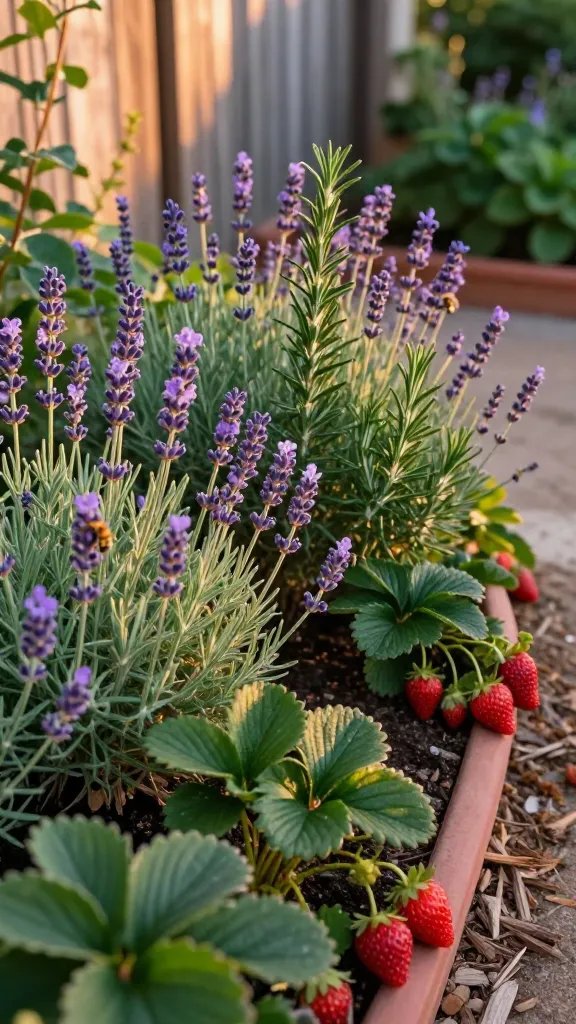
Lavender and rosemary give your garden major Mediterranean romance, while strawberries bring the sweet. Together, they scent the air, invite pollinators, and keep things tidy and low maintenance. It’s basically the edible version of a sunset walk.
Why It Works
- Lavender attracts bees like a magnet and repels moths and mosquitoes.
- Rosemary blocks some pests and likes the same dry, lean soils as lavender.
- Strawberries enjoy the pollinator boost and benefit from light wind protection.
Plant lavender as the tall anchors, rosemary as mid-height structure, and strawberries as a groundcover between them. Choose a sunny, well-drained spot and keep irrigation lean—no soggy roots, please.
Planting Notes
- Space lavender 18–24 inches, rosemary 18 inches, strawberries 10–12 inches.
- Mulch with pea gravel or coarse bark to reflect heat and deter slugs.
- Deadhead lavender for repeat bloom and cut rosemary lightly after flowering.
This trio shines in borders, raised beds, or patio planters. Benefits: intoxicating fragrance, fewer pests, and fruit you can steal while “weeding.” Seriously, it’s pure romance.
3. Chili Pepper & Oregano With Nasturtium: Spice, Citrus, And Heat
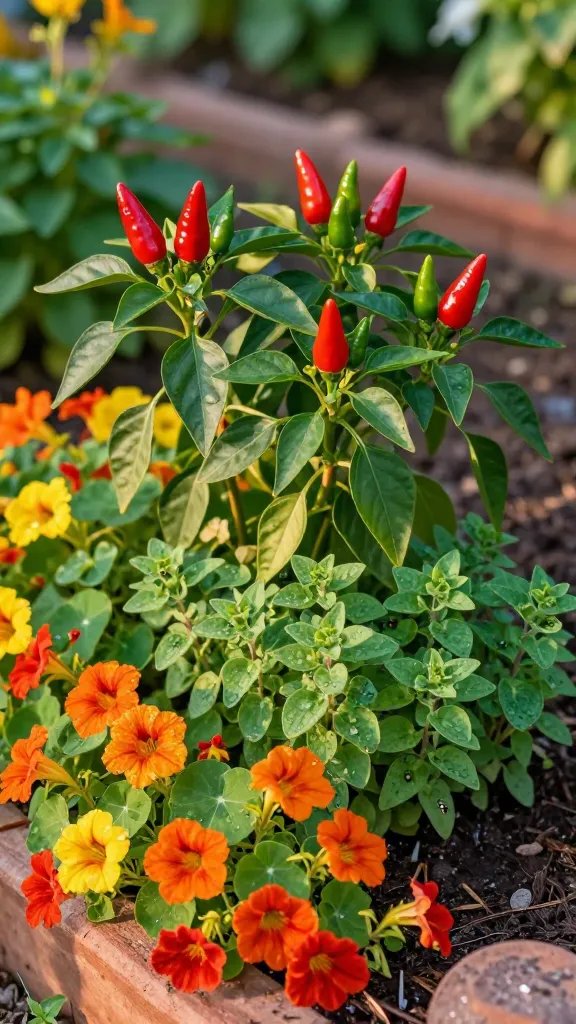
If you like a little fire with your flirtation, plant chilies with oregano and nasturtiums. You get edible flowers, ground-hugging protection, and a powerhouse herb that loves heat. The bed looks like a fiesta and cooks like one too.
Why It Works
- Chili peppers love warmth and steady moisture; they stand tall and productive.
- Oregano acts as a living mulch and draws in beneficial wasps and hoverflies.
- Nasturtiums pull double duty: they attract aphids away from peppers and give peppery, romantic salad petals.
Set peppers 18 inches apart. Plant a low mound of oregano between plants, then allow nasturtiums to trail around the perimeter. Full sun makes the flavors pop.
Pro Moves
- Stake peppers early to keep fruit off soil and reduce rot.
- Harvest nasturtium leaves young for milder bite; flowers taste lightly sweet and spicy.
- Trim oregano often to prevent takeover—this herb means business.
Use this combo for sultry summer dinners: chili oil, grilled veggies, and a nasturtium-topped salad. Benefits include natural pest management and bold, aphrodisiac-forward flavors.
4. Damiana & Lemon Balm With Calendula: Soft, Sunny, And Soothing
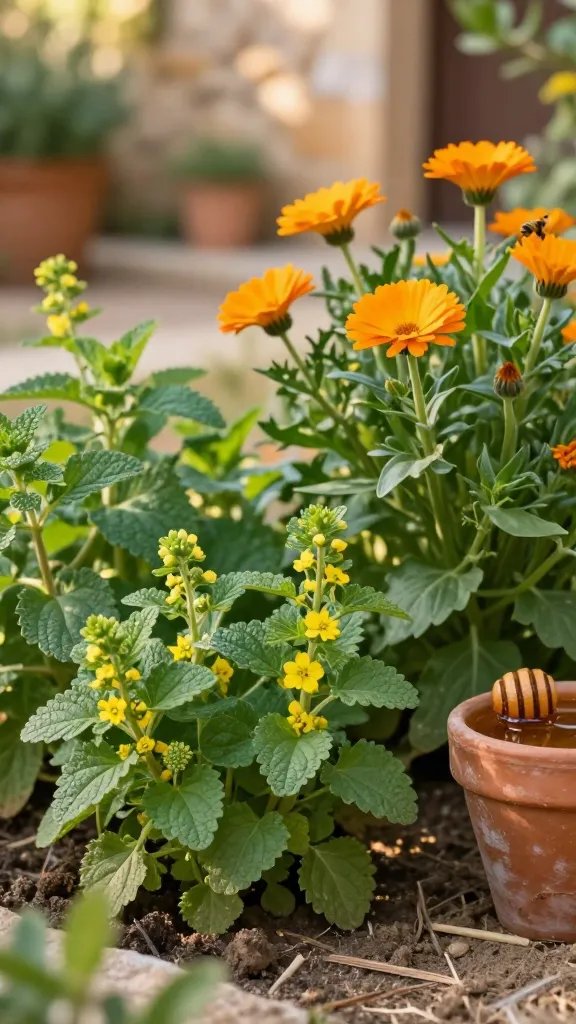
Damiana shows up in traditional love tonics, and it pairs beautifully with lemon balm’s citrusy calm. Calendula stitches it together with bright petals and gentle pest control. The vibe: mellow afternoons, herbal honey, and a little sparkle of sunshine.
Why It Works
- Damiana (Turnera diffusa) prefers warm, well-drained soil and steady heat.
- Lemon balm brings bees, calms the garden (and your nerves), and grows like a champ.
- Calendula attracts beneficials, deters some pests, and provides edible petals for teas and salads.
Plant damiana in the warmest microclimate you’ve got—south-facing beds or a heat-reflective wall. Tuck lemon balm nearby but contain it with a root barrier or planters. Thread calendula throughout to keep the party cheerful and productive.
Care Tips
- Damiana likes light pruning to stay compact and push new growth.
- Cut lemon balm before it flowers for best flavor; it can self-seed aggressively.
- Deadhead calendula to keep blooms coming and harvest petals dry for tea blends.
This combo works for herbal teas, relaxing elixirs, and eye-candy borders. Benefits: diverse pollinators, steady harvests, and a calming-meets-romantic aura that’s perfect for evening hangs.
5. Rose, Almond-Scented Thyme & Scented Geranium: The Date-Night Border
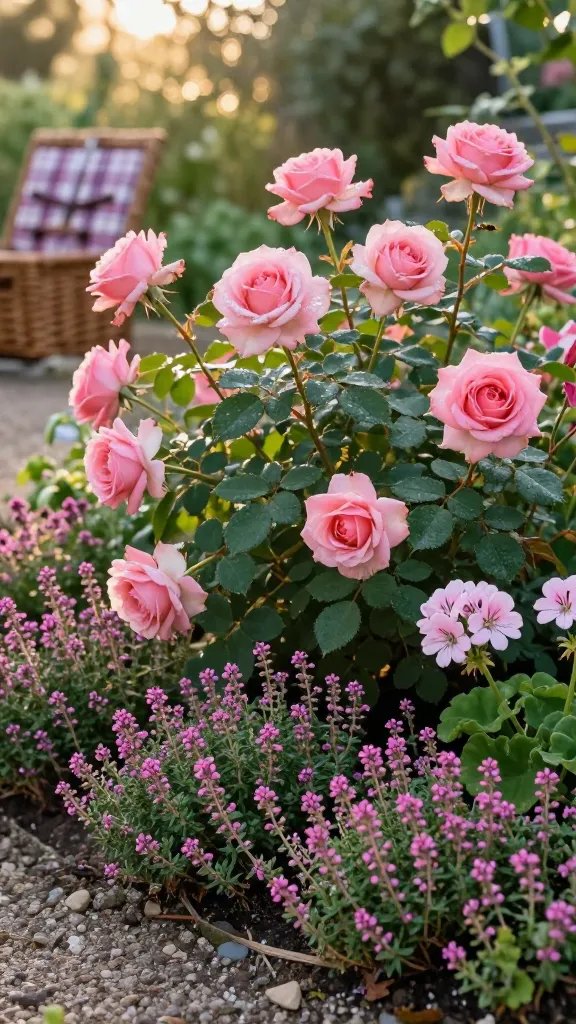
Want a garden that whispers “picnic blanket and poetry”? Pair classic roses with almond-scented thyme and scented geraniums. You’ll get layers of fragrance, edible petals, and a groundcover that keeps weeds in check.
Why It Works
- Roses bring the sensual petals and perfume—choose disease-resistant varieties with strong fragrance.
- Almond-scented thyme (Thymus praecox ‘Coccineus’ or similar) forms a fragrant mat that suppresses weeds and attracts pollinators.
- Scented geraniums (Pelargonium) add citrus-rose aromas and repel some pests with their essential oils.
Plant roses as anchors with 2–3 feet between shrubs. Edge the bed with thyme to create a perfumed carpet. Fill gaps with scented geraniums for lush texture and bonus leaves for syrups and garnishes.
Maintenance Notes
- Water roses at the base to avoid foliar disease; mulch to keep roots cool.
- Shear thyme lightly after bloom to keep it tight and tidy.
- Pinch scented geraniums to encourage bushiness and harvest leaves for desserts and cocktails.
Use this combo for bouquets, rose-petal sugar, and garden cocktails. Benefits: high romance factor, low weed pressure, and a border that smells like a love letter.
That’s your playbook for a garden that grows flavor, fragrance, and a little magic. Start with one combo and scale up as you fall in love with the results—because you will. FYI, the best time to plant a romantic garden was last season; the second best is right now. Go make something gorgeous.