
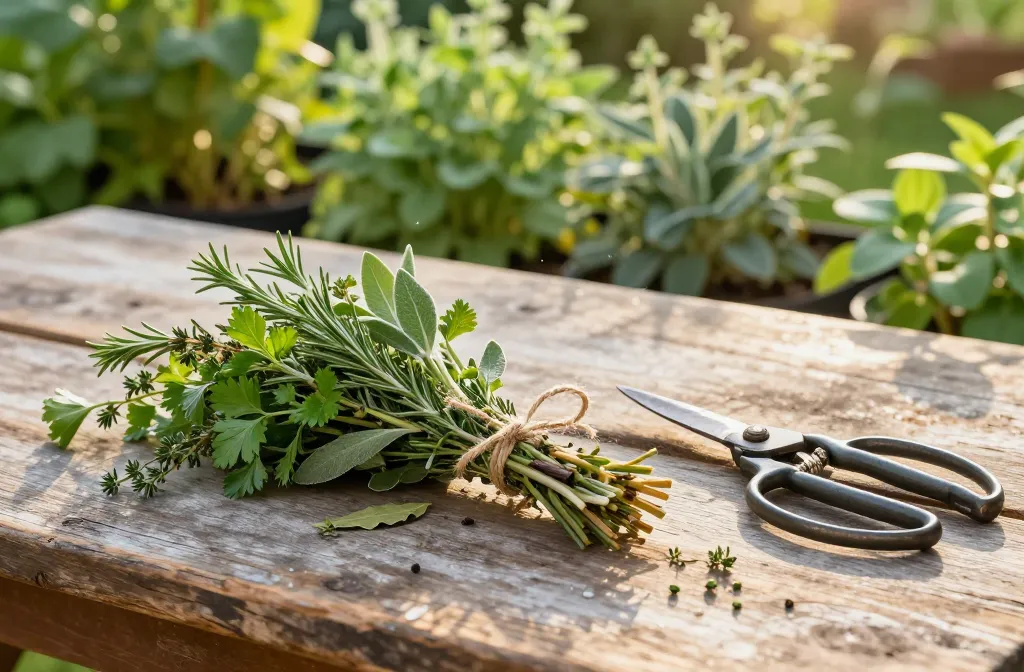
Your soup deserves main-character energy, and a homegrown bouquet garni delivers exactly that. Plant these aromatic MVPs and you’ll have ready-to-grab bundles that transform broths, stews, and roasted everything. We’re talking fragrance, flavor, and legit chef vibes—straight from your garden. Ready to grow a spice rack that actually smells like heaven?
1. Classic Thyme, Big Flavor
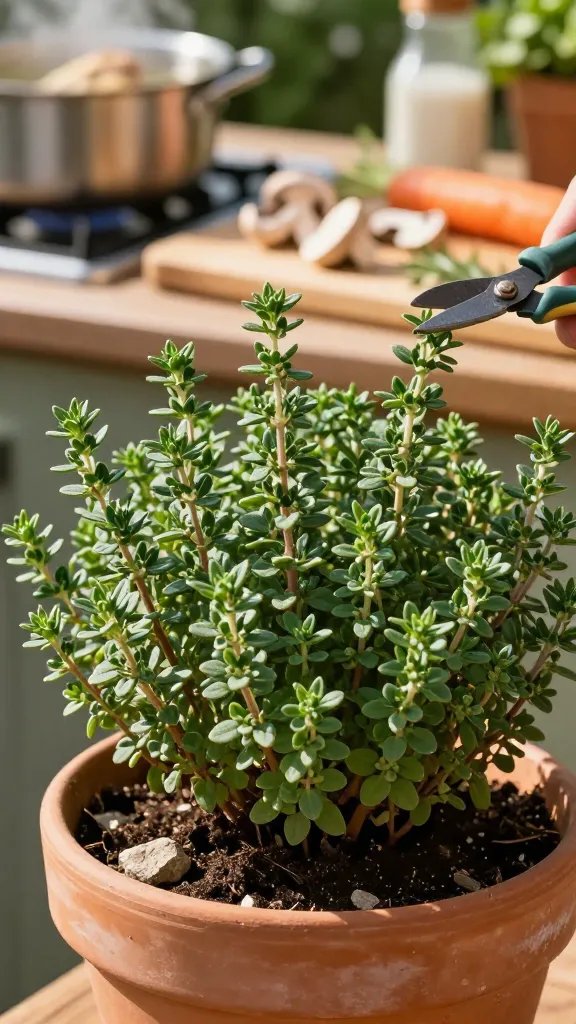
Thyme is the quiet overachiever of the herb world. It’s compact, evergreen in many climates, and its tiny leaves pack serious savory depth. Drop a sprig in your pot and suddenly your basic chicken soup tastes like it studied in Lyon.
Why It Works
- Heat-friendly: Holds flavor during long simmers
- Year-round harvest in mild zones
- Versatile: Pairs with poultry, beef, mushrooms, and root veg
Plant in full sun with gritty, well-drained soil. Water deeply but infrequently; thyme hates wet feet. Trim often to keep it dense, and dry extra sprigs for winter blends.
Use for: Long braises, bouquet garni bundles, and buttery thyme-roasted carrots. IMO, it’s the backbone of the bundle.
2. Bay Laurel: The Stew Whisperer
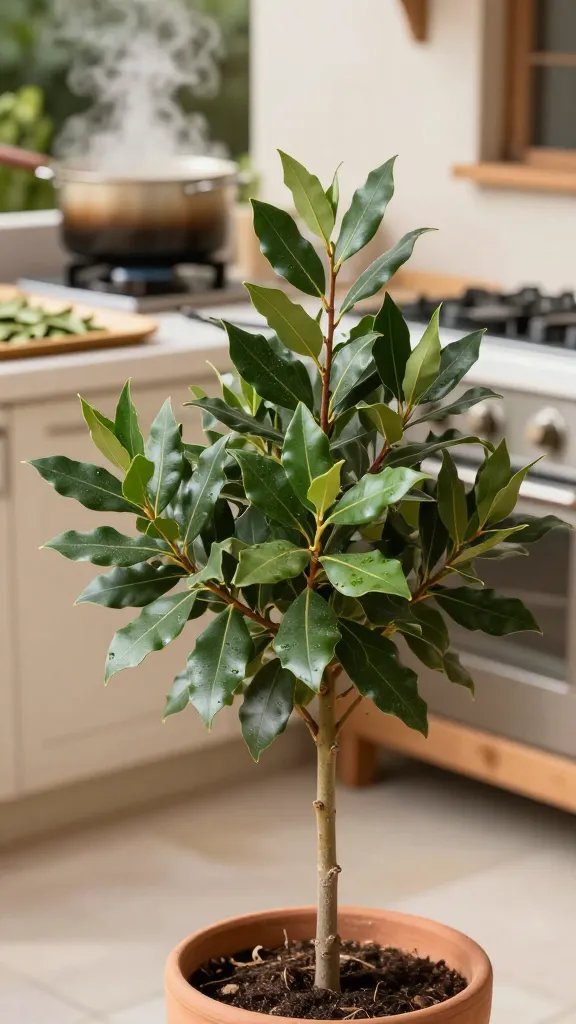
One bay leaf can change the mood of an entire pot. It adds a subtle, almost tea-like aroma that makes soups and sauces taste “finished.” The best part? A single plant gives you a lifetime supply.
Growing Tips
- Container champ: Perfect for patios in colder regions
- Prune into shapes (standard tree or bush)
- Winter indoors if temps drop below freezing
Pick mature, darker leaves for deeper flavor. Dry them in a single layer for a week to mellow bitterness and concentrate aroma.
Use for: Stocks, tomato sauces, beans, and anything that simmers for an hour or more. Trust me, don’t skip the bay.
3. Parsley: The Freshness Flip Switch
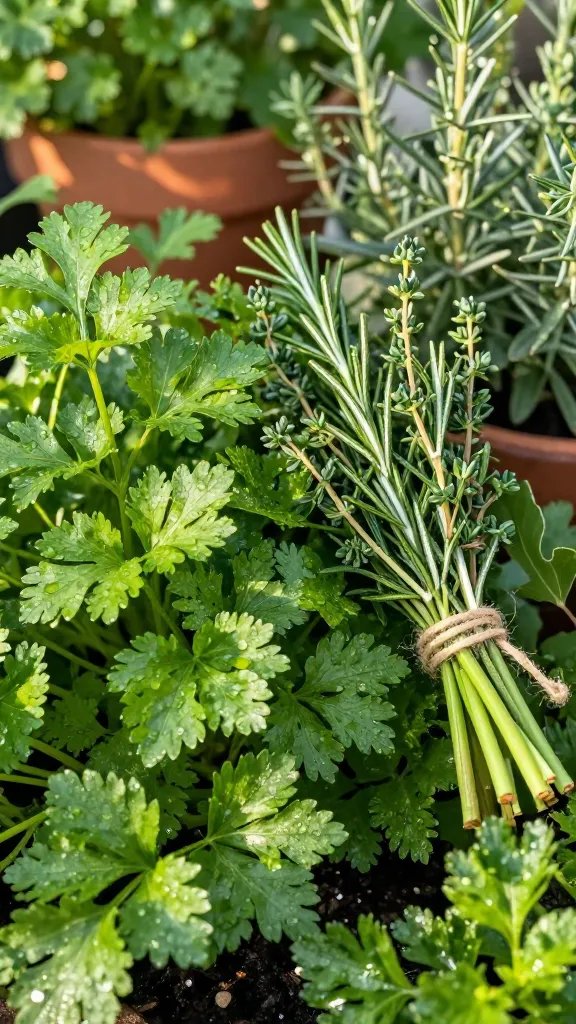
Flat-leaf parsley brings clean, green brightness that lifts heavy dishes. It ties a bouquet garni together—literally—since the stems make great “string.” Bonus: It grows fast and keeps producing.
How To Nail It
- Choose flat-leaf (Italian) for stronger flavor
- Partial shade tolerant but loves sun
- Harvest outer stems to keep it chugging along
Parsley loses flavor if cooked too long, so use stems in your bundle and save leaves for finishing. Sow successions every few weeks for a never-ending stash.
Use for: Stocks, bouquet garni ties, and finishing sauces and salads. It’s your “brightness button.”
4. Rosemary: The Aromatic Power Play
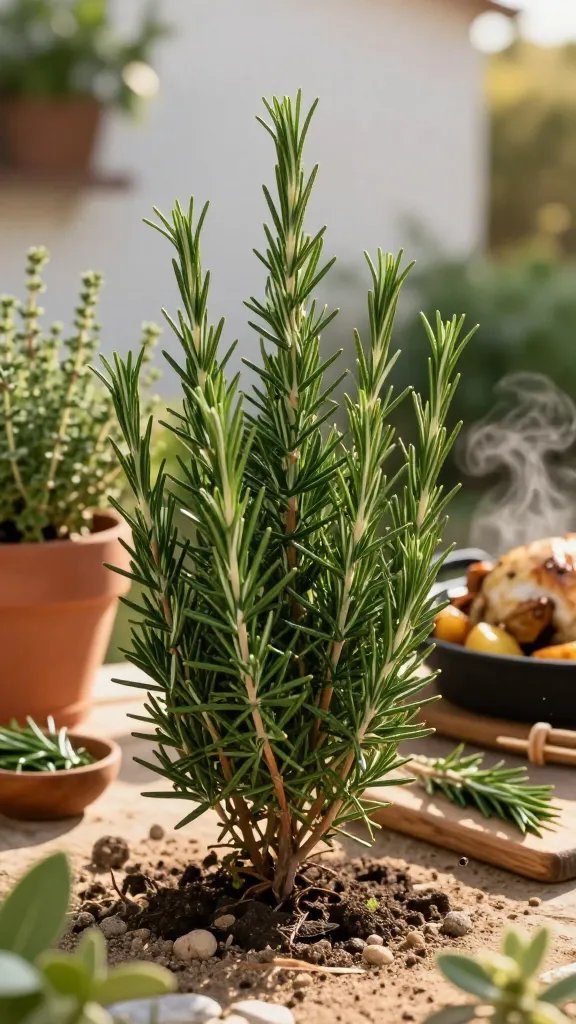
Rosemary marches into the pot and speaks with authority. Resinous, piney, and bold, it turns roast chicken, lamb, and potatoes into an event. Grow one plant and you’ll season the whole neighborhood.
Care Essentials
- Full sun and airy soil—treat it like a Mediterranean beach-goer
- Don’t overwater—seriously
- Prune regularly to prevent woody, leggy growth
Use small sprigs in bouquet garni so it doesn’t overpower delicate flavors. Strip leaves for quick recipes and save woody stems for skewers.
Use for: Bouquets with hearty dishes, roasted veg, and bread. Think “Sunday roast starter pack.”
5. Sage: The Cozy Factor
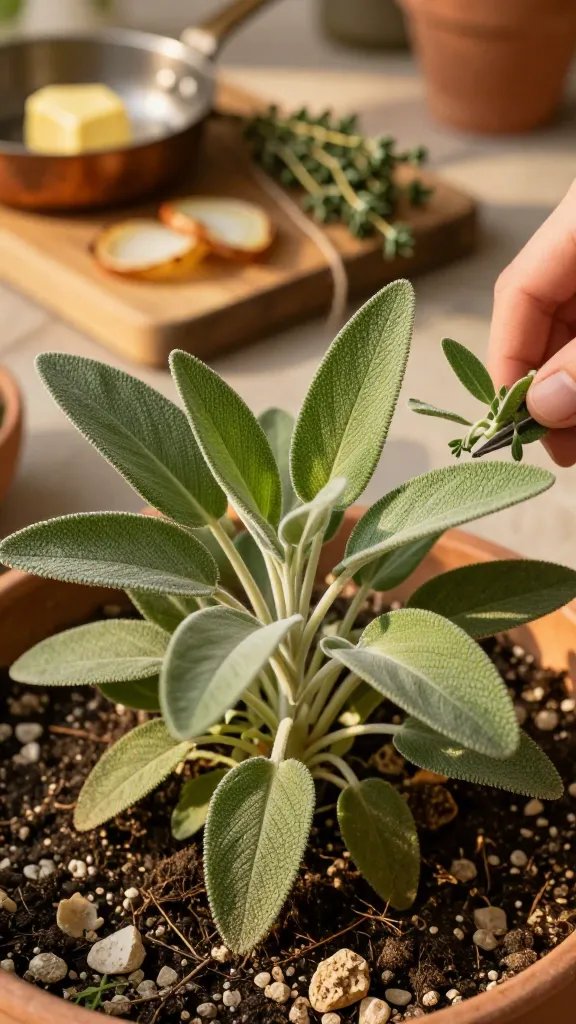
Sage tastes like fall sweaters and slow Sundays. It brings a warm, peppery, slightly camphorous note that plays perfectly with butter and browned onions. In a bouquet garni, it deepens gravies and braises without stealing the show.
Plant and Pair
- Sun lover with excellent drainage
- Don’t baby it—tough plants taste better
- Harvest lightly in year one; go bigger in year two
Use young, soft leaves for cooking; they taste less medicinal. Crisp them in butter for garnish, and add 1–2 leaves to a bouquet garni for rich sauces.
Use for: Poultry, sausages, and creamy dishes. It’s the “comfort” knob you turn up as the weather cools.
6. Marjoram: The Sweet, Floral Curveball
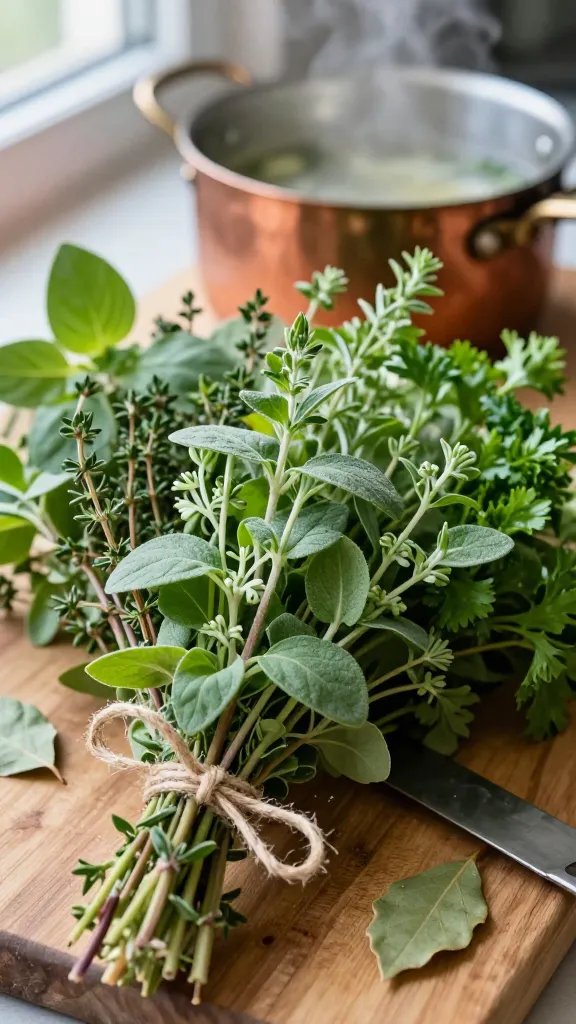
Marjoram is oregano’s softer, more charming sibling. It adds a sweet, floral lift to the mix that makes vegetable soups and white sauces sing. If your stew tastes a little flat, marjoram perks it up.
What To Know
- Tender perennial often grown as an annual in colder climates
- Pinch frequently to keep it bushy and delay flowering
- Add late or use in light simmering for maximum aroma
Marjoram’s delicate character can vanish with long cooking, so tuck a small sprig into your bouquet or finish with chopped leaves. It brings a wow factor without shouting.
Use for: Vegetable broths, fish stews, cream sauces, and lighter poultry dishes. FYI: It bridges thyme and parsley beautifully.
7. Tarragon: The Elegant Anise Whisper
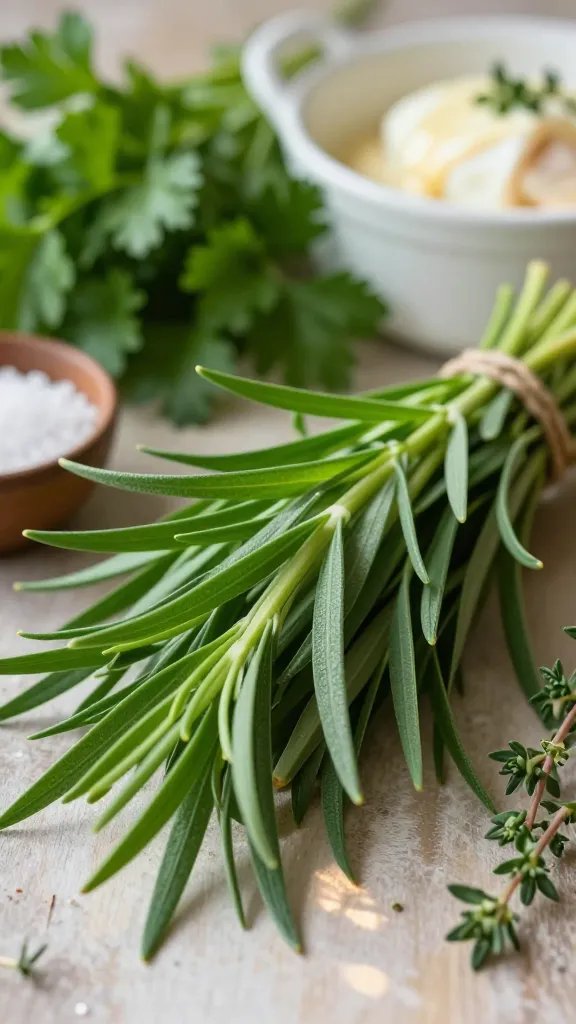
Tarragon brings a subtle anise note that feels fancy without trying. It loves chicken, fish, and anything creamy. In a bouquet garni, it adds complexity that people notice—but can’t quite place.
Growing Like A Pro
- French tarragon only for true flavor (propagated from cuttings)
- Morning sun, afternoon shade in hot climates
- Light, regular trims to prevent flowering and bitterness
Use sparingly—too much reads “licorice,” which is a vibe but not for every pot. Add near the end of cooking or use small sprigs in the bundle if simmering longer.
Use for: Chicken soup, poached fish, creamy sauces, and vinaigrettes. It’s your “elegant dinner party” herb.
8. Winter Savory: The Underrated Herb You’ll Brag About
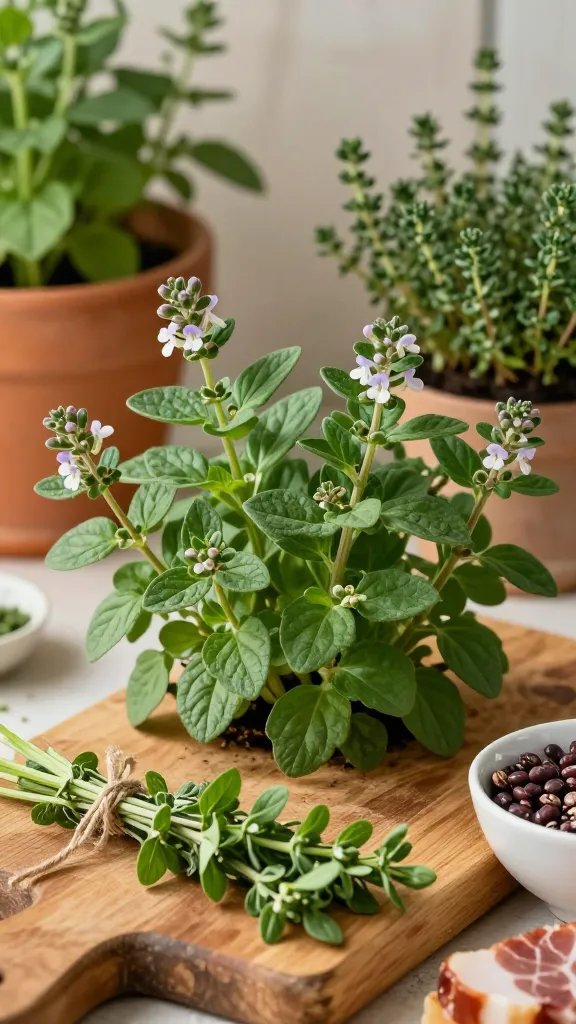
Winter savory is the sleeper hit for bean dishes and charcuterie-friendly stews. Peppery, thyme-adjacent, and sturdy, it holds up to long cooking without losing its spark. If thyme’s your all-rounder, savory is your specialist.
Why Grow It
- Evergreen in mild climates and cold-hardy
- Compact habit perfect for edges or containers
- Low maintenance with high payoff
Snip sprigs for bouquet garni whenever beans, lentils, or pork hit the pot. It helps with digestibility too—old-school cooks knew what they were doing.
Use for: Bean soups, cassoulet, lentil stews, and sausage dishes. Seriously, it’s the flavor friend you didn’t know you needed.
Quick Bouquet Garni Basics
- Classic combo: Parsley stems + Thyme + Bay
- Hearty upgrade: Add Rosemary or Sage
- Delicate twist: Add Marjoram or Tarragon toward the end
- For beans: Swap in Winter Savory
- Tie with kitchen twine or wrap in a small cheesecloth square
Keep bundles small—about the size of your thumb. You want flavor, not a forest floor.
Planting Layout Tips
- Sun hogs (front row): Thyme, Rosemary, Sage, Savory
- Partial shade friendly: Parsley, Marjoram
- Divas in containers: Bay Laurel, Tarragon
- Drainage matters: Add gravel or perlite in pots to keep roots happy
Mix textures and heights for a pretty, snippable patch. Also, plant near the kitchen if you can—you’ll actually use them.
Harvesting And Storing
- Snip in the morning after dew dries for peak oils
- Use fresh, or hang small bundles upside down to dry in shade
- Store dried herbs whole in airtight jars and crumble as needed
- Freeze tender herbs in olive oil cubes for quick weeknight magic
Label your jars. Future you will forget what’s what. Happens to the best of us.
Common Mistakes To Dodge
- Overpowering the pot: One strong herb (like rosemary) per bundle, max
- Boiling delicate herbs: Add marjoram and tarragon near the end
- Waterlogging: Most Mediterranean herbs want drainage, not soggy roots
- Neglecting pruning: Regular trims keep plants flavorful and bushy
Follow those basics and your garden will basically cook with you.
Ready to play herb Tetris? Plant these eight and your kitchen will smell like a bistro on a rainy night. Start with the classic trio, then riff with marjoram, tarragon, and savory when you want something special. Your soups, stews, and sauces will thank you—loudly.