
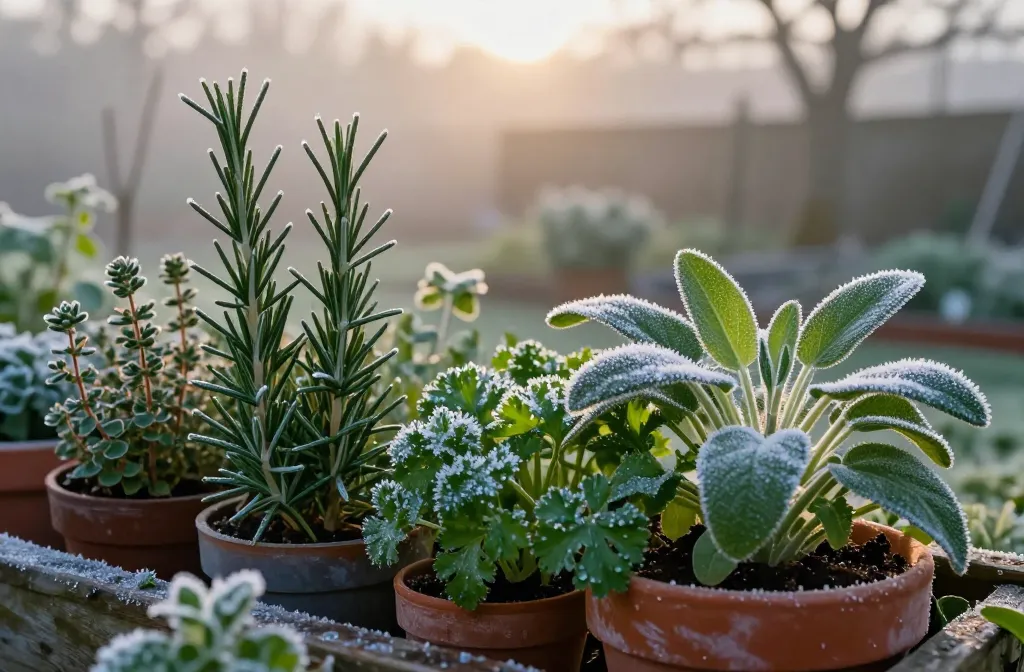
Your garden doesn’t have to pack it in the second temps flirt with freezing. Plenty of hardy herbs laugh in the face of a light frost and keep pumping out flavor. We’re talking cold-kissed leaves, richer aromas, and plants that don’t demand coddling. Ready to keep harvesting when everyone else gives up?
1. Rosemary: The Evergreen Warrior
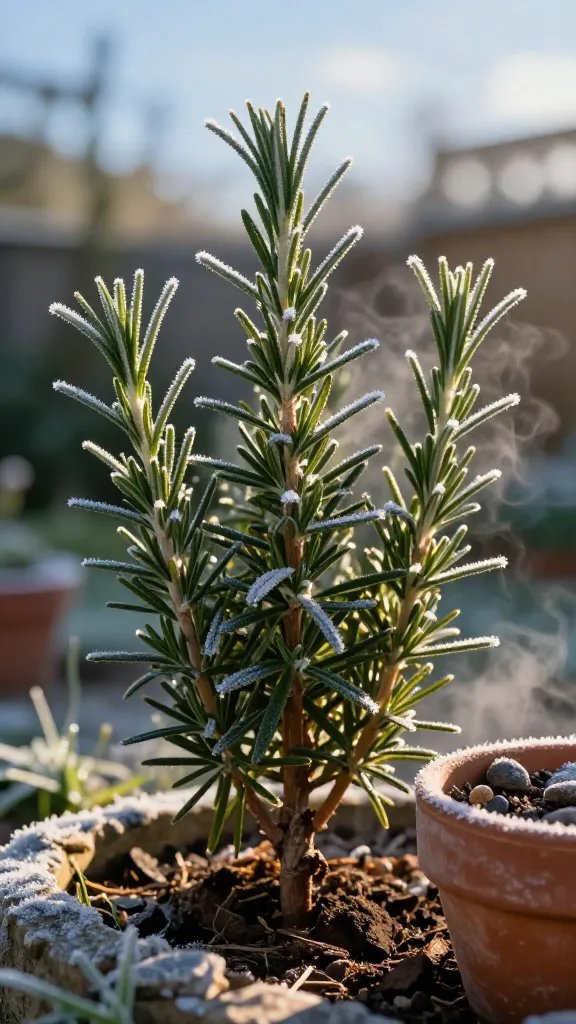
Rosemary stays gorgeous when the weather turns moody. Its needle-like leaves shrug off light frost, and the flavor actually deepens as temps dip. If you want a no-drama herb that looks good year-round, this is it.
Why It Thrives
- Woody structure insulates stems against chill.
- Oily leaves protect from dehydration and frostbite.
- Slow metabolism helps it ride out cold snaps.
Plant rosemary in a sunny, well-drained spot. Container growers: pick a terracotta pot so roots don’t stay soggy. You can even snip sprigs after a light frost for roasts or focaccia—the aroma goes next-level.
Best use: Cold-weather roasts, potatoes, breads, and infused oils when you want woodsy depth.
2. Thyme: Tiny Leaves, Big Chill Tolerance
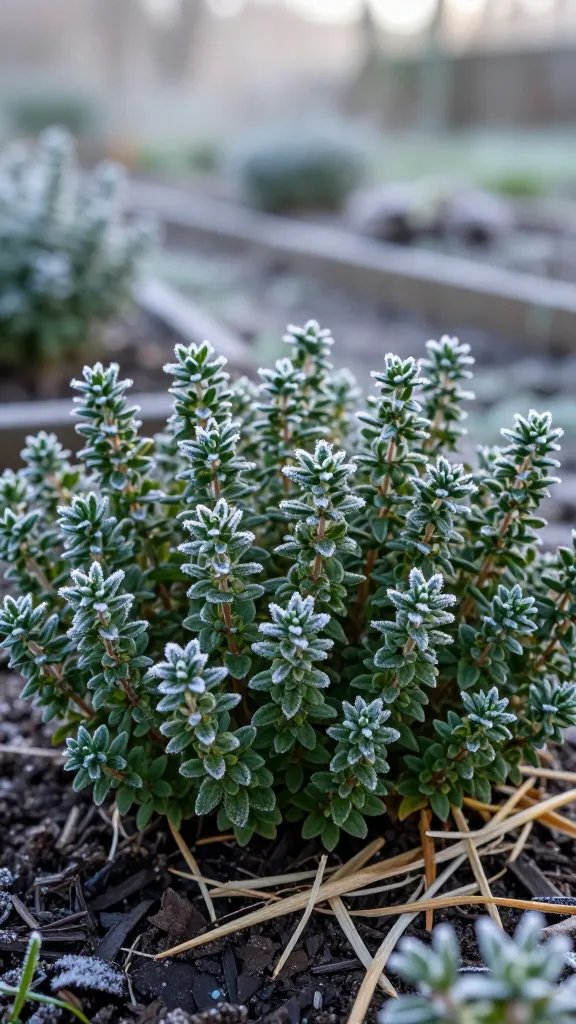
Thyme is small but mighty, and it handles light frost like a champ. Those little leaves cling close to the stems, which shields them from damage. Plus, thyme matures into a low mat that traps a bit of heat near the soil.
Tips To Keep It Thriving
- Choose English or German thyme for extra hardiness.
- Trim lightly after the first frost to shape, not scalp.
- Mulch around the base to protect the crown.
Flavor-wise, frost concentrates its earthy, lemony punch. Toss it into soups and sheet-pan dinners when you want cozy, herby comfort without babying your plants, IMO.
Best use: Stews, roasted veg, poultry rubs, and herbed butter for cold nights.
3. Sage: The Frost-Kissed Flavor Bomb
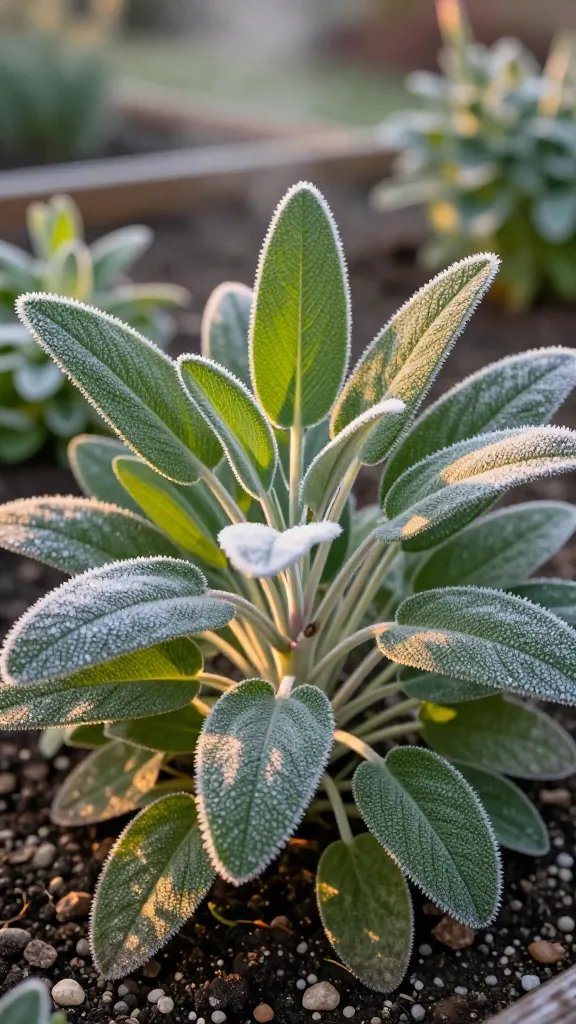
Sage goes from good to unforgettable after a nip of frost. The leaves get slightly sweeter and the aroma turns richer. The fuzzy texture on the leaves even helps insulate them.
Key Care
- Give it full sun and drainage—soggy roots = sad sage.
- Prune in spring to keep it from going woody and cranky.
- Clip outer stems first; leave the inner growth to keep powering the plant.
When stuffing season hits, you’ll thank yourself for keeping sage alive. Fry a few leaves in butter and drizzle over squash or pasta. It tastes like fall in a pan, seriously.
Best use: Brown butter sauces, stuffing, pork and poultry, and crispy leaf garnishes.
4. Parsley: The Resilient Workhorse
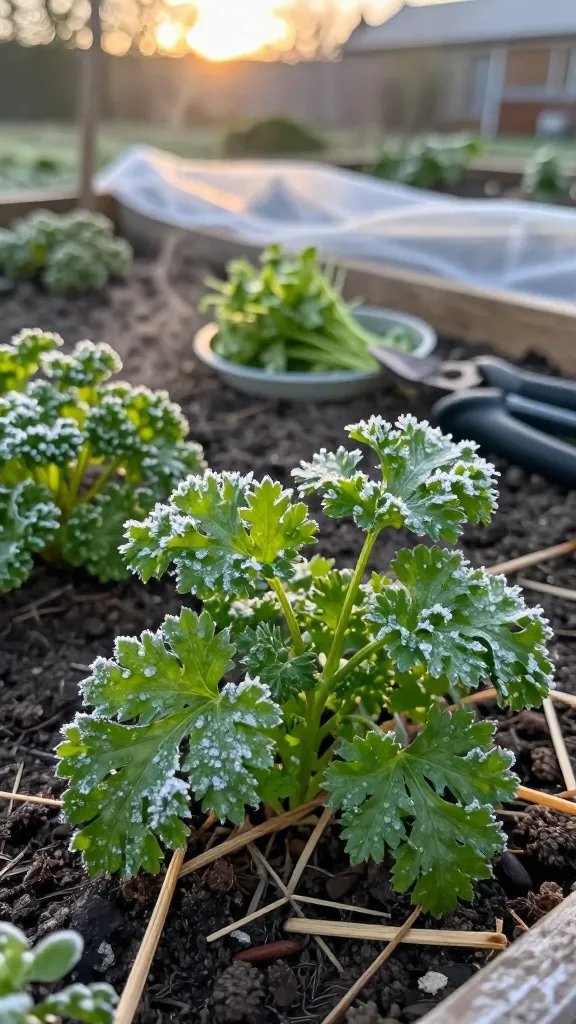
Curly or flat-leaf, parsley keeps pushing after a light frost. It might wilt lightly overnight, then perk up as soon as the sun shows up like nothing happened. It’s the kitchen MVP that refuses to quit.
Pro Moves
- Grow flat-leaf (Italian) parsley for bigger flavor; curly for texture.
- Harvest from the outside in so it keeps producing.
- Mulch lightly to protect the crown, and cover with a sheet on frosty nights if temps plunge.
Chop it into chimichurri or gremolata to bring brightness to hearty winter meals. A handful on soup instantly wakes it up.
Best use: Salads, sauces, tabbouleh, and finishing any dish that needs green sparkle.
5. Chives: The Cold-Snap Comeback Kid
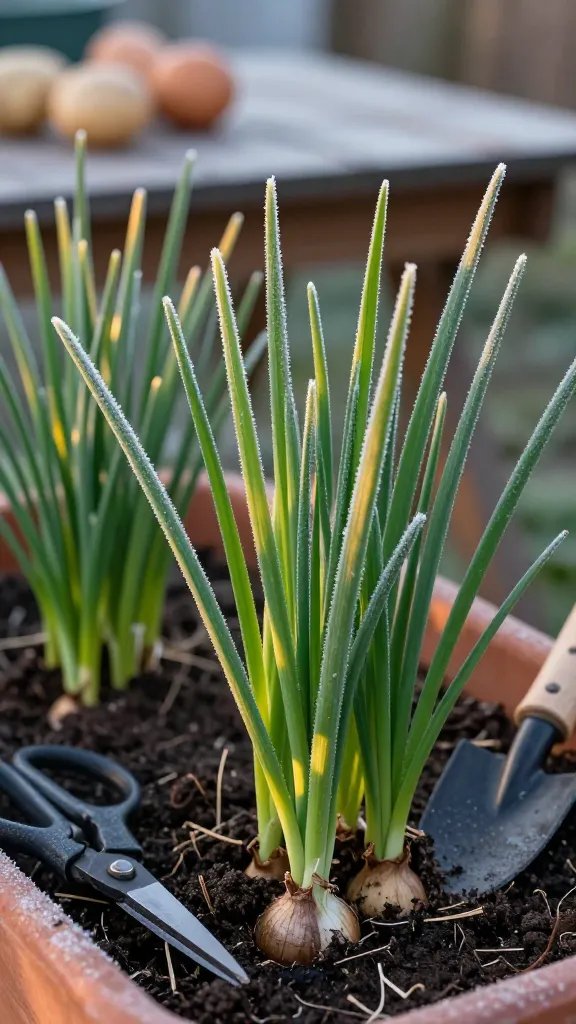
Chives handle light frost with minimal drama. The tops might flop after a chilly night, then bounce back like they never left. Even if the leaves do die back later, the bulbs survive and regrow stronger in spring.
How To Get The Most
- Plant in clumps and divide every 2–3 years to keep them vigorous.
- Keep soil moist but not soggy, especially in containers.
- Snip with scissors; don’t yank—pulling weakens the bulbs.
That mild onion flavor sings in eggs, potatoes, and creamy dips. Clip a bunch right after frost and stir into sour cream with lemon and salt—instant baked potato magic, FYI.
Best use: Omelets, soups, herbed cream cheese, and garnish for everything.
6. Mint: The Unkillable Aromatherapy Plant
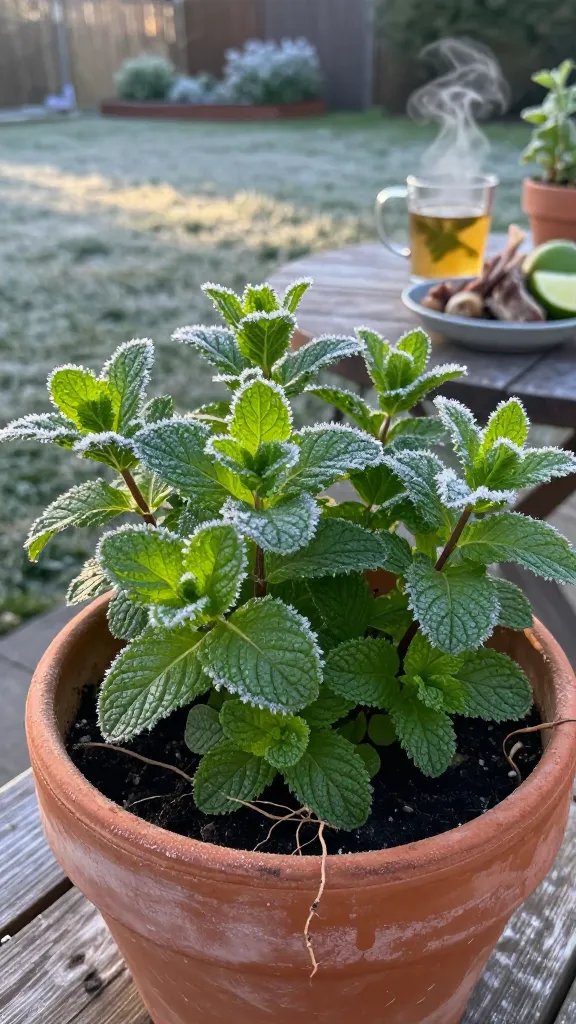
Mint treats light frost like a mild inconvenience. The tops may look a little rough after a cold night, but the underground runners stay lively and ready to push new growth. Translation: you’ll still have mojito leaves when the neighbors don’t.
Contain The Chaos
- Grow mint in a container unless you want it to colonize your yard.
- Trim leggy stems to encourage bushy growth.
- Water consistently—drying out makes the flavor harsher.
Cold-kissed mint tastes sweeter and brighter. Use it in hot tea, lamb marinades, or a cheeky chocolate-mint bark while you smugly watch it thrive.
Best use: Teas, cocktails, salads, and desserts when you want a clean, cool finish.
7. Oregano: The Robust Pizza-Plant
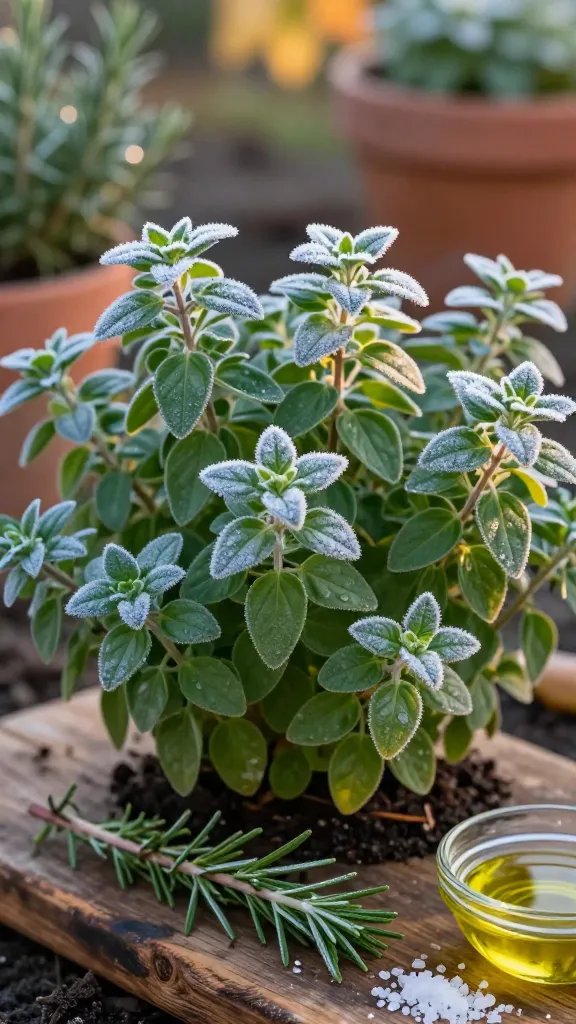
Oregano doesn’t just survive a light frost—it flexes. The leaves grow thicker, the oils intensify, and the flavor stands up to rich, cold-weather dishes. It’s basically built for fall cooking.
Grow It Like A Pro
- Pick Greek oregano for punchy flavor; Italian for a softer note.
- Let it dry a touch between waterings for stronger oils.
- Harvest stems and hang-dry—it keeps flavor beautifully through winter.
Crush a pinch into tomato sauces, roasted mushrooms, or a simple olive oil dip for bread. You’ll get that classic pizzeria aroma without leaving your kitchen, trust me.
Best use: Pizza, pasta sauces, roasted meats, and herb blends like za’atar or Italian seasoning.
See? Your herb garden doesn’t need a goodbye party the second frost shows up. Plant these hardy heroes, give them a little mulch and sunshine, and keep snipping through chilly mornings. Your winter meals will taste fresher, brighter, and a whole lot more impressive with almost zero extra work.