
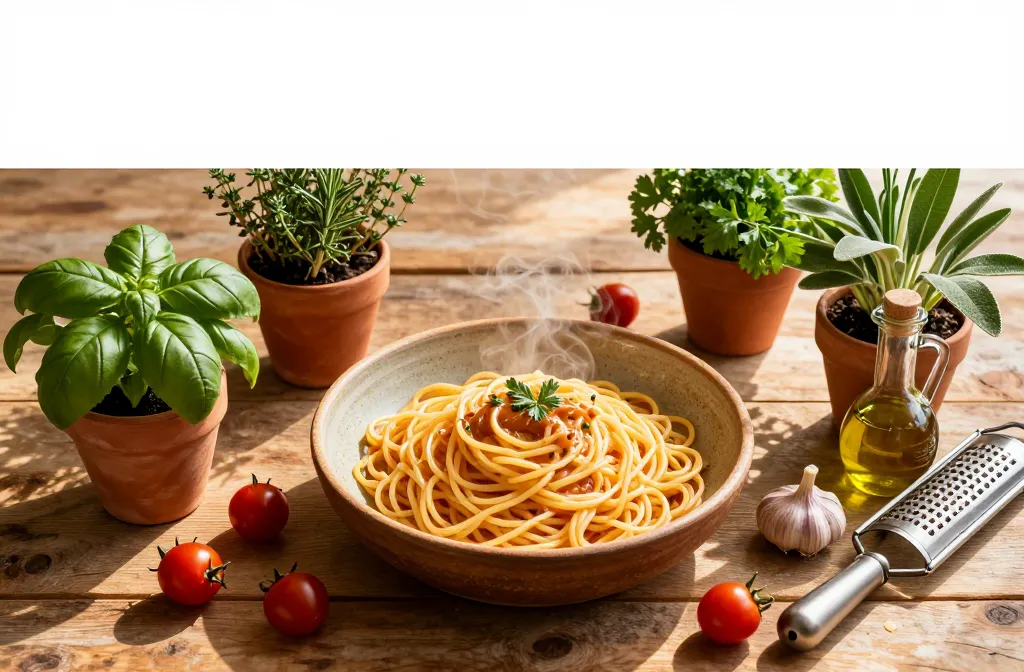
Imagine twirling pasta that tastes like a tiny trattoria moved into your backyard. These herbs bring that sun-drenched Italian flavor straight to your plate, no flights required. Grow them in pots, raised beds, or a windowsill jungle—your sauces won’t know the difference. Ready to make weeknight pasta taste like vacation?
1. Basil: The Sweet, Peppery MVP
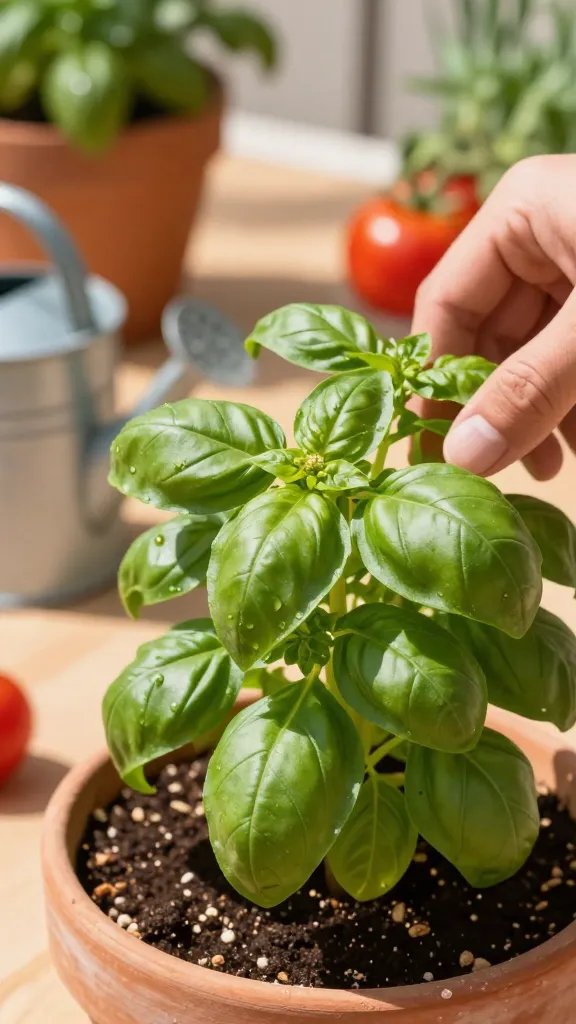
Basil basically runs the Italian herb world. It’s sweet, slightly peppery, and turns any tomato dish into a mic-drop moment. Grow a lot—you’ll use it constantly and it bolts faster than you can say “caprese” if you slack on harvesting.
Tips for Happy Basil
- Sun: 6–8 hours of direct light; warmth is everything.
- Soil: Loose, well-drained, slightly rich; add compost for lush leaves.
- Water: Keep evenly moist; avoid soggy roots.
- Pruning: Pinch tops often and remove flower buds to keep leaves tender.
Use basil fresh in pesto, tossed into hot pasta at the end, or layered with tomatoes and mozzarella. For quick pasta, stir chopped basil into buttered noodles with grated Parm—simple, perfect, done.
2. Oregano: The Earthy Flavor Bomb
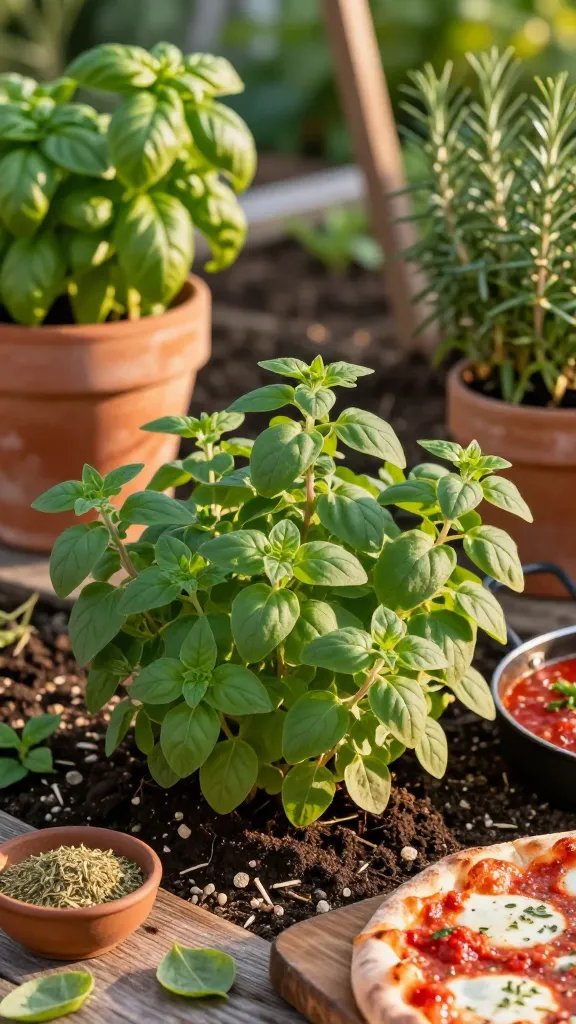
Oregano brings bold, peppery heat that laughs at slow simmering sauces. It shines dried or fresh, which makes it a pantry hero and a garden staple. Plus, it’s tough as nails—great for beginners.
Key Points
- Varieties: Choose Greek oregano for robust flavor; Italian oregano offers a gentler punch.
- Sun & Soil: Full sun, lean soil; too much fertilizer dulls the flavor.
- Maintenance: Trim stems to keep it bushy; harvest before blooming for best taste.
Use oregano in marinara, arrabbiata, and pizza sauces. It adds backbone to baked ziti and lasagna, and a pinch in garlic oil over spaghetti? Chef’s kiss, seriously.
3. Italian Parsley: The Zesty Finisher
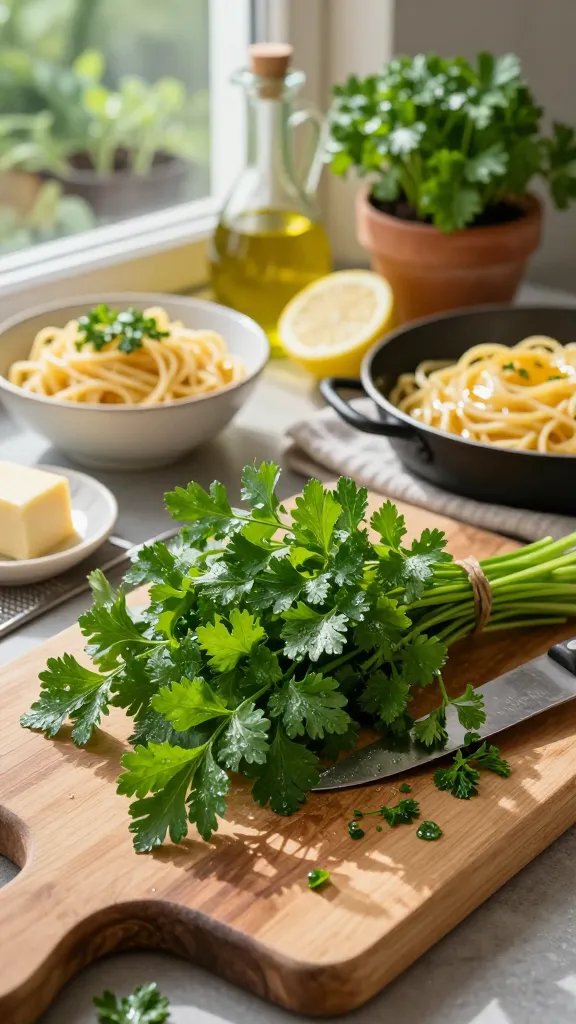
Italian (flat-leaf) parsley gives bright, clean flavor that wakes up rich pasta. It’s not just garnish—think of it as the citrus of herbs. It balances heavy cream, butter, and cheese like a pro.
Grower’s Notes
- Light: Full sun to part sun works; it tolerates a bit of shade.
- Soil: Moist, well-drained; mulching helps steady moisture.
- Harvest: Cut outer stems at the base; let the crown keep growing.
Chop parsley and shower it over cacio e pepe, carbonara, or garlic-lemon spaghetti. Make a quick gremolata with parsley, garlic, and lemon zest to finish any pasta that needs sparkle. FYI: it’s an excellent iron booster and breath freshener—practical and delicious.
4. Rosemary: The Piney Powerhouse
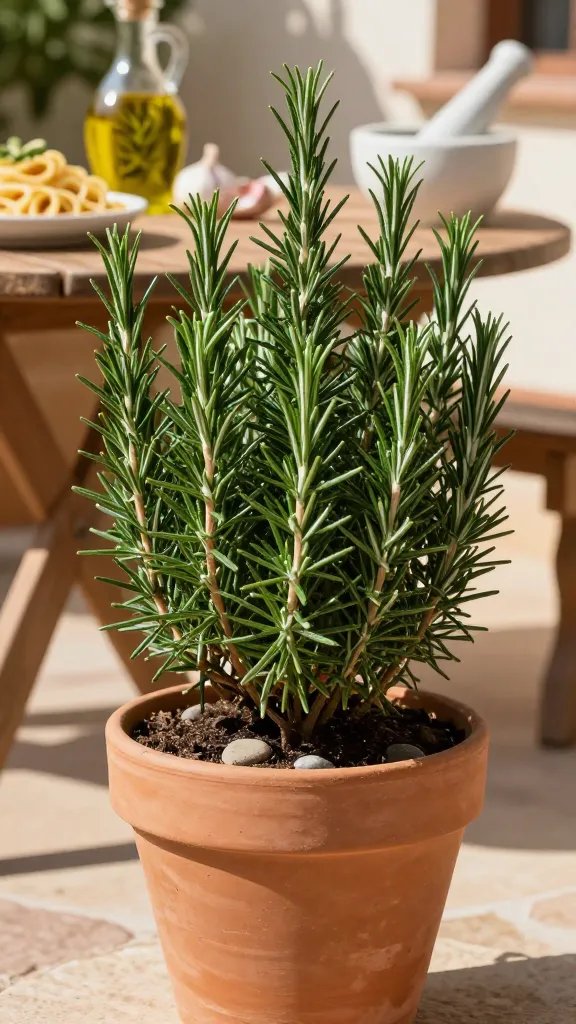
Rosemary brings woodsy, resinous aroma that turns simple pasta into a rustic masterpiece. It holds up to heat and roasts like a dream, but a light touch goes far—this herb has presence. Bonus: it’s basically a tiny evergreen shrub, so it looks chic in containers.
How To Keep Rosemary Happy
- Sun: Full, blazing sun; it loves heat.
- Drainage: Critical. Use gritty soil and a pot with a drainage hole.
- Water: Let the top inch dry out—no soggy drama.
Infuse olive oil with rosemary and garlic for a fragrant drizzle over pasta with white beans and cherry tomatoes. Or crisp breadcrumbs in rosemary oil and sprinkle over aglio e olio for crunch. Use when you want depth and savory perfume.
5. Thyme: The Subtle Scene-Stealer
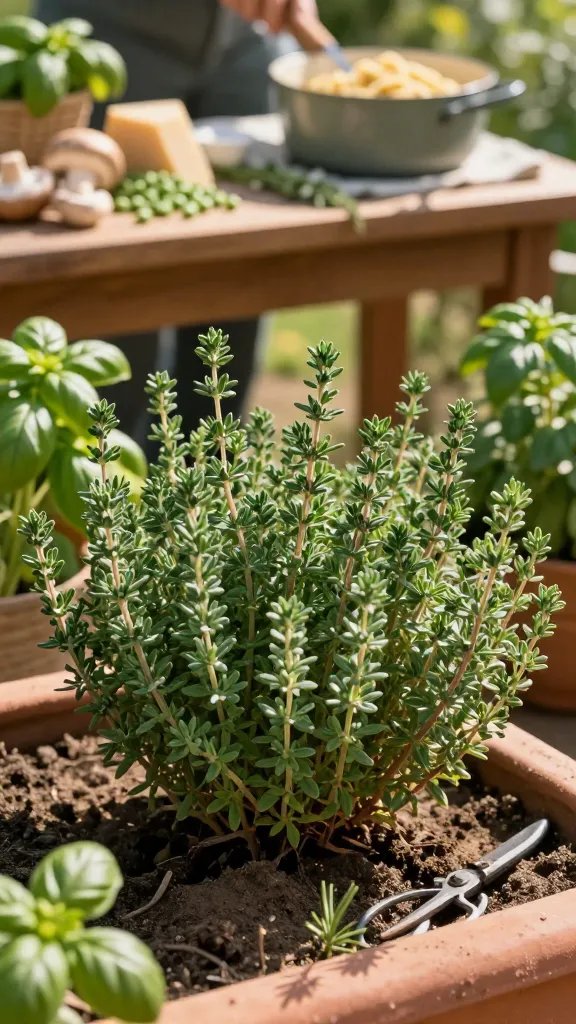
Thyme whispers rather than shouts, but you’ll miss it when it’s gone. It adds savory, lemony complexity that blends beautifully with cream sauces, mushrooms, and roasted veggies. The tiny leaves pack flavor without overpowering.
Planting and Harvesting
- Light: Full sun; thrives in heat.
- Soil: Sandy or well-drained; thyme hates wet feet.
- Harvest: Snip soft tips; woody stems can be stripped or tossed whole for infusions.
Try thyme in mushroom ragù or folded into a silky Alfredo with peas. Steep sprigs in butter, toss with pasta, and finish with Parm and lemon zest. IMO, thyme is your secret sauce for restaurant-level nuance.
6. Sage: The Nutty, Buttery Charmer
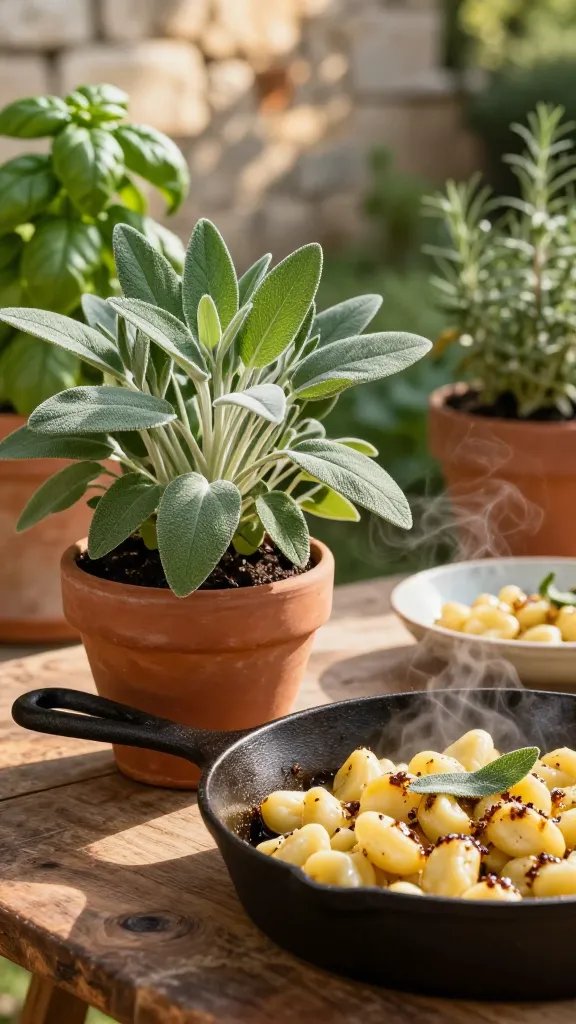
Sage adds soft, peppery, almost eucalyptus-like depth that loves butter and brown sauces. A few crisped leaves instantly turn a basic dish into something you’d order at a cozy osteria. It’s also easy to grow and looks gorgeous with silvery leaves.
Care Essentials
- Sun: Full sun; handles heat once established.
- Soil: Well-drained, slightly lean; too much fertilizer = bland leaves.
- Pruning: Trim after flowering to keep it compact and productive.
Sizzle sage in brown butter and toss with gnocchi or ravioli—instant dinner flex. Add a leaf or two to sausage and tomato pasta for depth. Use when you crave warm, autumnal vibes any time of year.
7. Marjoram: The Softer, Sweeter Oregano
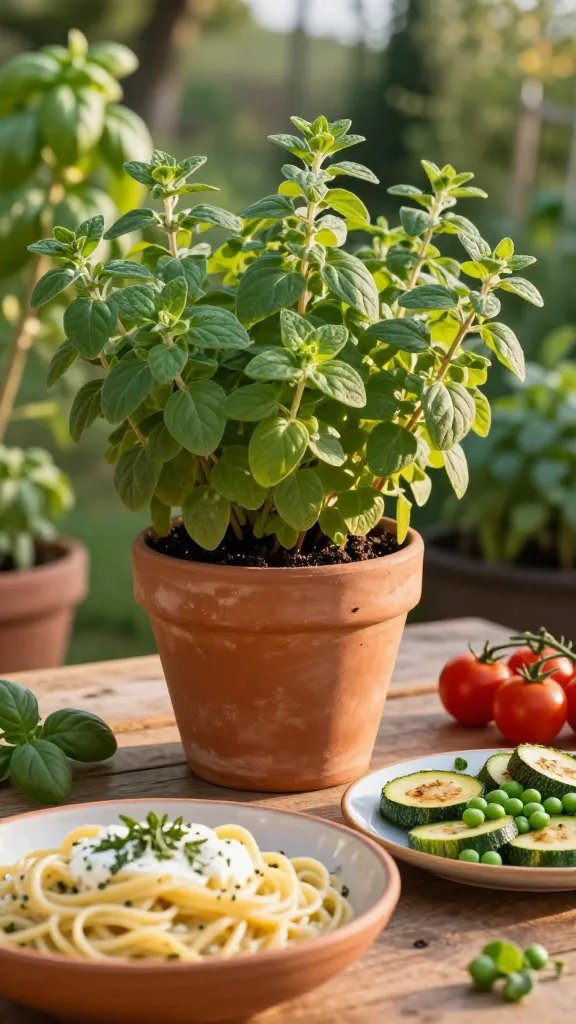
Marjoram is oregano’s charming cousin—floral, sweet, and delicate. It doesn’t dominate; it lifts flavors and makes everything taste a little more refined. If you love lighter pasta sauces, this is your herb.
Growing Pointers
- Light: Full sun; warmth boosts aroma.
- Soil: Well-drained; not too rich.
- Use: Add near the end of cooking to keep that gentle sweetness intact.
Stir fresh marjoram into lemony ricotta pasta or seafood linguine. It sings with zucchini, spring peas, and cherry tomatoes. Use marjoram when you want elegance without heat—trust me, it’s underrated.
Container Garden Game Plan
- Pot Sizes: Basil and parsley like 10–12 inch pots; woody herbs (rosemary, sage, thyme, oregano) do well in 8–12 inch pots with great drainage.
- Soil Mix: 70% high-quality potting mix, 20% compost, 10% perlite for airflow.
- Watering Rhythm: Finger test—water when the top inch is dry; rosemary and thyme prefer it drier.
- Harvest Smart: Snip in the morning after dew dries for peak oils.
- Companion Vibes: Keep basil with other moisture lovers; give rosemary and thyme their drier corner.
Quick Pairing Guide
- Basil: Tomato sauces, pesto, mozzarella, fresh finishes
- Oregano: Marinara, pizza sauce, baked pasta
- Italian Parsley: Finishes, gremolata, brightening rich dishes
- Rosemary: Garlic oil, beans, roasted veg pasta
- Thyme: Mushrooms, cream sauces, lemon zest combos
- Sage: Brown butter, ravioli, sausage pastas
- Marjoram: Seafood, ricotta, light vegetable pastas
Preserving Your Bounty
- Drying: Oregano, thyme, rosemary, and sage dry beautifully—hang small bundles in a dry, dark space.
- Freezing: Chop basil and parsley, freeze in olive oil in ice cube trays; drop into hot pasta later.
- Pesto Party: Basil or parsley pesto freezes great; leave out cheese and stir it in fresh when serving.
Ready to plant your pasta paradise? These seven herbs deliver big flavor with minimal fuss, and they’ll make weeknight noodles feel like a celebration. Start with two or three, add more as you go, and prepare for compliments at every dinner—because your garden’s about to taste like Italy, no passport required.