
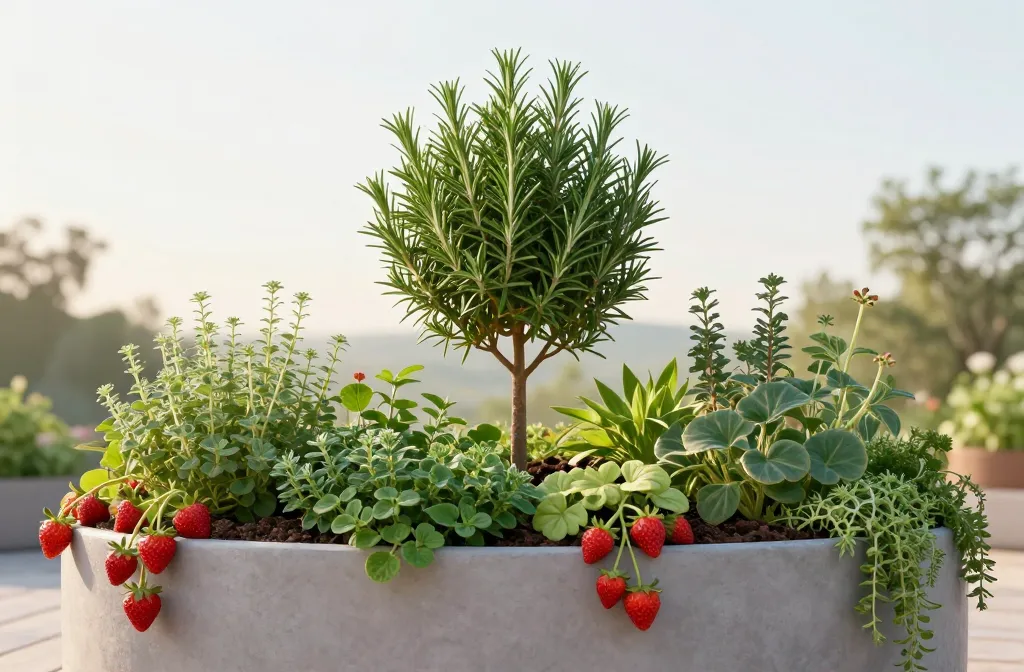
Containers shouldn’t be a one-hit wonder with a lonely thriller plant standing center stage. Layer in edible groundcovers and you get moisture control, weed suppression, and snacks—yes, snacks. These low-growers spill, trail, and fill the gaps under tall plants so everything looks lush and intentional. Ready to turn your pots into mini food forests?
1. Creeping Thyme That Smells Like Summer After Rain
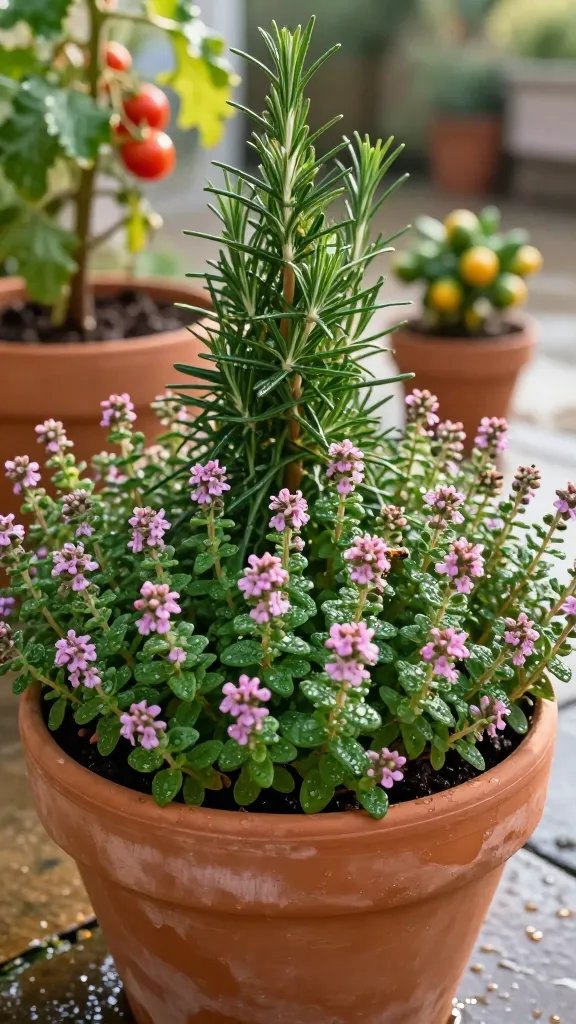
Creeping thyme hugs the soil, laughs at drought, and perfumes your patio every time you brush it. It slips under tall rosemary, tomatoes, or dwarf citrus and ties the whole container together with tiny flowers and glossy leaves.
Why It’s Awesome
- Low, dense growth that suppresses weeds and shades the soil
- Bees adore the blooms, which helps pollinate the whole container garden
- Culinary workhorse: toss it on roasted veggies, chicken, or flatbreads
Plant multiple plugs around the rim and let them knit together. Keep it on the dry side; thyme hates wet feet, especially in cool weather. Use it with upright herbs, peppers, or any tall plant that likes bright, warm conditions.
2. Strawberries That Cascade And Actually Taste Like Summer
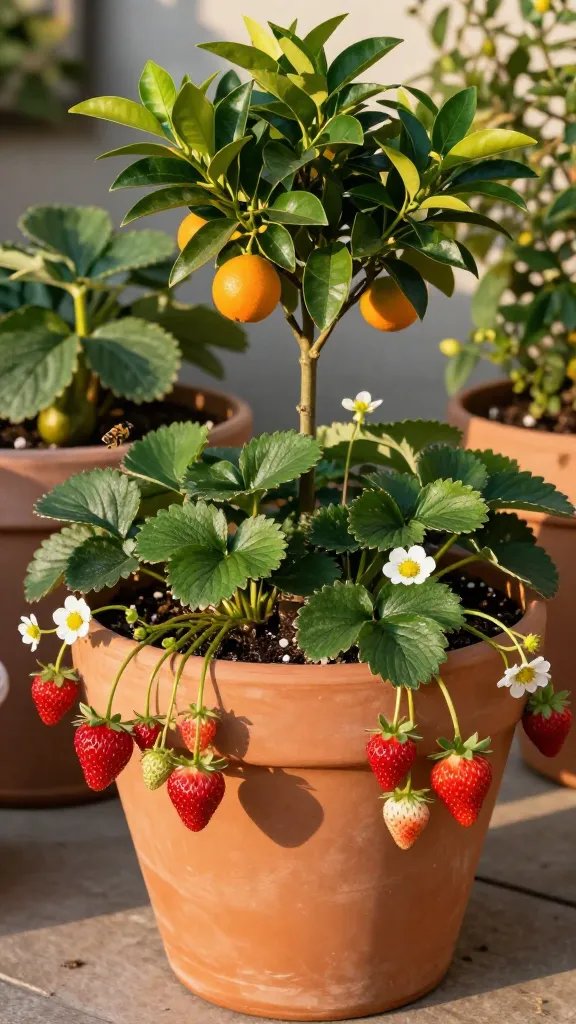
Alpine or everbearing strawberries spill over pot edges like a red-studded waterfall. They cover soil, attract pollinators, and reward you with sweet little bites while your tall plants do their thing.
Tips For Success
- Choose everbearing or alpine types (like ‘Mara des Bois’ or ‘Alexandria’) for steady snacking
- Pair with tall chill pals: blueberries, dwarf citrus, figs, or even roses
- Use a rich but well-draining mix and fertilize lightly every 3–4 weeks
Strawberries shade the soil and cut down watering needs. They shine in bigger containers where runners can drape instead of crowding your main plant.
3. Nasturtiums That Trail Like Jewelry And Taste Peppery
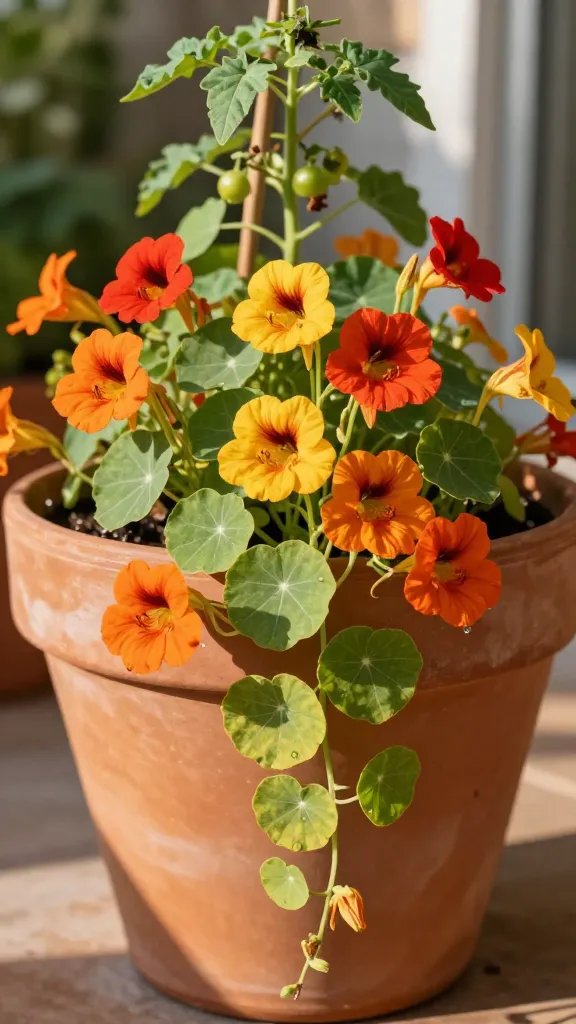
Nasturtiums bring edible flowers and lily-pad leaves that look like botanist-approved confetti. They love to tumble off the pot and create a living mulch around leggy showpieces like tomatoes and okra.
Key Points
- Entire plant is edible: leaves, flowers, and seeds (hello, “poor man’s capers”)
- Deterrent bonus: their scent can confuse some pests—anecdotal but helpful
- Thrives in leaner soil; too much fertilizer = all leaves, no blooms
Direct-sow seeds around the rim and thin to the strongest vines. Great when you want color plus salad toppings without fuss. FYI, they’ll outpace slower groundcovers, so give them elbow room.
4. Oregano That Makes Your Container Smell Like A Pizzeria
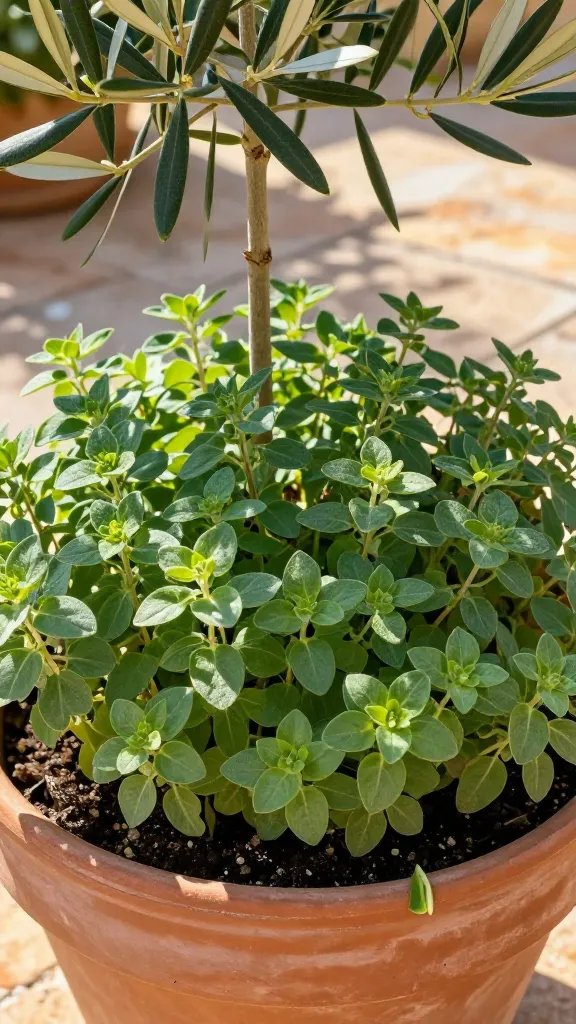
Oregano forms a soft, spreading mat that tolerates heat and light foot traffic (for the clumsy among us). It pairs beautifully with tall Mediterranean stars like olives, bay, eggplant, or cherry tomatoes.
Growing Notes
- Pick Greek oregano for bold flavor; Italian for a softer vibe
- Prune lightly to keep it low and bushy; harvest often for best taste
- Use a gritty, well-draining mix and avoid overwatering
Oregano’s dense habit blocks evaporation and makes containers look full and intentional. Use it when you want herbaceous groundcover that gives back in the kitchen, IMO one of the most underrated options.
5. Dwarf Garlic Chives For A Quiet Onion Kick
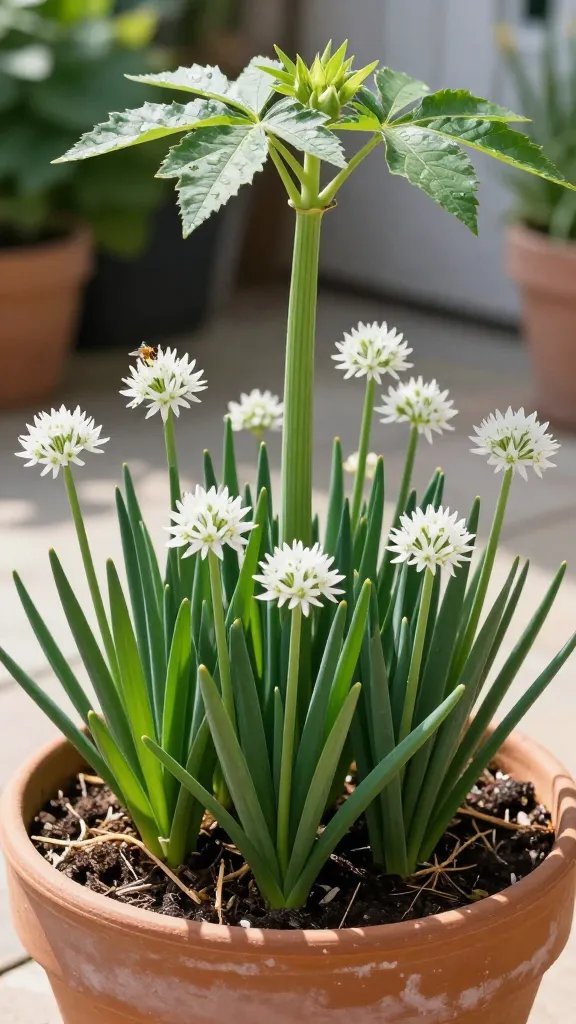
Garlic chives grow in tidy clumps with flat leaves and white starry flowers that look fancy and taste savory. They stay compact enough to edge a pot without hogging root space.
Why They Work
- Edible leaves and buds with mild garlic flavor—win
- Pollinator magnet when in bloom, which helps your tall fruiting plants
- Cold-hardy in many zones; regrows easily after harvest
Plant a ring of starts around a tall thriller like okra, lemongrass, or dwarf corn (yep, container corn exists). Clip leaves regularly to keep them compact and delicious. They’re clutch when you want subtle structure with year-round usefulness.
6. Low-Growing Sorrel That Brings Lemon Zing
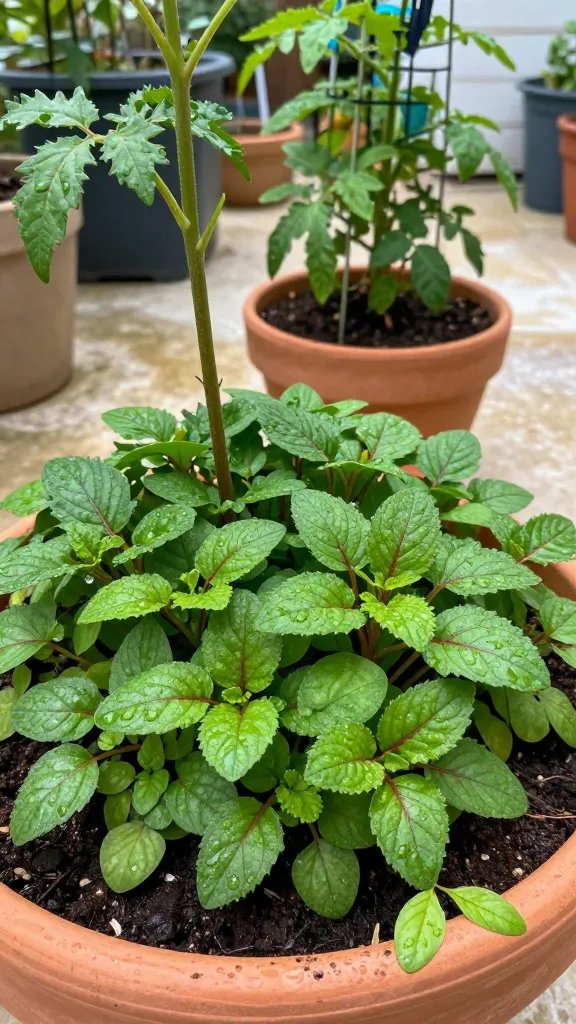
Red-veined or common sorrel lays down shiny leaves that taste like a squeeze of lemon—no citrus required. It tolerates partial shade, so it slots under taller plants like kale trees (yes, you can stake kale) or dwarf fruit trees.
How To Use It
- Harvest young leaves for salads and sauces; older ones get tangier
- Keep soil evenly moist; sorrel sulks when bone-dry
- Pair with thirstier tall plants like tomatoes or cucumbers for shared watering schedules
Sorrel’s broad leaves act like living mulch while giving you a constant supply of citrusy greens. Use it when you want shade tolerance and flavor that punches way above its size. Seriously, it wakes up anything creamy or starchy.
7. Prostrate Rosemary For Cascading Aroma And Drama
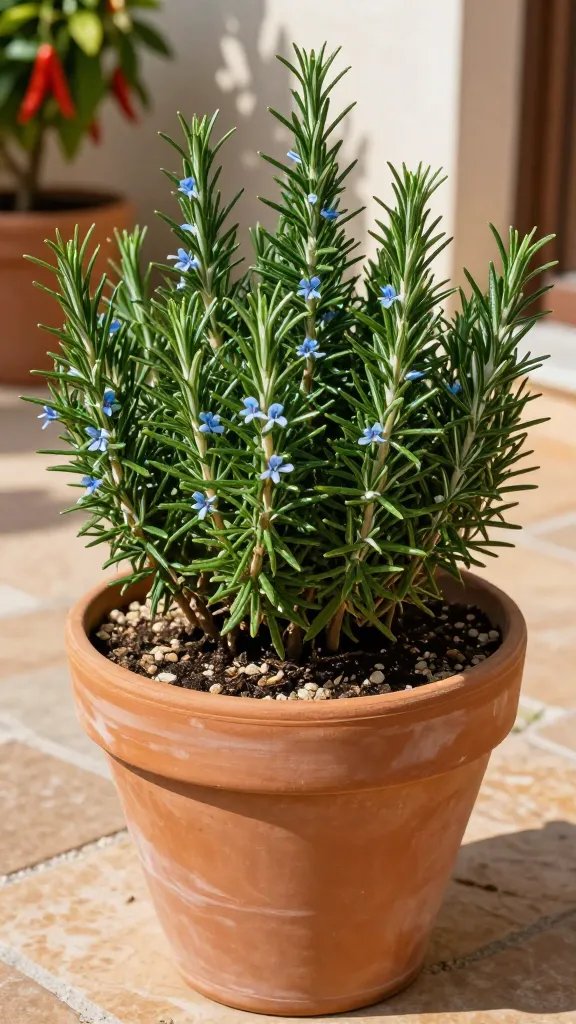
Prostrate rosemary drapes elegantly and smells like the Mediterranean coast after a sea breeze. It keeps soil covered, adds texture, and turns any container into a showpiece with edible style.
Care Cheats
- Full sun and excellent drainage—mix in extra perlite or pumice
- Trim lightly after flowering to encourage dense trailing
- Pair with upright companions like standard rosemary, bay, or chili peppers for “tall + fall” contrast
Snip sprigs for roasts, oils, and skewers. Use prostrate rosemary when you want an evergreen, drought-friendly groundcover that brings fragrance and a designer look with almost no maintenance.
Quick Pairing Ideas To Steal
- Tomato + nasturtiums + oregano = pizza garden in a pot
- Dwarf citrus + strawberries + thyme = brunch container
- Eggplant + prostrate rosemary + garlic chives = Mediterranean mood
- Blueberry (in acidic mix) + alpine strawberries = sweet-tart duo
Container and Care Basics (Because Details Matter)
- Size: Big pots win. Aim for at least 16–20 inches wide for multi-plant combos.
- Soil: High-quality potting mix with added perlite for drainage. Herbs prefer it leaner; fruiting plants want richer.
- Watering: Groundcovers reduce evaporation, but don’t get cocky—check moisture 2–3 inches down.
- Feeding: Slow-release organic fertilizer at planting; supplement with liquid feed for heavy feeders.
- Spacing: Start with small plugs. Let them fill in rather than cramming everything on day one.
Pick two of these edible groundcovers and try them with your tallest container diva. You’ll get better moisture control, prettier pots, and built-in garnishes—what’s not to love? Go plant, taste, repeat.