
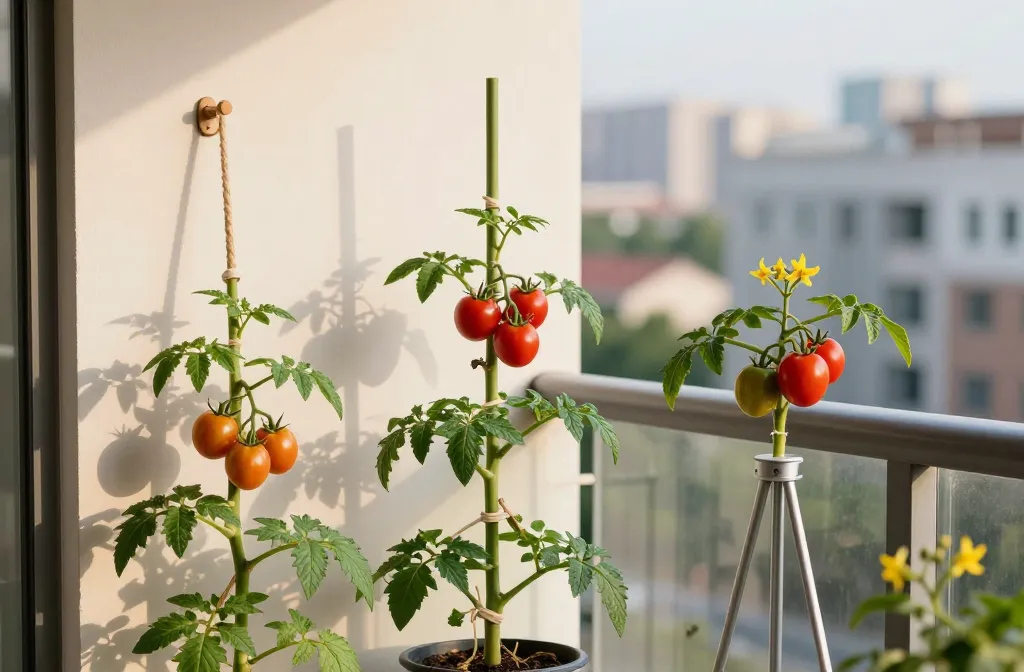
Tomato jungle in a pot and no cage in sight? You’re not doomed. With a few clever tricks, you can keep those vines upright, fruits blemish-free, and your balcony from looking like a plant wrestling ring.
These six methods skip the bulky store-bought cage and lean on smarter, more flexible setups. You’ll use simple materials, save space, and keep your plants happier. Ready to turn floppy stems into sturdy, fruit-loaded champs?
1. Single-Stake Training: The Minimalist’s Power Move
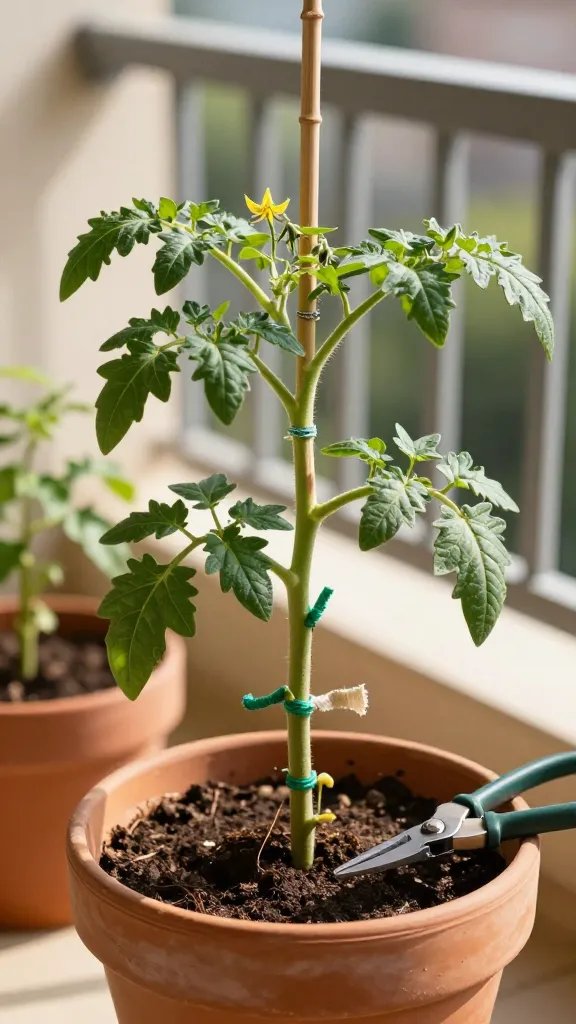
One sturdy stake and a handful of ties can tame even the most dramatic tomato vines. This method keeps airflow high, saves space, and makes pruning a breeze. It’s simple, clean, and surprisingly strong when done right.
What You’ll Need
- One 4–6 ft stake (bamboo, fiberglass, or a hardwood dowel)
- Soft ties: garden tape, old t-shirt strips, or Velcro plant ties
- Pruners for weekly tidying
Drive the stake into the pot before or right after planting. Place it near the main stem but not through the root ball. As the plant grows, tie the main stem to the stake every 6–8 inches, using loose figure-eight loops so the stem can expand.
Tips
- Choose a thick stake for indeterminate varieties. Skinny bamboo may bow under a heavy fruit set.
- Prune suckers regularly to maintain a single leader. Less foliage means less strain and better airflow.
- Avoid tight ties. You’re supporting, not choking.
Use this when you want a tidy, vertical tomato with easy harvest access and minimal materials. It’s the go-to for balconies and crowded patios.
2. Florida Weave, But Make It Portable
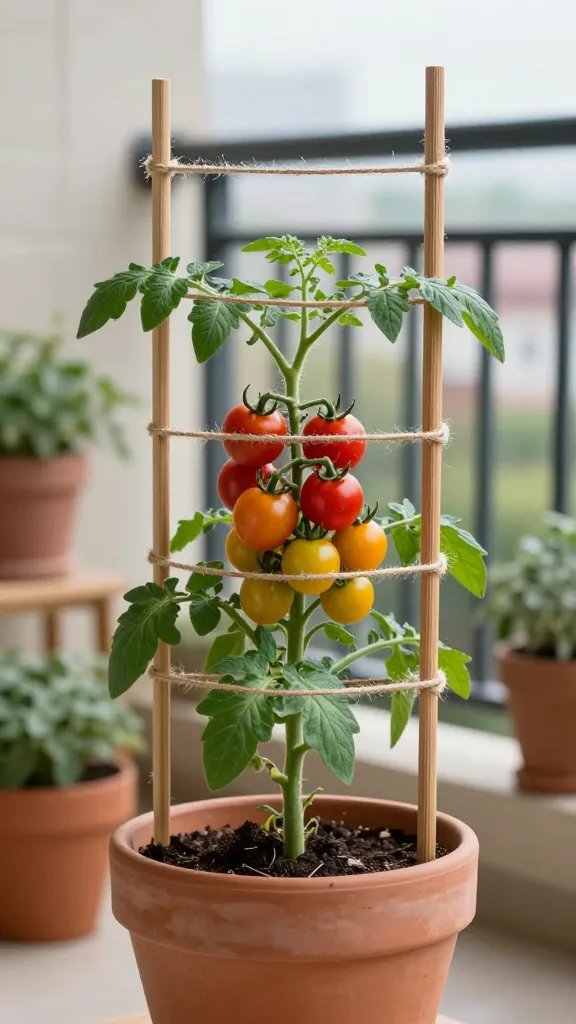
Think of this as a mini trellis woven around your pot. Two stakes stand on opposite sides, and you “weave” twine around the plant as it grows. It’s strong, adaptable, and surprisingly chic if you keep your lines neat.
How It Works
- Place two sturdy stakes at the front and back of the pot.
- Run twine from one stake to the other, on one side of the plant. Then run another line on the opposite side.
- As the plant grows, add new levels every 6–8 inches. You’re sandwiching the plant upright with twine layers.
This method distributes weight across multiple lines, so stems don’t pinch or kink. It also lets you guide branches without rigid frames.
Materials
- Two stakes (fiberglass or thick bamboo)
- Durable twine (jute works, but UV-resistant poly twine lasts longer)
- Scissors and a little patience
FYI: This shines for bushier plants or when you have multiple stems to corral. It’s flexible, affordable, and great if you’re done with tangled messes.
3. String Trellis From Above: The Balcony Hack
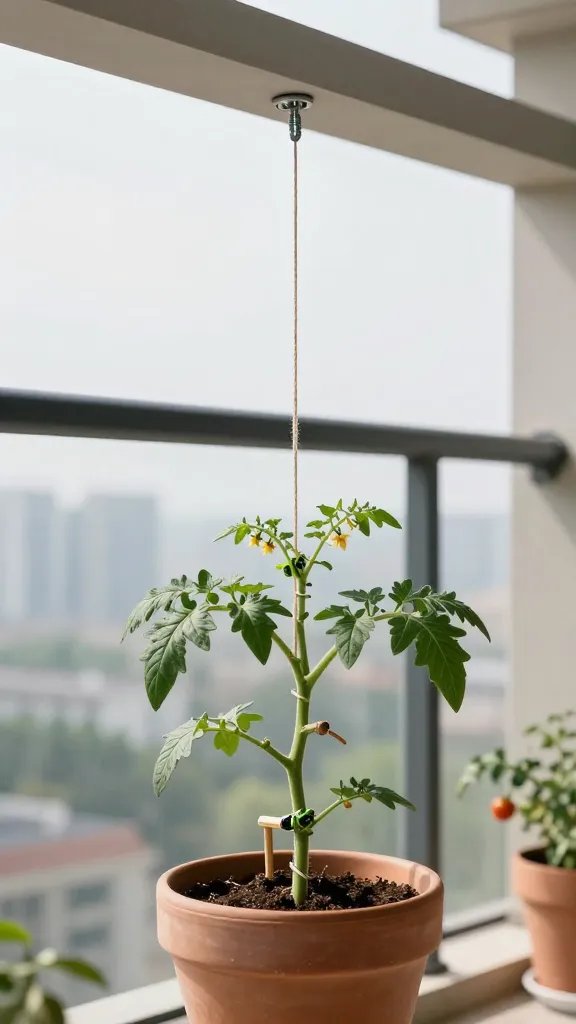
No ground space for stakes? Use gravity. A string trellis anchored above the plant trains tomatoes upward like a pro greenhouse. It’s sleek, strong, and leaves your pot uncluttered.
Setup
- Anchor a hook or eye screw overhead: balcony beam, pergola, or a mounted bracket.
- Run a strong line (nylon cord or tomato twine) down to the pot and secure it to a stake or a heavy-duty clip in the soil.
- Twist the main stem around the string as it grows, or use soft clips for extra support.
Want extra height? Just keep twirling the vine up. This keeps fruit off the rim of the pot and out of harm’s way.
Pro Tips
- Use a slip knot or carabiner at the top so you can tighten slack mid-season.
- Install a secondary line if you expect heavy clusters. Tomatoes love redundancy.
- Prune aggressively with indeterminates. This method favors a single or double leader.
Use this when you’ve got a balcony rail or pergola and want a clean, vertical setup without bulky hardware cluttering your pot.
4. DIY Ladder Trellis: Compact, Cute, And Sturdy
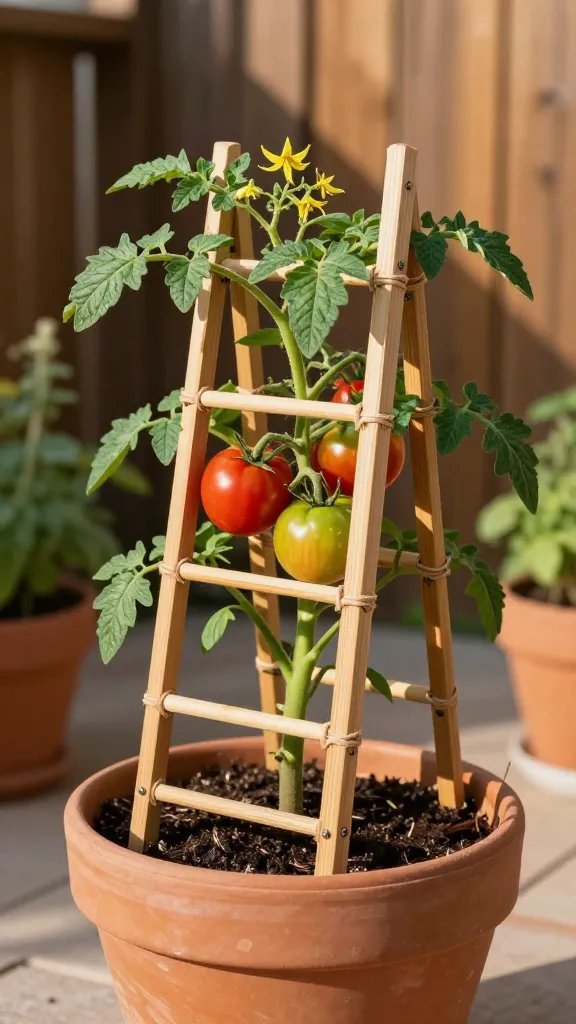
Build a mini ladder that sits in the pot like a little A-frame or flat-back trellis. It looks good, supports multiple branches, and lasts for seasons if you use decent wood. Plus, it gives you tons of tie-in points for easy training.
Basic Build Idea
- Two verticals: 3–4 ft hardwood dowels or cedar stakes
- Rungs: thin dowels or bamboo cut to width
- Attach with weatherproof screws, zip ties, or twine lashings
Push the ladder’s legs deep into the pot, hugging the back edge. Tie branches to the rungs as they develop, spacing ties so fruits hang free and don’t rub against wood.
Why It Works
- Multiple tie points mean less strain on any one stem.
- Flat profile fits against a wall, which is clutch for small patios.
- Easy to remove at season’s end without a wrestling match.
Use this when you want something sturdy, reusable, and nice-looking that supports both determinate and indeterminate varieties.
5. Bamboo Teepee Or Quad-Pod: The Flexible Framework
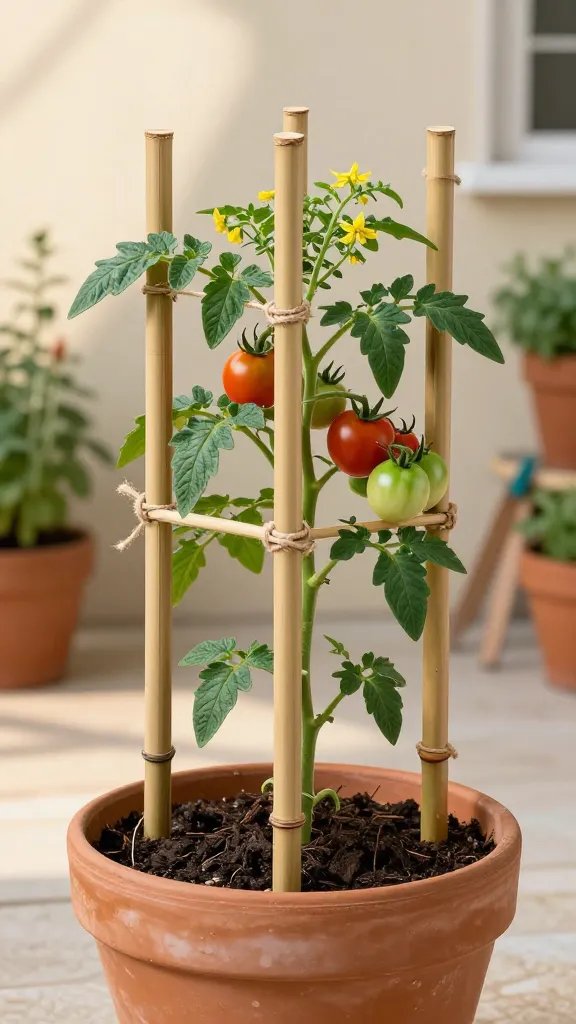
Three or four bamboo poles laced at the top create a teepee or quad-pod that handles big plants without metal cages. It’s light, cheap, and deceptively strong. You can adapt it to fit any pot size, which makes it a workhorse setup.
How To Assemble
- Insert three to four 5–6 ft bamboo poles evenly around the pot’s edge.
- Gather the tops and lash them tightly with twine about 6–8 inches from the tips.
- Add a few horizontal ties between poles for extra stabilization.
As your tomato grows, secure stems to the nearest pole with soft ties. The multiple uprights distribute weight and reduce the “toppling tower” effect.
Smart Upgrades
- Wrap with jute netting or a few horizontal twine lines for extra catch points.
- Use fiberglass or metal garden rods if wind is an issue.
- Set the pot against a wall, then anchor the lashing to a hook for windproofing.
Use this if you grow vining tomatoes in breezy spots or want a quick setup that scales for lush growth. It’s low-cost and surprisingly elegant in a rustic way, IMO.
6. Soft Netting Grid: Gentle Support For Heavy Clusters
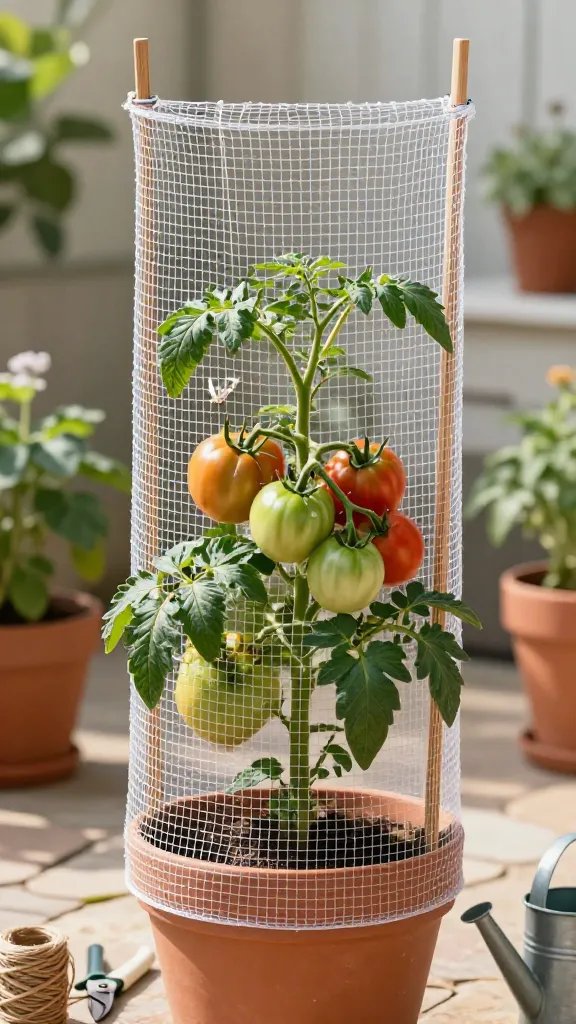
Some tomatoes don’t just sprawl—they produce clusters that need cradling. Enter soft netting. Stretch a grid behind or around the plant to catch sprawling stems without bruising fruit.
Setup Options
- Two stakes with trellis netting stretched vertically behind the plant
- Wrap a partial “net cuff” around the pot’s upper half to catch side shoots
- Create a U-shaped frame: one back stake and two side stakes, net across
Guide stems through the grid as they grow. Clip or tie them lightly. Netting spreads the load across multiple anchor points, so stems don’t snap under fruit weight.
Materials
- UV-stable trellis netting or soft plastic mesh (4–6 inch squares)
- Stakes or a simple PVC frame
- Plant clips for easy repositioning
Benefits? Excellent for cherry and cocktail tomatoes that go wild, and for gardeners who want fewer ties and more “auto-support.” Seriously, it saves time mid-season.
Bonus Know-How For All Methods
Want bulletproof tomatoes without cages? Layer these essentials with any setup.
- Right Pot Size: Use at least 5 gallons for determinate, 10–15 for indeterminate. Cramped roots = weak support.
- Heavy Base: Add a couple bricks or rocks at the bottom (with drainage protected) to lower the center of gravity.
- Wind-Proofing: Tie supports together or anchor to a railing if you get gusts.
- Pruning Strategy: Choose single- or double-leader and stick with it. Random suckers = chaos.
- Tie Materials: Soft, wide ties prevent stem damage. Retie as stems thicken.
- Fertilizer Timing: Steady feeding creates thicker stems. Go balanced early, then bloom/fruit-focused later.
- Water Consistency: Even moisture prevents sudden growth spurts that topple top-heavy plants.
Which Method Fits Your Tomato Personality?
- Neat freak, tiny balcony: Single stake or string trellis from above.
- Messy but ambitious plant: Florida weave or netting grid.
- Aesthetic goals + reuse: DIY ladder trellis.
- Windy spot or heavy producer: Bamboo teepee/quad-pod.
Common Mistakes To Dodge
- Late installing supports: Add them early to avoid root damage and bent stems.
- Ties too tight: Leave wiggle room. Check weekly.
- Underestimating height: Tomatoes can outgrow you. Plan for 5–6 ft if indeterminate.
- Ignoring airflow: Dense foliage invites disease. Prune for light and space.
Quick Materials Checklist
- Stakes: bamboo, fiberglass, or wood
- Twine: jute or UV-resistant poly
- Soft plant ties or clips
- Netting (optional)
- Pruners and a sturdy pot
Bottom line: You don’t need a bulky cage to grow gorgeous, supported tomatoes in pots. Pick the method that fits your space, commit to weekly tie-ins and pruning, and your plant will repay you with heavy, clean clusters. Try one today, tweak as you go, and enjoy the bragging rights when your neighbors ask how you did it—because they will, trust me.