
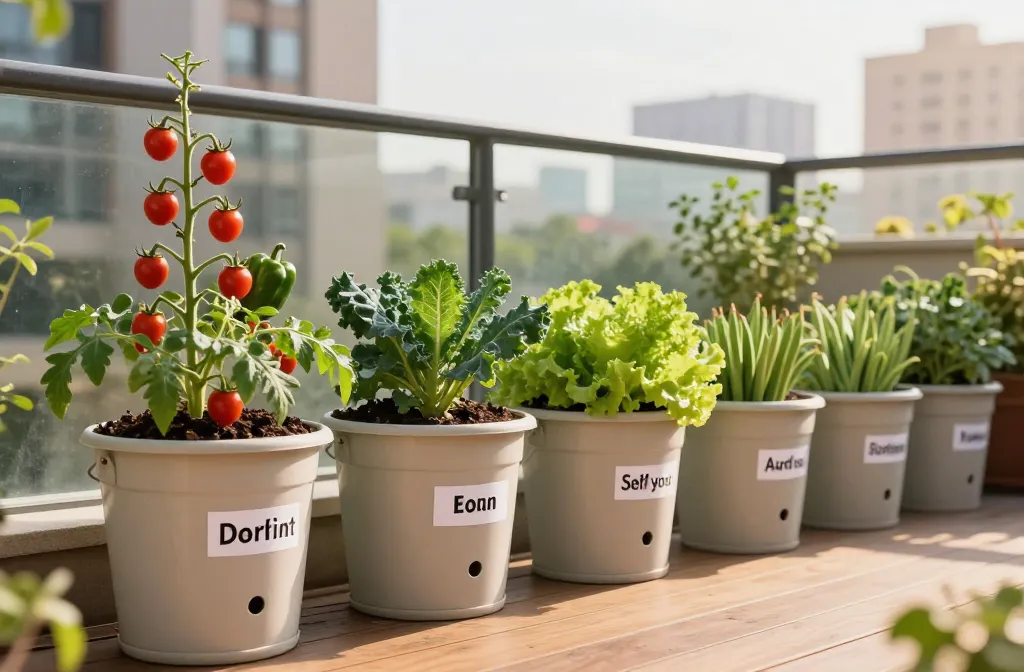
Want a garden that feeds you without stealing your weekends or your wallet? A 5-gallon bucket garden gives you big harvests in tiny spaces—balcony, driveway, stoop, wherever. We’re talking crisp greens, juicy tomatoes, and crunchy peppers from containers you can move with one hand. Ready to turn a stack of buckets into a mini farm? Let’s do it.
1. Pick The Right Buckets And Set Them Up Like A Pro
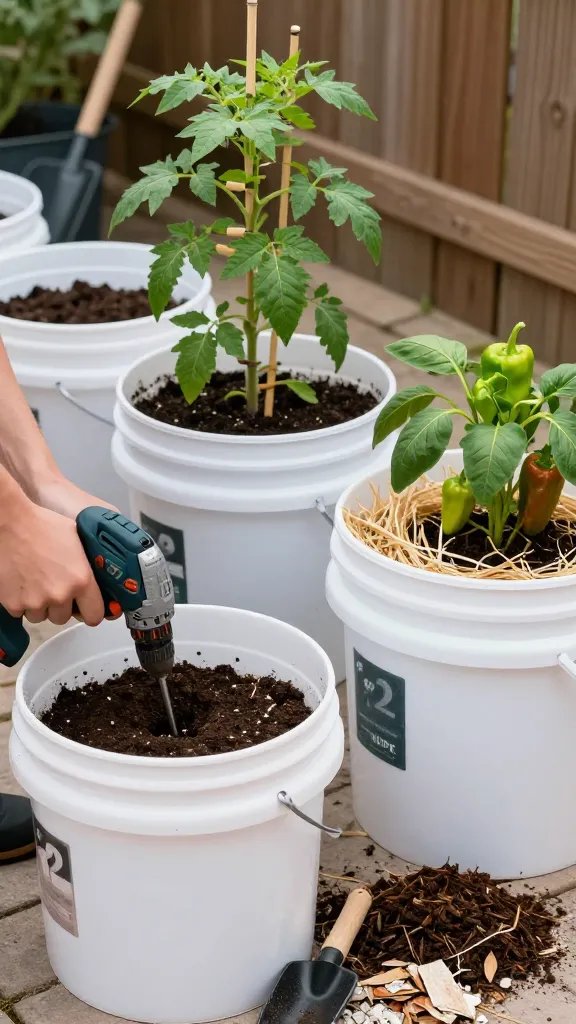
Great harvests start with smart setup. The right bucket, drainage, and soil blend will decide whether your veggies thrive or tantrum. Do this once, do it right, and the rest feels easy.
Materials That Matter
- Food-safe 5-gallon buckets (look for #2 HDPE or buy new from hardware stores)
- Drill with 3/8″ bit for drainage
- High-quality potting mix (not garden soil)
- Compost and perlite or coarse bark for airflow
- Mulch (shredded leaves, straw, or pine fines)
Drill 10–12 holes in the bottom and a few around the lower sides for extra drainage. Mix soil at roughly 60% potting mix, 30% compost, 10% perlite. Fill to 2 inches below the rim so water doesn’t slosh out every time you irrigate.
Pro Tips
- Color counts: Light-colored buckets run cooler in summer.
- Lift them up: Set buckets on bricks or pot feet to prevent swampy bottoms.
- Mulch everything: Keeps roots cool and stretches watering intervals.
Investing in good buckets and breathable soil sets you up for healthier roots, fewer diseases, and better yields. It’s the foundation of your whole micro-farm.
2. Plant Smart: 12 High-Yield Vegetables That Love Buckets
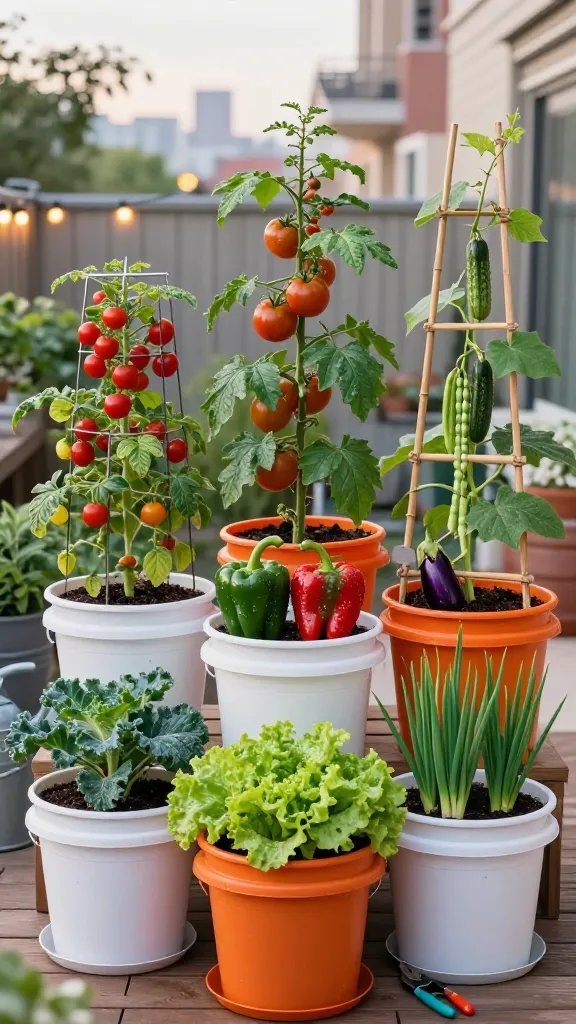
You don’t need acreage to eat like a garden influencer. These 12 bucket-friendly champs give you serious harvests in minimal space. Mix fast growers with season-long producers for nonstop snacks.
The Power Dozen
- Cherry Tomatoes (1 plant/bucket): Compact types like ‘Tumbling Tom’ or ‘Sun Gold’ crush it. Stake or cage immediately.
- Bush Tomatoes (1 plant/bucket): Go for determinate types like ‘Celebrity’ or ‘Roma’ for tidy growth and big production.
- Peppers (1–2/bucket): Bell or hot—both thrive. Varieties like ‘California Wonder’ and ‘Jalapeño’ stay neat.
- Eggplant (1/bucket): ‘Fairy Tale’ or ‘Patio Baby’ produce early and often.
- Cucumbers (1–2/bucket): Bush types like ‘Bush Pickle’ or ‘Spacemaster’ climb a small trellis easily.
- Pole Beans (6–8 seeds/bucket): Give them a teepee of bamboo stakes for a vertical bean fountain.
- Zucchini (1/bucket): Choose compact types like ‘Black Beauty’ or ‘Dunja’. Harvest small and often.
- Swiss Chard (4–6/bucket): Cut-and-come-again superstar. Rainbow stems = instant garden flex.
- Kale (2–3/bucket): ‘Lacinato’ or ‘Red Russian’ keep producing for months.
- Leaf Lettuce (8–10/bucket): Mix baby greens for constant salads. Sow thick, harvest often.
- Green Onions (20–30/bucket): The easiest win. Tuck them between larger plants, too.
- Radishes (15–20/bucket): 25 days to crunchy glory. Perfect for quick wins and morale boosts.
Spacing Snapshot
- One big plant per bucket for tomatoes, eggplant, zucchini.
- Two medium plants for peppers or compact cucumbers.
- Multiple smalls for greens, scallions, and radishes.
Choose compact or patio varieties when possible. You’ll get more fruit per square foot and avoid the “I live in a jungle now” problem. FYI: this lineup covers snacks, salads, and sauces like a boss.
3. Feed And Water For Beast-Mode Growth
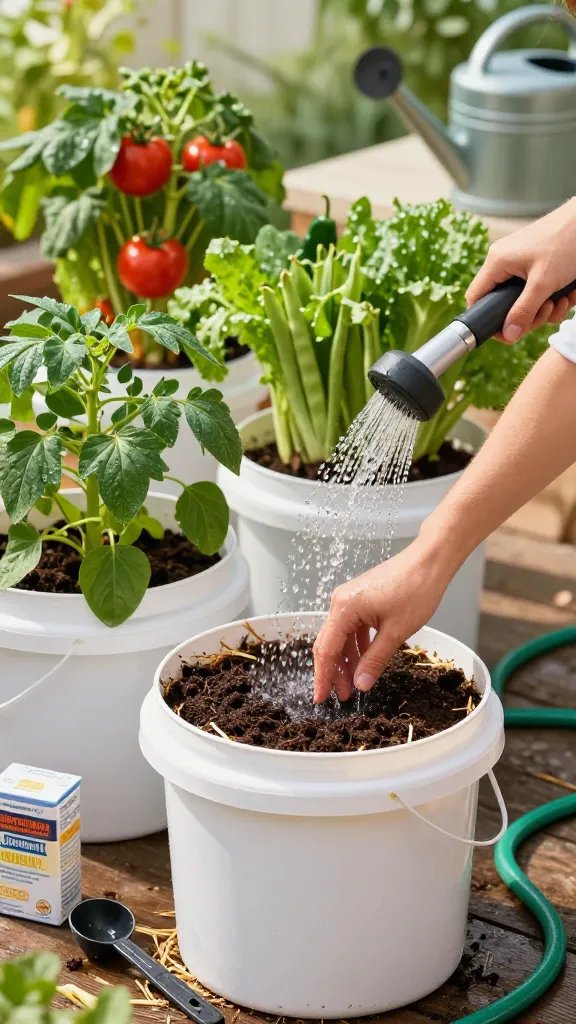
Containers dry out fast and nutrients leach like gossip at brunch. Dial in watering and feeding, and your plants will go from meh to monster. It’s not complicated—just consistent.
Watering That Actually Works
- Daily check: Stick a finger 2 inches deep. Dry? Water. Moist? Chill.
- Morning wins: Water early to reduce evaporation and disease.
- Deep, not drippy: Water until it runs from the bottom, then stop.
- Heat hack: On hot days, water twice. Mulch helps a ton.
Fertilizer Game Plan
- Base charge: Mix a slow-release organic fertilizer into the top 3 inches at planting.
- Weekly feed: Use a balanced liquid fertilizer or fish/seaweed emulsion every 7–10 days.
- Heavy feeders: Tomatoes, cucumbers, and peppers love a bloom-booster once fruit sets.
- Greens: Prefer nitrogen. Compost tea keeps them lush and sweet.
Bonus: Simple Self-Watering Upgrade
- Drop a soaker hose ring or wicking cord into the bucket, or try sub-irrigation inserts.
- Top with mulch to reduce watering frequency by 30–40% (seriously).
Consistent moisture and steady nutrients mean fewer blossom-end rot dramas and more pickable produce. Your future self (and your salads) will thank you.
4. Grow Vertically And Companion-Plant Like You Mean It
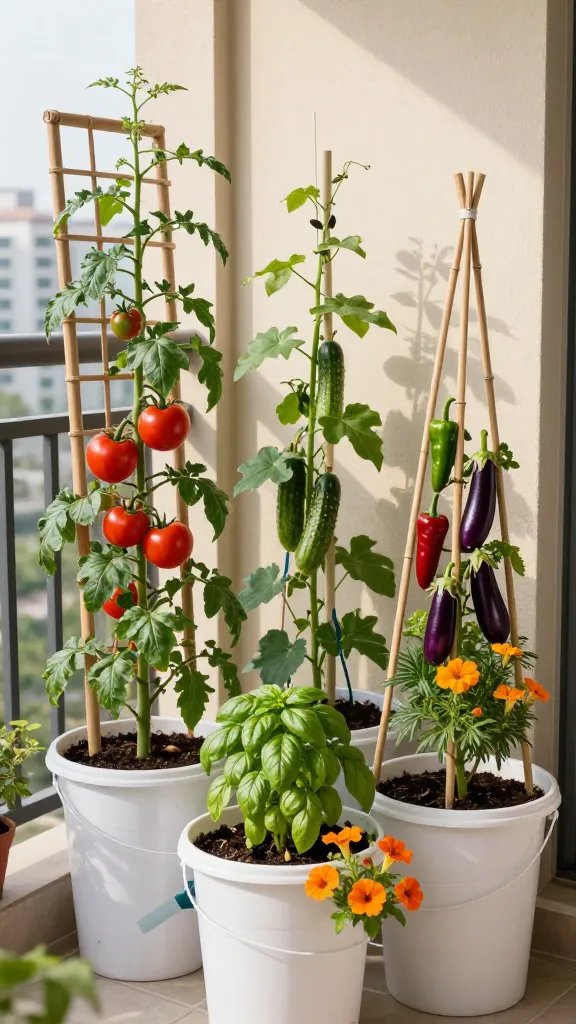
Vertical support turns buckets into skyscrapers of food. Companion planting squeezes extra flavor and pest control into the same space. Together, they make your tiny garden feel huge.
Space-Saving Structures
- Cages and stakes: Add at planting for tomatoes, peppers, and eggplant.
- Trellises: Lean a panel against a wall for cucumbers and pole beans.
- Bean teepee: Three bamboo canes tied at the top—instant climbing gym.
Companion Combos That Slap
- Tomatoes + Basil: Better flavor, fewer pests. Add a few marigolds for nematode control.
- Cucumbers + Dill: Brings beneficial insects and tastes amazing together.
- Peppers + Green Onions: Scallions fit around edges without competing hard.
- Kale/Chard + Nasturtiums: Trap aphids on nasturtiums, not your greens.
Layout Idea: The 12-Veg Bucket Grid
- Back row (sun lovers, tall with supports): 2 tomatoes, 1 eggplant, 1 pole bean.
- Middle row (medium height): 2 peppers, 1 cucumber, 1 zucchini.
- Front row (shorties): 1 chard, 1 kale, 1 lettuce, 1 mixed scallion/radish bucket.
Vertical grow and smart buddies mean more food per square foot and easier maintenance. It also looks ridiculously cool—your neighbors will ask questions.
5. Keep Pests, Problems, And Seasons Under Control
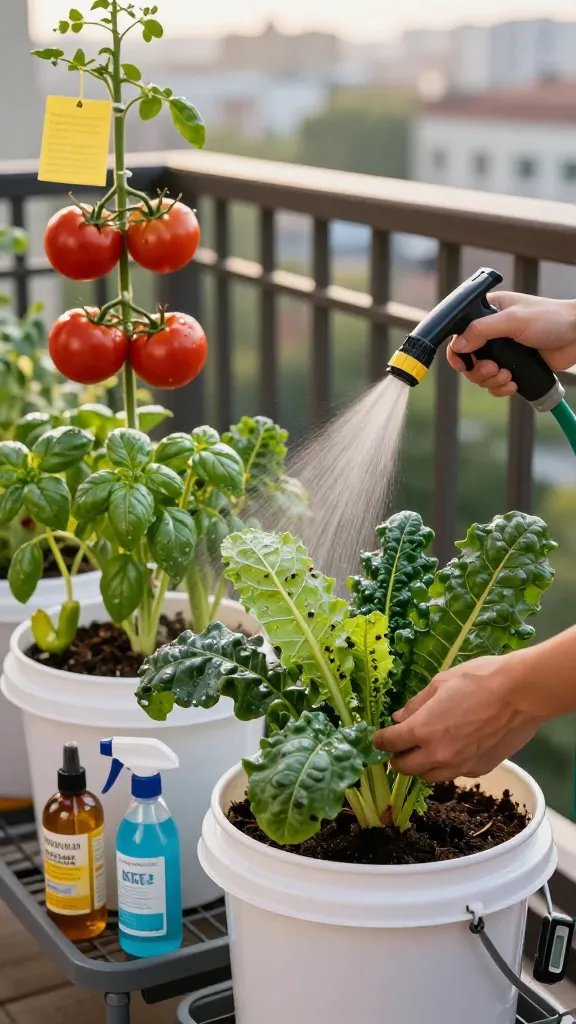
You’ll face a few villains: heat, bugs, disease, and timing. Don’t panic. With quick checks and small tweaks, you’ll keep plants happy and harvests rolling.
Easy Pest Patrol
- Scout weekly: Flip leaves, look for holes, sticky residue, or tiny clusters of bugs.
- Hand-squish and hose: For aphids and caterpillars, a strong spray plus fingers works.
- Neem oil or insecticidal soap: Use in the evening to avoid leaf burn.
- BT for caterpillars: Targets worms on kale, chard, and tomatoes.
Disease Prevention 101
- Airflow: Don’t crowd plants. Prune tomato suckers below the first flower cluster.
- Water the soil, not leaves: Wet foliage = disease party you did not RSVP to.
- Rotate crops by bucket: Don’t plant tomatoes in the same bucket twice in a row.
- Refresh mix: Top off with fresh compost between plantings.
Season Stretching
- Spring: Start with radishes, lettuce, kale, chard, and scallions.
- Summer: Swap in tomatoes, peppers, cucumbers, beans, and zucchini.
- Fall: Replant greens, radishes, and scallions; keep basil until frost.
- Frost hack: Toss a sheet or row cover over cages on cold nights. Buckets move, so wheel them near a warm wall if needed. IMO, mobility is the bucket garden’s secret superpower.
With a simple weekly routine—water, feed, scout—you’ll dodge disasters and keep the harvests coming. FYI: the “little and often” approach beats heroic rescues every time.
That’s your 5-gallon bucket garden game plan—compact, productive, and surprisingly low-drama. Start with a few buckets, add more as your confidence grows, and enjoy ridiculous amounts of fresh food. You’ve got this, and your future salsa is already celebrating.