
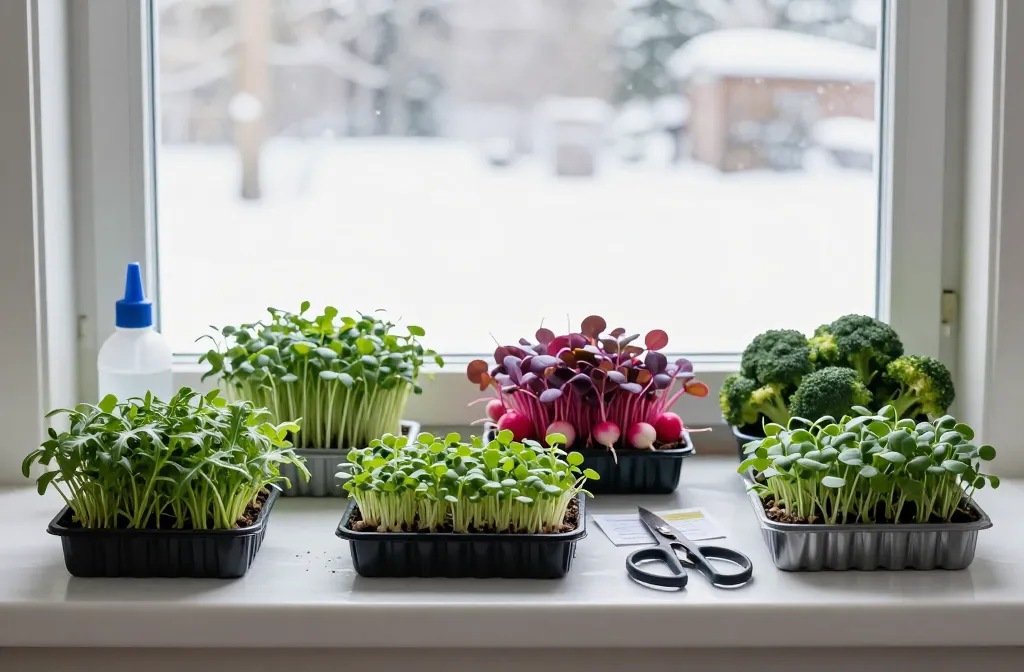
Snow outside, salad inside. That’s the January vibe we want, right? Microgreens give you fast harvests, big flavors, and an instant shot of green happiness on your windowsill. They grow in a week or two, no garden required. Grab a tray, some seeds, and let’s get you a winter jungle.
1. Peppery Rocket: Arugula That Wakes You Up
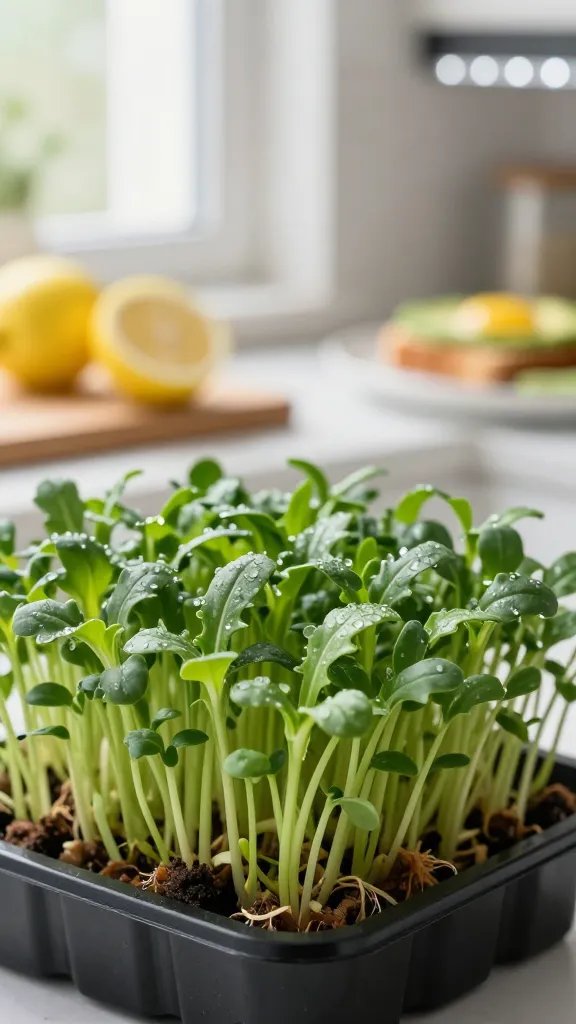
Crave a bite with attitude? Arugula microgreens bring a bright, peppery kick that makes eggs and avocado toast sing. They germinate fast and don’t need intense light to taste amazing.
Quick Wins:
- Soak time: None
- Days to harvest: 8–12
- Light: Moderate grow light or bright window
Cut them when the first true leaves peek in. Use them for pizza finishing or toss into lemony salads. Big flavor, tiny effort—seriously.
2. Sunrise Radish: Color, Crunch, And Sass
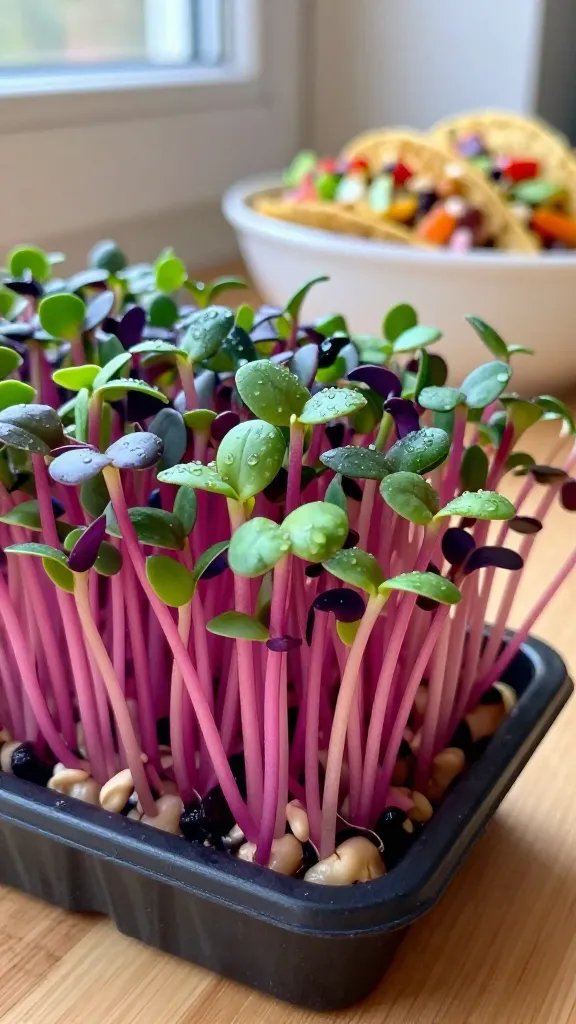
Radish microgreens taste like radish tops but juicier and milder. They shoot up quickly and come in gorgeous pink and purple varieties. Want instant gratification? This is it.
Tips:
- Sow densely for fuller trays
- Blackout for 2 days for stronger stems
- Mist lightly to avoid damping-off
Perfect for grain bowls and tacos when you need bite and color. FYI, they’re great for beginners who want results this week, not next month.
3. Mild Mighty Broccoli: The Nutrient Workhorse
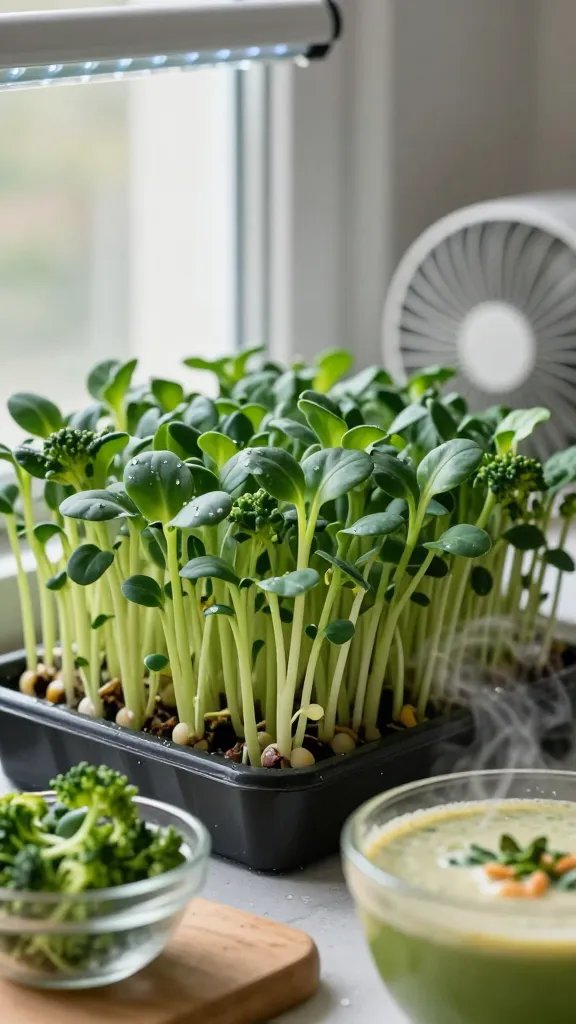
Broccoli microgreens deliver a mild, slightly sweet flavor and an impressive nutrient profile. They love cool rooms and don’t mind shorter winter days with a grow light assist.
Key Points:
- Days to harvest: 9–12
- Rinse seed hulls off if needed
- Keep airflow for cleaner leaves
Throw them into smoothies or on top of soup. They play nicely with everything and boost your winter meals without stealing the show.
4. Crimson Cabbage: Pretty And Punchy
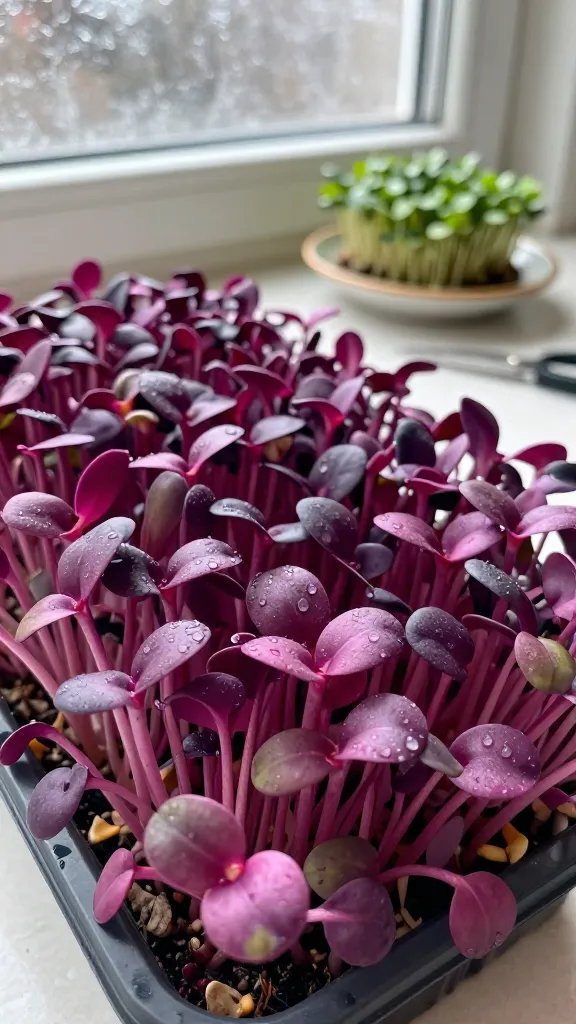
Red or purple cabbage microgreens bring jewel-tone drama and a gentle brassica bite. They stay compact and tidy, which makes small trays look lush and intentional.
Why You’ll Love It:
- Great germination in cool temps
- Color that survives cooking (mostly)
- Ideal for sandwiches and sushi bowls
Use them when dishes need a pop of color and crunch. Your winter photos—and your taste buds—will thank you.
5. Spicy Mix: The “Why Choose?” Blend
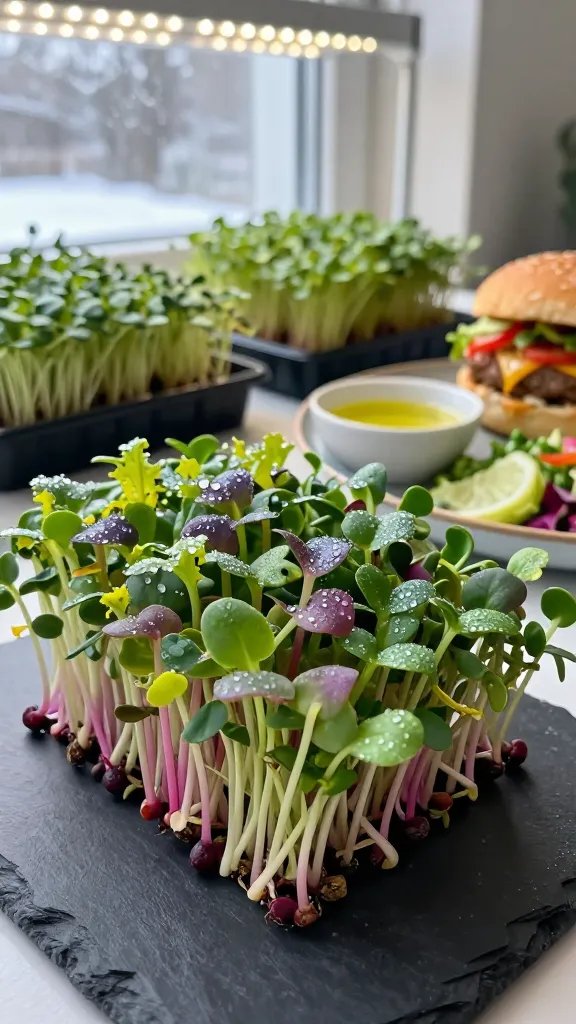
Can’t pick just one? A spicy brassica blend (mustard, radish, arugula) gives layered heat and texture. It grows evenly and looks fancy without the fuss.
Blend Benefits:
- Balanced flavor across varieties
- Less risk of a dud tray
- Fast 7–10 day harvest
Use for burger toppers or a quick side salad with olive oil and lemon. It’s the shortcut to restaurant-level flavor at home.
6. Sunflower Shoots: Nutty, Juicy, Addictive
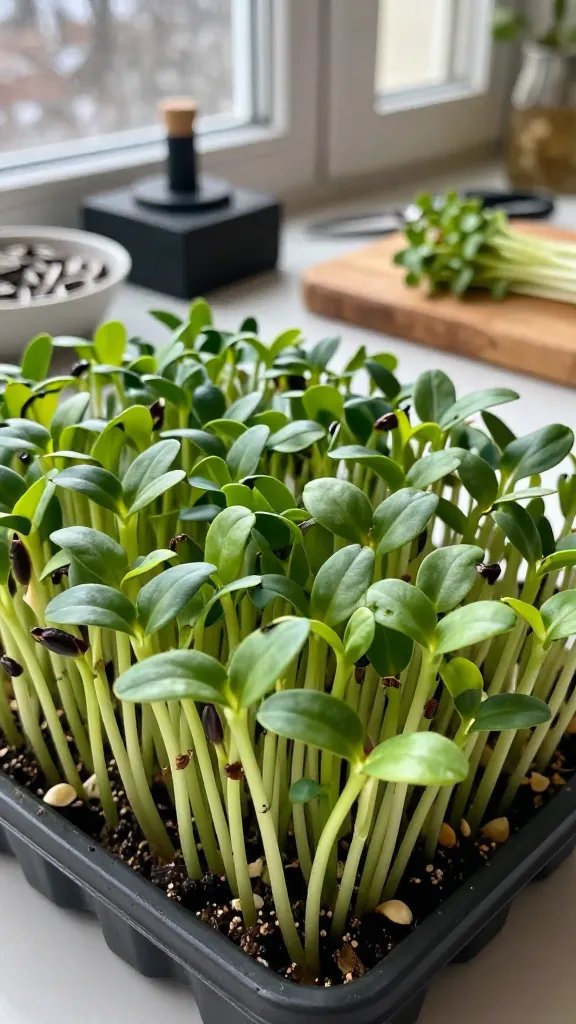
Sunflower microgreens taste like fresh almonds and snap like sugar peas. They feel substantial, which helps winter meals feel satisfying.
How To Nail It:
- Soak seeds 8–12 hours
- Use a deeper tray and a thin soil layer
- Weigh down for 2 days to strengthen stems
Harvest when the first leaves open and seed hulls fall off. Add to sandwiches, ramen, or eat by the handful. IMO, a January essential.
7. Pea Shoots: Sweet Vines Of Winter
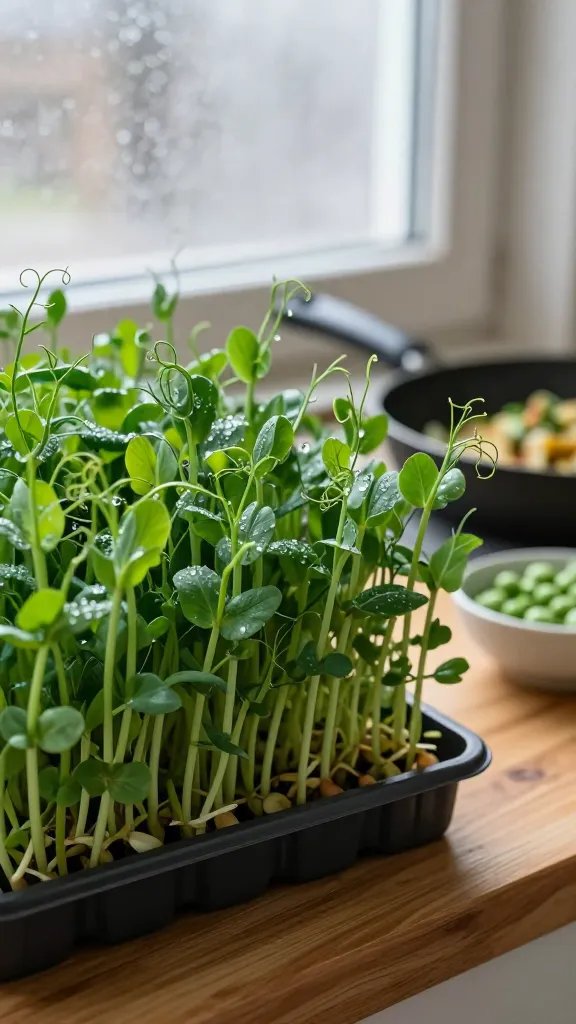
Pea shoots taste like spring peas, and they twirl charming tendrils that look gorgeous. They tolerate cool rooms like champs, perfect for chilly apartments.
Growing Notes:
- Soak 8–12 hours
- Harvest at 10–16 days, before leaves toughen
- Bottom water to keep stems crisp
Use as a salad base or stir-fry add-in. When you crave fresh garden vibes in January, pea shoots deliver big time.
8. Purple Kohlrabi: Crunchy And Photogenic
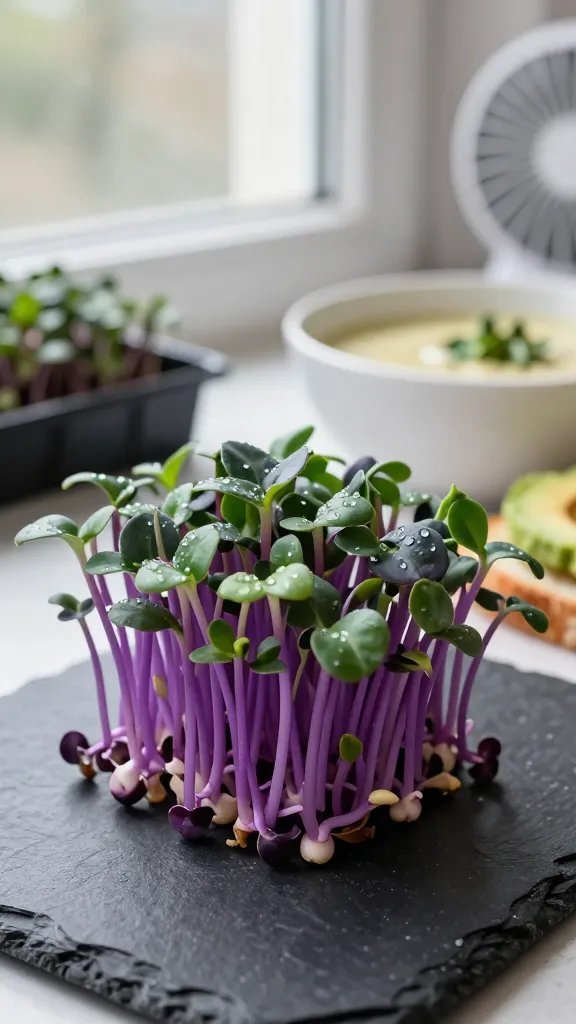
Kohlrabi microgreens give you sweet brassica flavor and luminous purple stems. They germinate consistently and look premium on everything.
Good-To-Know:
- No soak required
- Harvest at cotyledon stage for sweetest flavor
- Keep airflow to avoid leggy growth
Top creamy soups or avocado toast. They add color without overpowering delicate dishes—chef’s kiss.
9. Mustard Heatwave: Tiny Leaves, Big Drama
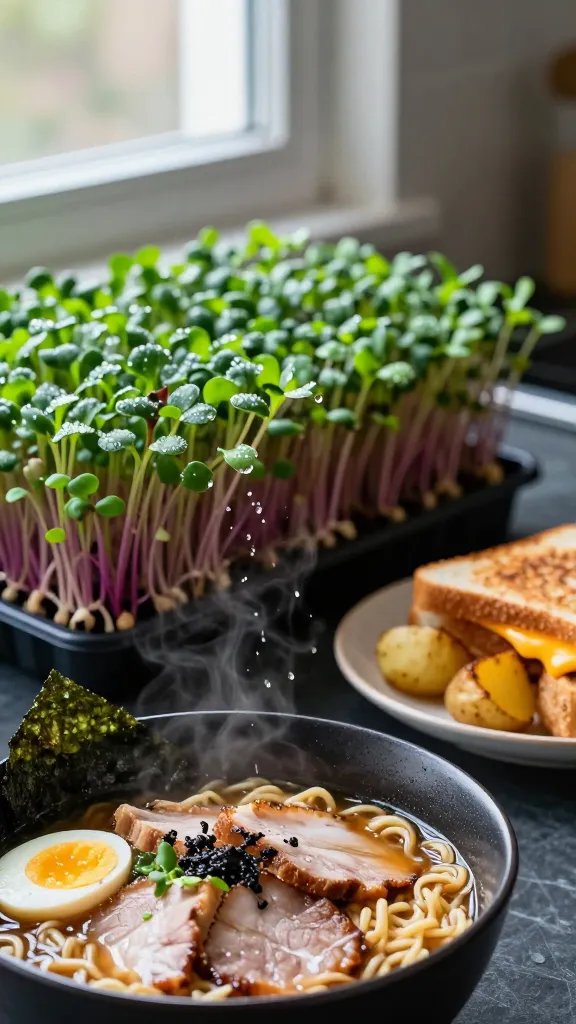
Mustard microgreens deliver serious heat with a wasabi vibe. They grow lightning-fast and wake up heavy winter dishes.
Tips:
- Sow thinner to avoid overheating and mold
- Harvest at 7–10 days
- Pair with fatty foods to balance heat
Use on grilled cheese, ramen, or roast potatoes. You’ll feel instantly more alive, trust me.
10. Basil Babies: Sweet, Fragrant, Worth The Extra Light
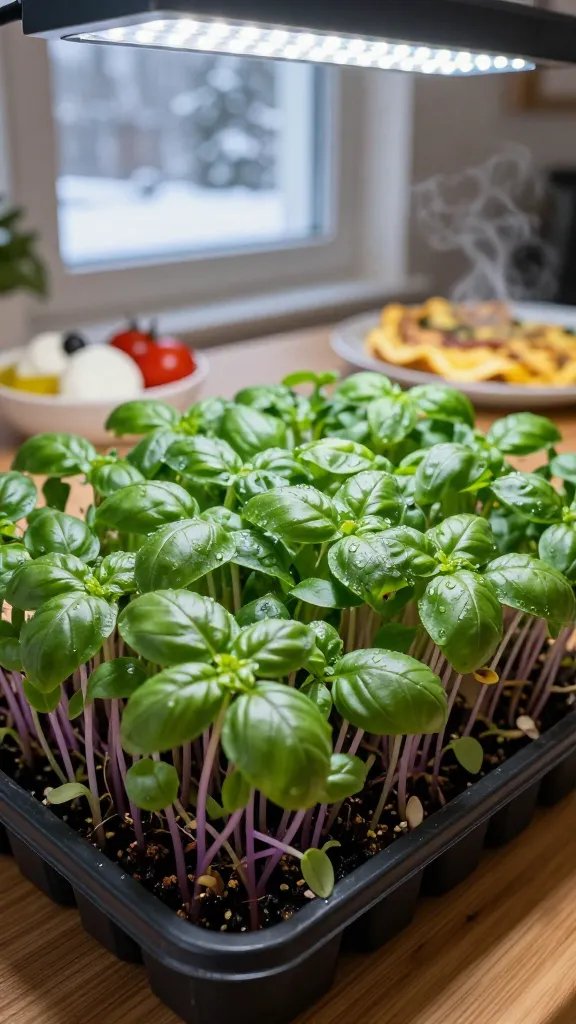
Basil microgreens bring a fragrant blast of summer, even in deep winter. They prefer warmth and strong light, but the payoff tastes incredible.
How To Succeed:
- Bottom heat helps germination
- Give 12–14 hours under a grow light
- Mist lightly—basil bruises easily
Garnish pasta and caprese bowls, or fold into omelets. When cabin fever hits, basil is your edible aromatherapy.
11. Cilantro Sparks: Citrus-Herb Magic
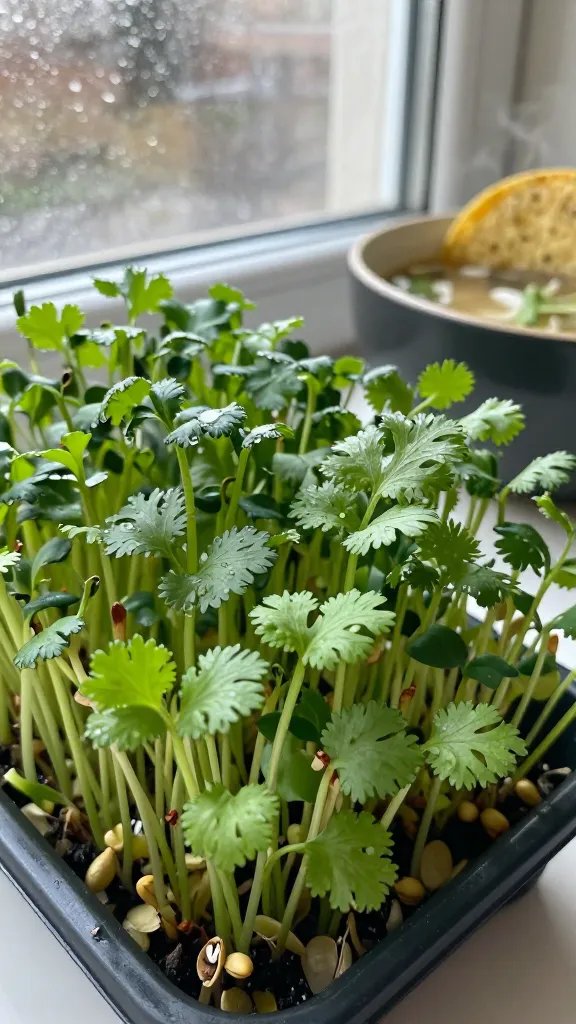
Cilantro microgreens taste bright, a little citrusy, and way fresher than supermarket bunches. They sprout slowly, but January gives you time.
Essentials:
- Pre-soak or gently crack seeds for better germination
- Patience: 14–21 days to harvest
- Cool temps help flavor
Finish tacos, pho, and rice bowls with a sprinkle. If you’re a cilantro person, this feels like cheating in the best way.
12. Chive-Like Leeks: Onion Flavor Without Tears
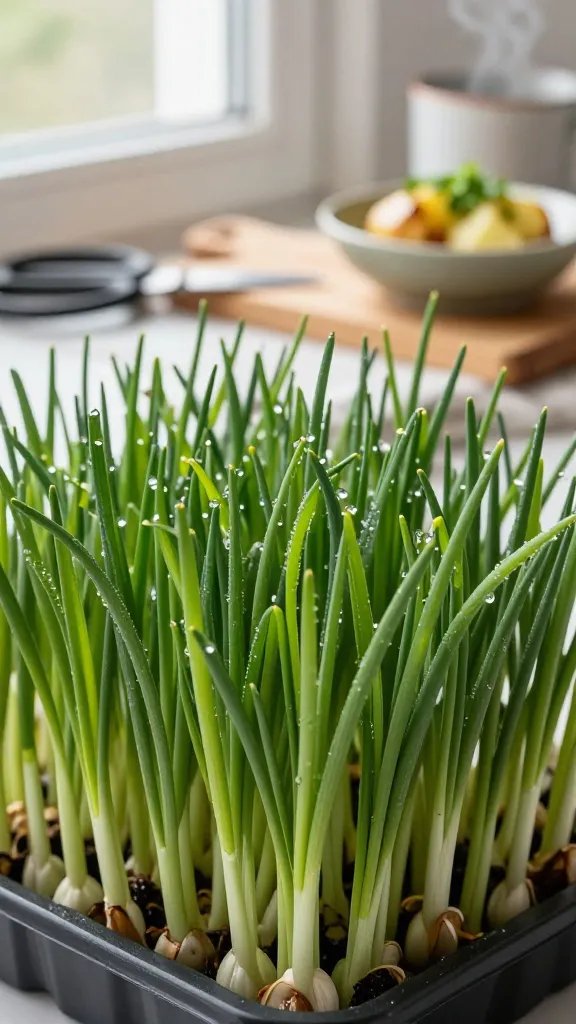
Leek microgreens bring sweet allium flavor and fine, grassy texture. They look delicate and elegant but grow sturdier than you think.
Pro Moves:
- Broadcast thinly; they tangle if too dense
- Harvest at 14–20 days for best flavor
- Snip with sharp scissors to avoid bruising
Top baked potatoes, omelets, and creamy soups. You get that oniony punch minus the drama.
13. Bright Beet: Red Stems, Earthy Sweetness
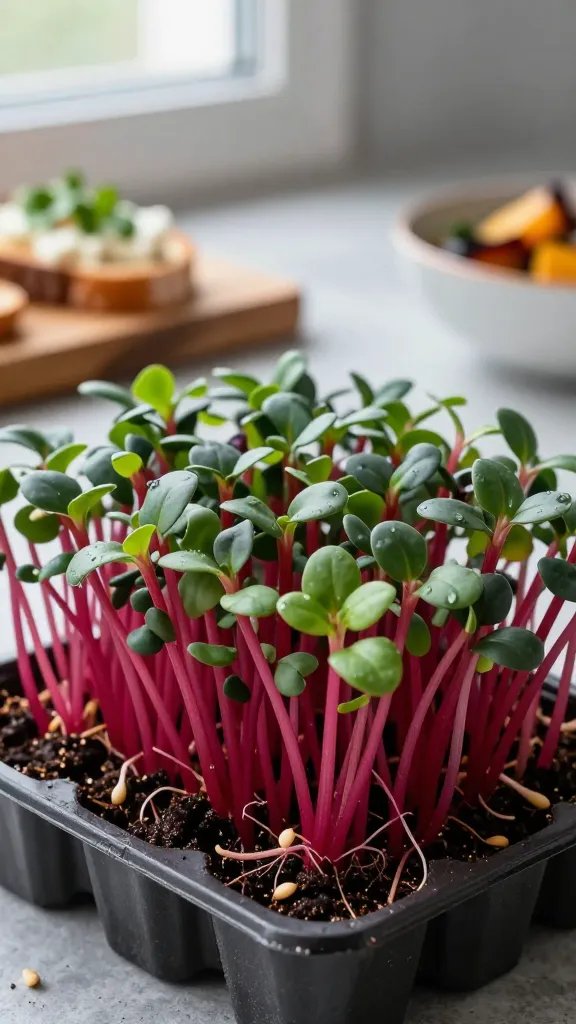
Beet microgreens deliver stunning magenta stems and a gentle earthy-sweet flavor. They take a bit longer, but the color payoff is wild.
Growing Tips:
- Pre-soak lightly or just sow and wait
- Expect 12–18 days to harvest
- Use a slightly deeper medium for sturdier roots
They shine on goat cheese toast, roasted veggie bowls, and winter salads. When your plate needs flair, beet’s your buddy.
14. Tender Mizuna: Feather-Light, Flavor-Forward
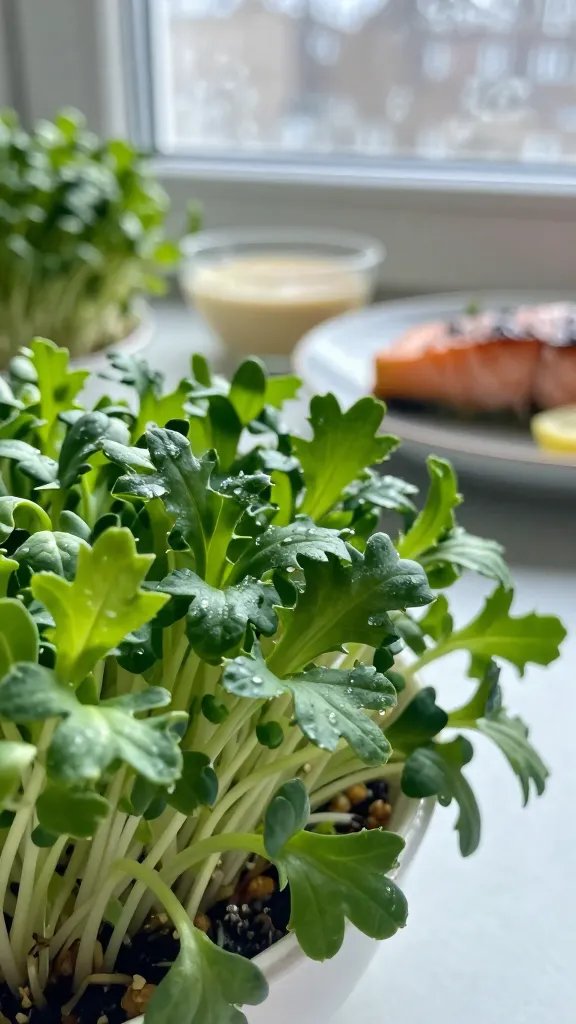
Mizuna microgreens taste mild, mustardy, and a little sweet. They grow feathery leaves that make salads look fancy without trying.
Why Grow It:
- Cold-tolerant and forgiving
- Harvest at 10–14 days
- Mixes beautifully with arugula or cabbage micros
Toss with sesame dressing or nest under roasted salmon. It’s the microgreen equivalent of a soft-focus filter—gentle and gorgeous.
15. Amaranth Glow: Velvet Texture, Neon Drama
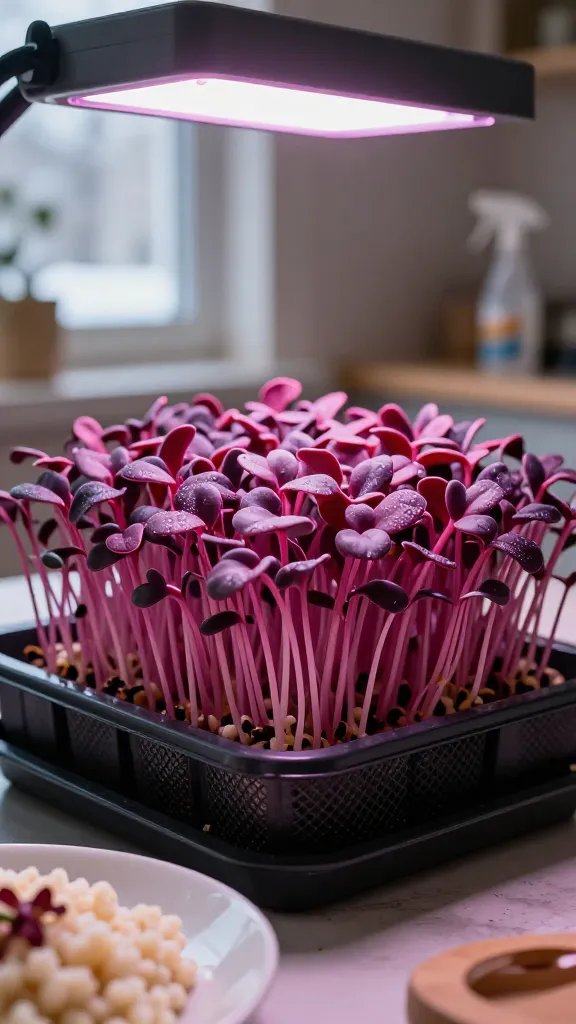
Amaranth microgreens bring neon-magenta leaves and a silky mouthfeel. Flavor stays mild, so they pair with bold or delicate dishes.
Getting It Right:
- Very fine seeds—sow evenly and thinly
- Prefers warmth and steady light
- Harvest early (8–12 days) to avoid bitterness
Use as a vibrant garnish on anything beige. When winter plates feel dull, amaranth does the heavy lifting on looks.
Gear And Setup That Make January Easy
- Trays with drainage plus matched bottom trays for bottom watering
- LED grow light (full spectrum), 12–14 hours daily
- Sterile soilless mix or grow mats (hemp, coco, or felt)
- Spray bottle, small fan for airflow, and a simple timer
Bottom water to keep stems dry, blackout for 2–3 days after sowing for stronger growth, and harvest with clean scissors when cotyledons look full and perky.
Flavor Pairing Cheat Sheet
- Spicy (mustard, radish, arugula): Fatty foods, noodles, potatoes
- Sweet/Green (pea, sunflower): Sandwiches, stir-fries, bowls
- Mild Brassicas (broccoli, cabbage, kohlrabi): Eggs, soups, smoothies
- Herbaceous (basil, cilantro, leeks): Tacos, pasta, ramen
Common January Mistakes (And Fast Fixes)
- Leggy growth? Move lights closer (4–8 inches) and extend light hours.
- Mold on soil? Improve airflow, reduce misting, and bottom water only.
- Weak flavor? Harvest at the right stage; give more light for punch.
- Slow germination? Be patient in cool rooms or add a heat mat for warm-loving varieties.
That’s your cold-climate microgreen playbook. Start two or three varieties this week and rotate trays for nonstop harvests. Before you know it, January will taste like June—no parkas required.